The NIOS Class 12 History Question Paper of December 2, 2025, was a significant event for many students. The original exam in October 2025 was postponed due to elections in Bihar. The rescheduled test gave students the chance to complete their history class 12 exam without feeling as much pressure. Understanding how to prepare for future exams or the structure of the December 2025 NIOS History exam is important for students who have just taken the test. This guide provides a detailed breakdown of the NIOS 315 History Question Paper. We focus on Set A as well as Set B. It also explains what makes this exam unique and how to prepare effectively for future NIOS exams.
NIOS Class 12 History 315 Question Paper Overview
For many students, the NIOS Class 12 History 315 Question Paper on December 2, 2025, was a critical exam. The exam for October 2025 was rescheduled due to Bihar's elections. The paper was based upon the usual NIOS structure and pattern, with a few nuances due to the timing changes. The NIOS History 315 test generally tests your knowledge of India's history, global events, and social movements that have shaped our world today. The exam tested your knowledge of:
- Remember important facts
- Causes and Effects of Historical Events
- Connect historical events with their implication.
This December 2025 essay was created to test both historical knowledge and the ability to analyze and interpret events in a deeper way.
Detailed analysis of Sets A and B
History 315 was also available in two sets. The questions in Set A were slightly different from those of Set B, but both followed the general format. Compare these two sets so that future students will have an idea of what they can expect.
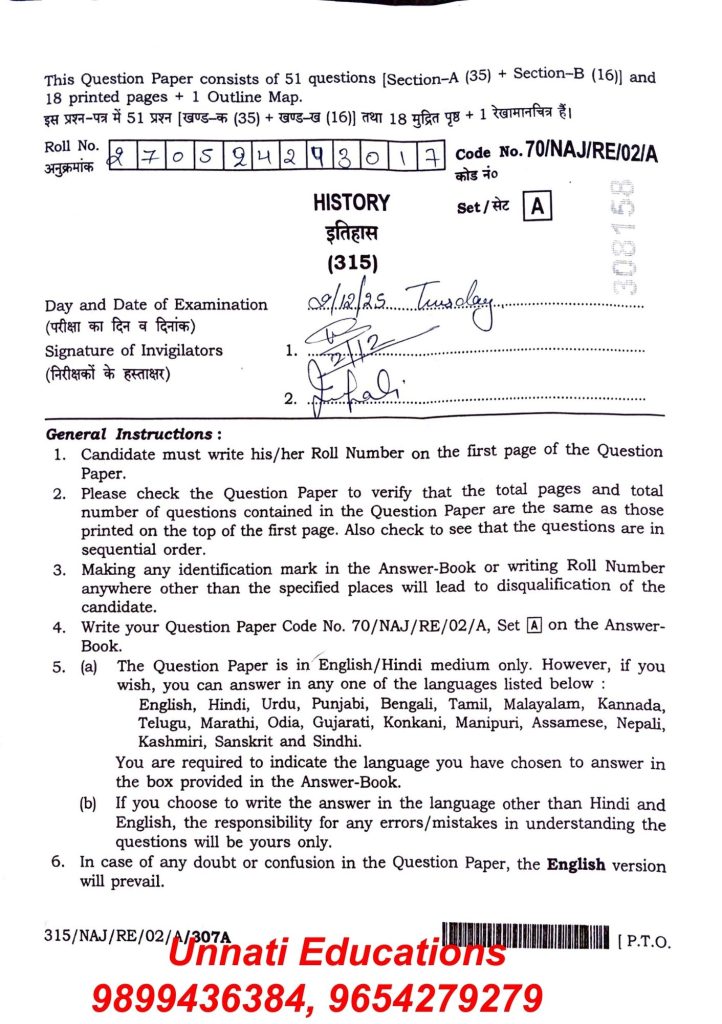
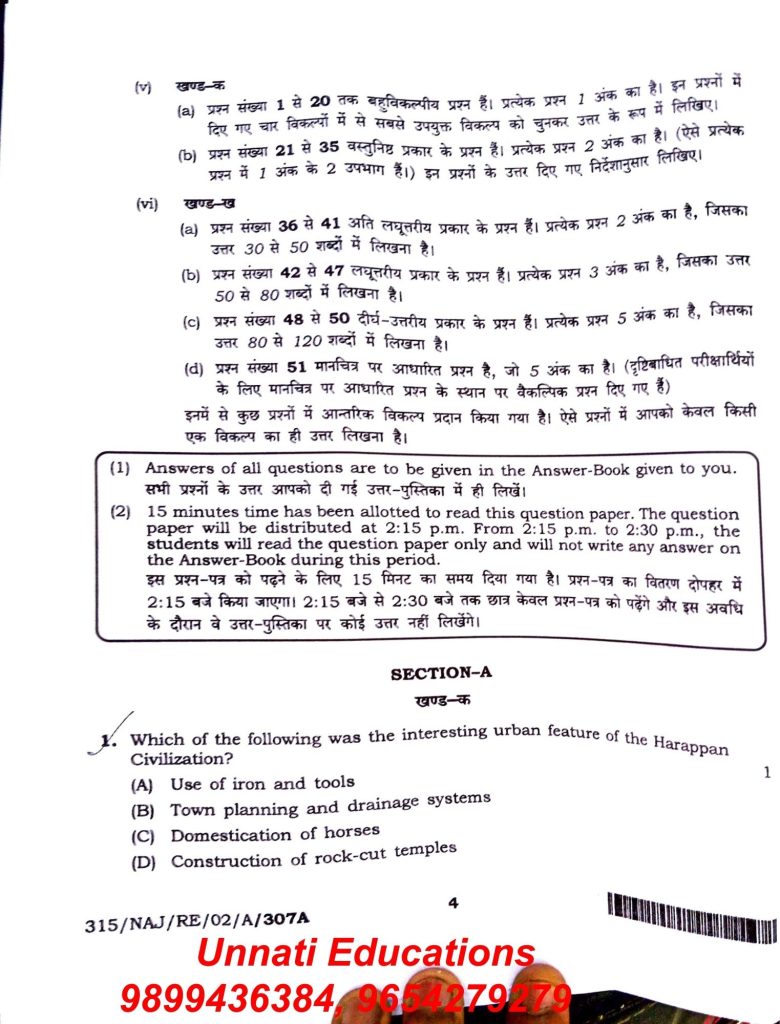
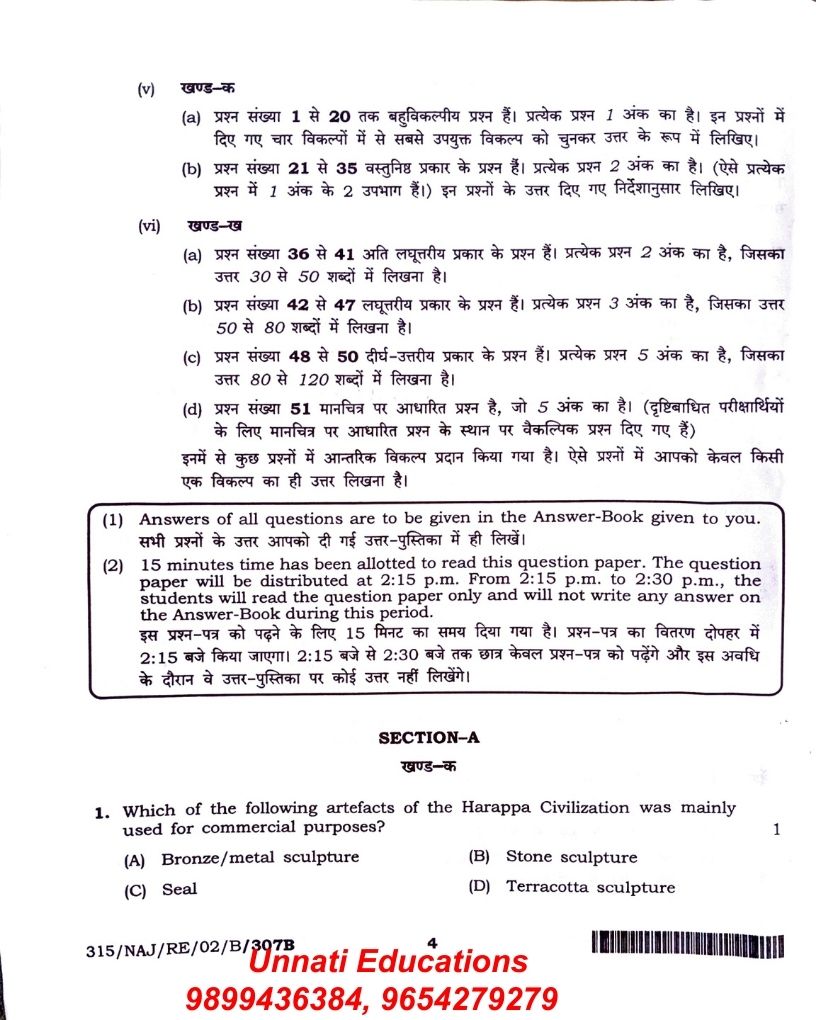
NIOS Class 12 History 315 Question Paper Set A
- The Section A (MCQs), which focuses on historical facts, was a set that placed a lot of emphasis on key figures and dates. Multiple-choice answers were mainly about dates, important historical events, and key terms.
- The questions in Section B require a brief description of important historical events, such as the Indian National Movement or the Non-Cooperation Movement.
- Section C: Long Answer Questions. The questions in this section are about World War I and its impact on Indian freedom.
- The Section D Essay questions were based on the Indian Constitution and its impact on society after Independence.
NIOS Class 12 History 315 Question Paper Set A Showcase
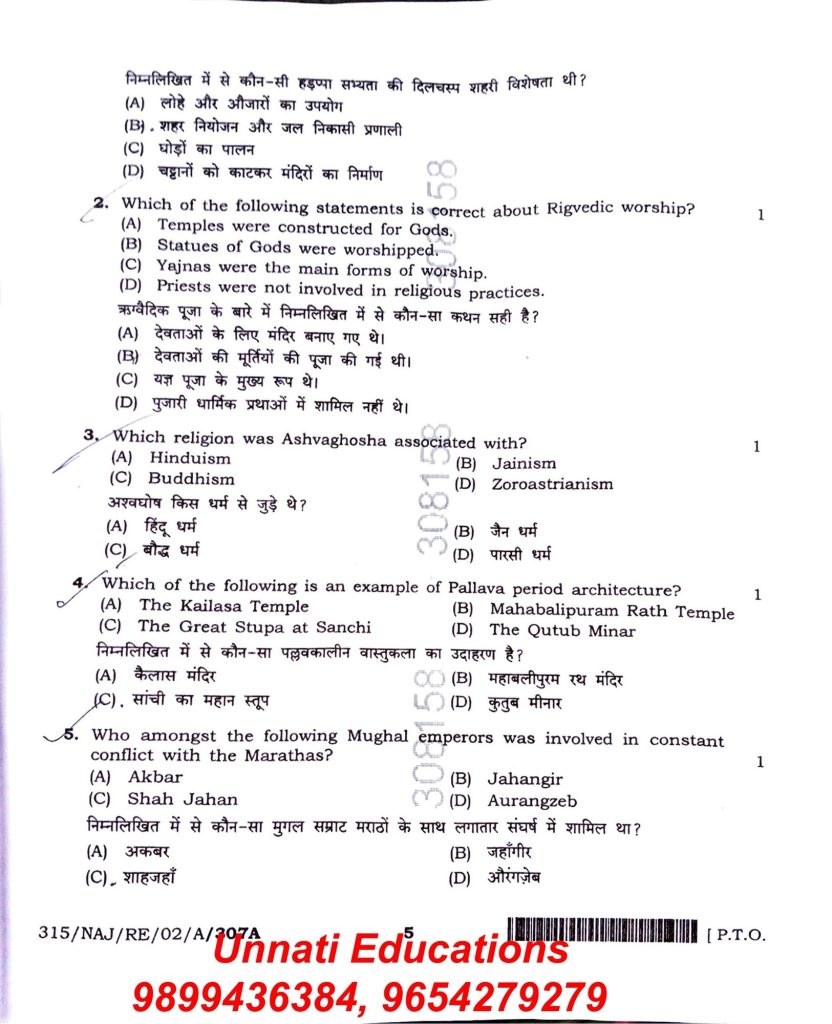
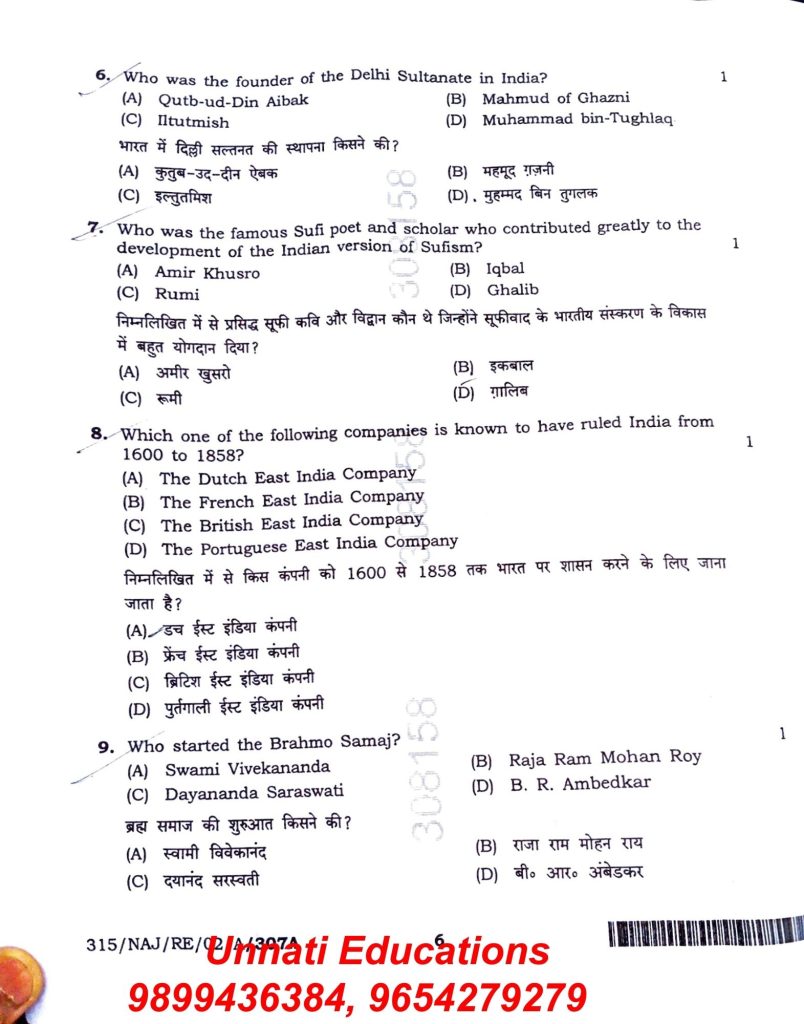
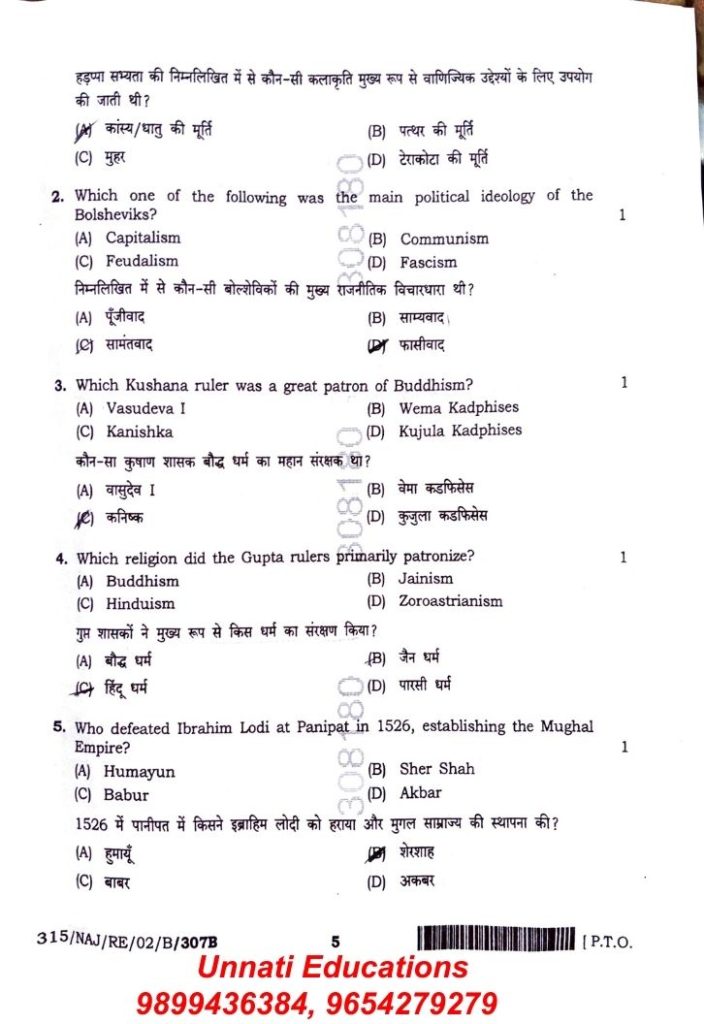
NIOS Class 12 History 315 Question Paper Set B
- Section A: This section is similar to Set A but more focused on cause-and-effect questions and historical terms.
- Section B: The set B questions were a little more conceptual and asked students to examine the role Indian reformers such as Raja Ram Mohan Roy played in society's transformation.
- Section C: Long Answer Questions. The questions in this section are more specific and ask students to analyze the effects of colonialism on the economy or strategies employed by the Quit India Movement.
- The Section D Essay included an essay question about the importance of religion to the Indian independence movement. This encouraged a more in-depth exploration of the cultural aspects of India's struggle for freedom.
NIOS Class 12 History 315 Question Paper Set B Showcase
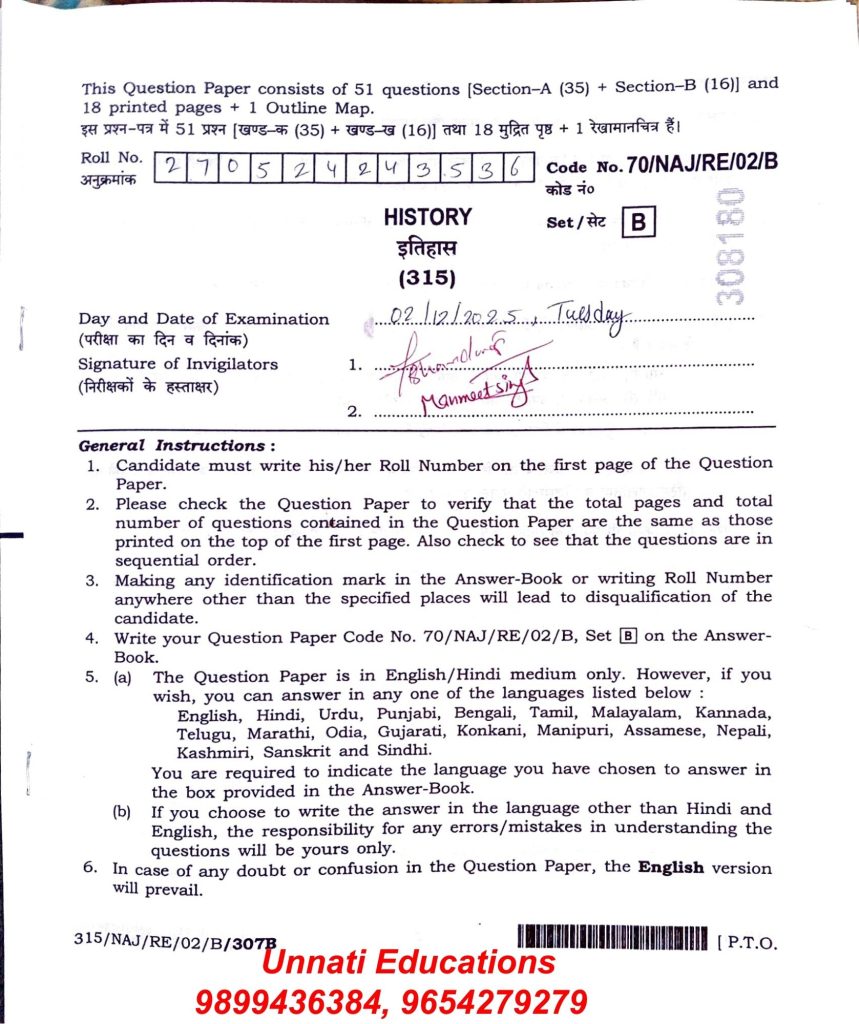
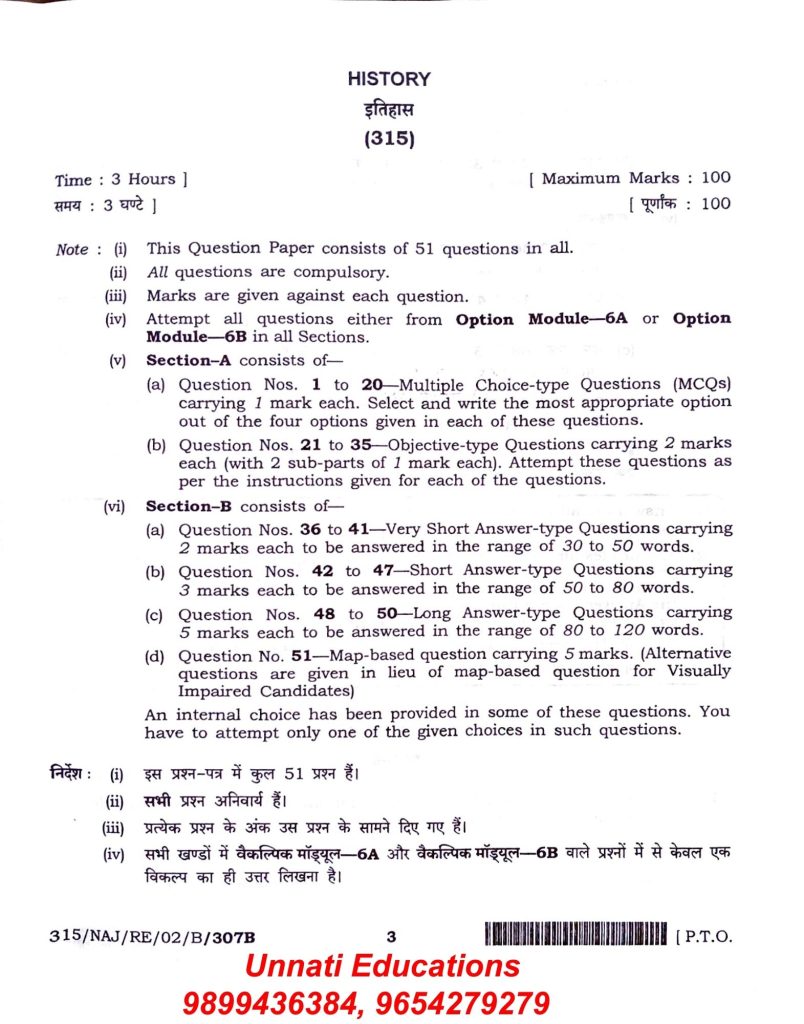
Key Differences Between Set A and Set B:
| Features | Set A | Set B |
| Section A (MCQs). | Focus on dates, facts, events | More emphasis on cause-and-effect |
| Short Answer (Section B) | Focus on major events | Focus on historical figures and their impact |
| Section C (Long answer) | Economic impact, national movement | Cultural and social implications |
| Section D (Essay) | Indian Constitution, World War I | The role of religion in the struggle for freedom |
The NIOS History Question Paper Structure
The NIOS History Class 12 Question Paper follows a clear, predictable structure. This is a breakdown of how the question paper is structured:
| Section | Question Types | Marks | Focus Areas |
| Section A | Multiple Choice Questions | 1 mark each | Fact-based knowledge, historical events |
| Section B | Quick Answers | 2 marks each | Dates, events and key individuals |
| Section C | Questionnaires with Long Answers | 5 marks each | Analytical responses, understanding concepts |
| Section D | Write-Type Essay Questions | 10 marks each | Detailed analysis and interpretation of events |
What to study for the NIOS History 315 question paper (December 2025).
Essential Study Plan Tips:
Here are some tips to help you pass the NIOS Class 12 History 315 exam:
- You can start by familiarizing yourself with key themes, such as colonial policy, the Indian National Movement and Post-Independence India.
- Write as much as you can in the time available.
- Examine previous year papers: Review past papers to learn the style of questions and the timing.
- Concentrate on Conceptual Clarity. Don't memorize the facts, but understand their causes and effects.
Avoid these Common Mistakes in NIOS History Exam
There are some common mistakes that students make when taking the NIOS Class 12 history question paper.
- Rushing through MCQs. Many students rush to complete MCQs, despite their importance. These questions require accuracy, so take your time.
- Do not skip questions with long answers, no matter how difficult they may seem. Spend your time well and answer all questions.
- Students often have trouble managing their time when they are faced with four sections. Practice past papers in order to determine how long each section takes.
- Never neglect revision. Always review your answers. This is especially important for long-answer questions and essays. You can easily lose marks by not reviewing your work.
Exam preparation for NIOS History 315 question paper
Here are some tips to help you pass the NIOS History 315 test:
1. Understanding the syllabus thoroughly
Although the syllabus is extensive, it's important to know the key topics, including colonial and post-independence history, as well as global events. Concentrate on areas where you have most often been tested.
2. Use Previous Year Papers
Practicing previous NIOS Class 12 History Question Papers will help you become familiar with the format of the test. It will also give you an idea about the topics that are most frequently covered, particularly in Sections C and D.
3. Time Management
Each section should be given a specific amount of time. As an example, section A (MCQs) should only take 15 minutes, while section D (Essay) will require the maximum time of 30-40 minutes.
4. Concentration on Conceptual Understanding
Many questions in Sections B and C require you to demonstrate a deeper understanding. Do not memorize the facts, but rather understand why and how historical events occurred.
5. Revise Key Topics
List key topics, such as the Quit India Movement and the economic impacts of colonialism. Review these topics thoroughly before your exam.
NIOS History question paper Class 12: Topics covered in the question paper
The NIOS History 315 Question Paper includes several key themes. Past papers have consistently covered the following topics, and you should prioritize them during your preparation.
- Colonial India: This course focuses on British policies in India and their impact, such as economic exploitation and reforms.
- Indian National Movement: Learn about key movements like Civil Disobedience and Quit-India.
- Post-Independence India: Focus on political struggle, economic challenges, and the Constitutional Assembly after 1947.
- Learn about global movements and events, such as World War I & II and the Russian Revolution.
What makes the NIOS History Class 12 different?
NIOS provides a level of flexibility not offered by other boards. The students can study at their own pace and choose the subjects they want to take. They may also reappear in exams if necessary. The flexibility in the timing of NIOS examinations allows students to concentrate on areas where they are less confident. NIOS also offers regional language support so that students may choose a language in which they are most comfortable. The board is more student-friendly and inclusive than other educational systems.
FAQs
1. How is the NIOS Class 12 History question paper formatted?
The NIOS Class 12 History Exam consists primarily of essay questions and multiple-choice questions. Questions are designed to test both conceptual and factual understanding.
2. What should I do to prepare for the NIOS History 315 question paper?
Concentrate on important historical events, figures and movements. Use past papers to familiarize yourself with the structure of exams and to improve time management.
3. What are the main topics of NIOS History 315?
Colonial India, the Indian National Movement and Post-independence India are among the most significant topics.
4. How do Sets A and B differ in the NIOS History Exam?
The questions asked and the historical events covered may differ between Set A and Set B. Set A tends to focus more on dates and historical facts, while Set B requires more analysis.
5. What if I don't pass the NIOS History Exam?
Students can retake exams multiple times. If necessary, students can increase their score in subsequent attempts.
Results: Preparing for the NIOS History 315 question paper
The NIOS Class 12 History Question Paper was rescheduled for the December 2, 2025, exam. This exam offered students a chance to finish their Class 12 History exams after delays caused by elections in Bihar. To do well on future NIOS tests, it is important to understand the Set A/Set B structure, practice with previous papers and focus on conceptual understanding. Success is possible with the proper preparation, good time management and confidence. Students can demonstrate their knowledge of history by taking this exam. With the proper preparation, they will be able to excel in their academics and careers.