NIOS Class 10 Folk Art 244 Practical Files Solved for 2026
NIOS Class 10 Folk Art 244 Practical Files carry marks that are genuinely easy to keep, yet most learners lose them because the file looks rushed, the drawings are missing, or half the experiments are left unwritten. That is the exact gap we close for you. Our handwritten, solved file covers all 10 traditional Indian folk-art forms.
NIOS Class 10 Folk Art 244 Practical Files Solved for 2026
Written by Prateek Talwar · Reviewed by Jyoti Sharma, Senior NIOS Counsellor · Updated for the 2026 session
NIOS Class 10 Folk Art 244 Practical Files carry marks that are genuinely easy to keep, yet most learners lose them because the file looks rushed, the drawings are missing, or half the experiments are left unwritten. That is the exact gap we close for you.
We prepare a complete, handwritten Folk Art 244 practical file for the 2026 session, with every experiment solved, sketched and explained in the way an external examiner expects to see it. You do not spend your evenings copying folk-art motifs. You get a neat, ready-to-submit file and can focus your energy on the written paper instead.
NIOS Class 10 Folk Art 244 Practical Files at a Glance
Folk Art (subject code 244) is a Secondary-level course offered by the National Institute of Open Schooling, and its practical component asks you to actually draw and paint ten traditional Indian folk-art forms. The practical file is the written and illustrated record of those ten experiments, submitted at your study centre and marked as part of your final score.
| Subject and code | Folk Art (244), NIOS Secondary |
|---|---|
| Class | Class 10 (Secondary) |
| Practical work in the file | 10 experiments, fully solved |
| Format | Handwritten record with hand-drawn illustrations, diagrams and labelled artwork |
| Session | Prepared for the 2026 practical exam |
| Medium | English (Hindi medium on request) |
| Delivery | Ready file shared and dispatched after you message us on WhatsApp |
What You Get in Our NIOS Class 10 Folk Art 244 Practical File
Our Folk Art 244 practical file is built page by page, not printed from a template. Every experiment is written by hand in clear, exam-friendly handwriting and paired with the correct traditional drawing, so the file reads like the work of a student who genuinely practised each art form.
- All 10 experiments solved with aim, materials, theory, procedure, observations and result laid out in the standard NIOS format.
- Hand-drawn illustrations for every folk-art form, from Madhubani double-line borders to the Pongal Kolam pot, coloured where the art form needs it.
- Simple, easy-to-understand explanations so you can revise the theory of each folk art before your viva without hunting through the textbook.
- Neat margins, borders and index so the file looks complete and organised from the very first page.
- Prepared for the 2026 session, following the current practical structure for subject 244.
If you have already collected some of your NIOS Study Material and only the practical file is pending, this fills that last gap without you starting a fresh notebook from scratch.
Sample Pages From the NIOS Class 10 Folk Art 244 Practical Files
We would rather show you the quality than describe it, so below is a 15-page preview from the file. It covers the index and the first three experiments in full, Madhubani, Warli and Sanjhi, so you can judge the handwriting, the drawings and the depth of the explanations before you decide.
For the broader picture, you can browse how we prepare the other NIOS Class 10 Practical Files and judge the same standard across subjects before deciding.
These are only the first 15 pages. The complete Folk Art 244 practical file covers all 10 folk-art experiments with aim, theory, procedure, observations, drawn plates and results.
All 10 Experiments Covered in the Folk Art 244 Practical File
Here is the full list of experiments in the file, exactly as they appear in the index, with the region each art form belongs to and the specific work our solved file demonstrates for that experiment. Every experiment is solved in the copy you receive.
| No. | Experiment (Folk Art Form) | Region / Origin | What the Solved File Shows |
|---|---|---|---|
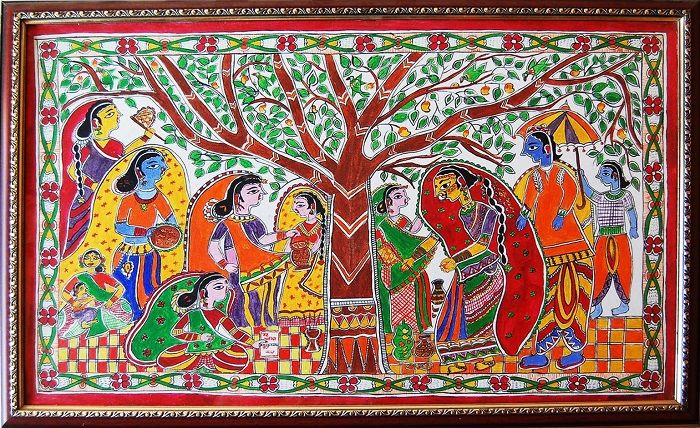
| 1 | Madhubani Art | Mithila, Bihar | Ram and Sita marriage panel, Fish and Peacock theme, Kohbar layout, double-line borders, large expressive Mithila eyes, flat bright colours |
| 2 | Warli Painting | Warli tribe, Maharashtra | Red-clay background, white two-triangle human figures, Palaghat Devi Chowk marriage scene, Tadi-picking scene from palm tree |
| 3 | Sanjhi Art | Braj region, Rajasthan and western UP | Stencil Sanjhi of Krishna with flute, raised cow-dung relief Sanjhi, floating Water Sanjhi with conch-shell powder |
| 4 | Pithora | Bhil and Rathwa tribes, Gujarat, MP, Rajasthan | Full Pithora Baapji wall with houses, horses, sun and moon, Likhandra painter role, daily-life motifs like Panihari and farmer |
| 5 | Rangoli | Maharashtra (floor art) | Border rangoli with flower petals, square-and-diamond design, 6×6 dot-grid rangoli, regional names across India |
| 6 | Alpana | Bengal | Rice-paste technique, Lakshmi Puja alpana with lotus and goddess footsteps, marriage-ceremony circular design, floral floor pattern |
| 7 | Kolam (Kalam in Kerala) | Tamil Nadu and Kerala | Panchvarnam five natural colours from paddy husk and turmeric, Bhadrakali Kolam with Prabhamandalam halo, dot-grid kolam, Pongal pot kolam |
| 8 | Mandana | Rajasthan and Madhya Pradesh | Geru and khadiya clay preparation, "Bharat" filling method, threshold mandana, eight-petalled and six-petalled lotus designs |
| 9 | Painting on Cloth | Traditional fabric styles | Starch surface preparation on markin cloth, Phad painting of Devnarayana, Pichwai painting, Kalamkari with black outlining |
| 10 | Painting on Clay | Terracotta and clay board | Cleaning, sealing, base-coating, sponge-patterning and final sealing of a terracotta pot, plus etching a clay board for texture |
Because Folk Art is a practical-heavy subject, the same forms you paint in the file also appear in your theory paper and viva. Keeping the file aligned with the official practical list is far simpler when you cross-check it against the NIOS Class 10 Syllabus before you begin.
How Our Handwritten Folk Art 244 Practical File Is Prepared
Every Folk Art 244 practical file we hand over goes through the same careful routine, because folk art is judged as much on the drawing as on the writing. We do not shortcut either half.
We work through each activity, from the Madhubani Kohbar to the terracotta pot, so the steps we write down actually match what a student would do. The illustrations are sketched and coloured page by page, matching the traditional style of each region rather than a generic print. Aim, theory, procedure, observations and result are penned neatly, with headings and margins so the file stays tidy.
A reviewer then checks the file against the NIOS record format before it is sent to you. This is why the sample above looks like a real student's book rather than a printout. The goal is a file you can submit that reads as your own work and holds up if an examiner asks you about any page in it.
Why the Folk Art 244 Practical File Matters for Your Result
In a practical subject like Folk Art 244, the internal practical marks are among the most reliable marks on your scorecard. Unlike the written paper, where a tricky question can cost you, a well-made file lets you secure those marks with certainty. Losing them to an incomplete notebook is an avoidable mistake.
A neat, fully solved file also helps at the viva. When your examiner flips through ten clearly drawn folk-art forms with correct motifs and tidy observations, the conversation tends to go smoothly, and that confidence often carries over into your spoken answers.
There is a longer-term benefit too. Folk art appears again in the theory paper, so a file you understand rather than blindly copy doubles as revision. Preparing it thoughtfully means you are studying the subject, not just decorating pages.
Who Should Use This Folk Art 244 Practical File
This Folk Art 244 practical file suits any NIOS Secondary learner who wants a complete, presentable file without spending weeks on drawings. It is especially useful if you are managing several subjects at once, sitting the exam through a study centre, or simply not confident sketching traditional motifs by hand.
Learners who are ordering more than one subject often pick up their other NIOS Class 10 Practical Files in the same conversation, so everything arrives ready to submit together and nothing is left pending near the deadline.
It is equally suited to repeat candidates who lost marks last session on an unfinished file, and to working students who need a dependable, exam-ready record they can hand in with confidence.
How to Order the NIOS Folk Art 244 Practical File for 2026
Ordering is simple and there is no long form to fill. Message us on WhatsApp, tell us you need the NIOS Class 10 Folk Art 244 Practical Files for the 2026 session, and we confirm the details, the format and the delivery timeline with you directly.
Once your file is ready, we share it with you so you can review the pages before you submit. If your study centre expects a particular cover or index style, mention it while ordering and we adjust the file to match.
You can browse the wider range of NIOS Practical Files we prepare across subjects, then come back and confirm Folk Art whenever you are ready. There is no pressure to decide on the spot.
Tips to Complete Your Folk Art 244 Practical File Neatly
If you would rather attempt part of the Folk Art 244 practical file yourself, a few habits make a real difference to how the finished notebook looks.
- Sketch lightly in pencil first, then trace the final outline in black. Folk art rewards clean lines, and pencil roughing lets you fix proportions before you commit.
- Fill the space. Madhubani, Warli and Pithora all follow a "leave no blank area" rule, so background motifs like vines, dots and small figures are part of the style, not decoration.
- Use flat, bright colour without shading for most forms, and let one colour dry before adding the next to avoid smudging.
- Keep borders equal on all sides and write the aim, procedure and result under clear headings so the examiner can follow your work quickly.
Even with these tips, the drawings take time, which is exactly why many students hand the illustration-heavy experiments to us and keep only the writing for themselves.
Frequently Asked Questions on NIOS Folk Art 244 Practical Files
What is included in the NIOS Class 10 Folk Art 244 practical file?
The Folk Art 244 practical file includes all ten solved experiments, from Madhubani and Warli to Painting on Cloth and Painting on Clay. Each one carries the aim, materials, theory, step-by-step procedure, hand-drawn illustrations, observations and result. The file also has a proper index, neat borders and clean handwriting, so it is complete and ready to submit at your study centre.
Are the Folk Art 244 practical file experiments handwritten with drawings?
Yes. Every Folk Art 244 practical file is written by hand in clear, exam-friendly handwriting, and each folk-art form is drawn and coloured by hand in its traditional style. Nothing is printed from a template. This matters in a practical subject, because examiners look closely at whether the motifs and figures match the genuine style of each region.
Which experiments does the Folk Art 244 practical file cover?
The Folk Art 244 practical file covers Madhubani Art, Warli Painting, Sanjhi Art, Pithora, Rangoli, Alpana, Kolam, Mandana, Painting on Cloth and Painting on Clay. That is the full set of ten experiments in the standard order. You can see the complete index, along with the region and key motifs for each art form, in the experiments table earlier on this page.
Can I see a sample of the Folk Art 244 practical file before ordering?
Yes. We show a genuine 15-page sample on this page, covering the index and the first three experiments, Madhubani, Warli and Sanjhi, in full. You can check the handwriting, the drawings and the clarity of the explanations before deciding. If you would like to see any specific experiment as well, just ask us on WhatsApp and we will share it.
Is this Folk Art 244 practical file valid for the 2026 NIOS session?
Yes. The Folk Art 244 practical file is prepared for the 2026 session and follows the current practical structure for subject code 244. If NIOS updates any part of the practical format, we align the file accordingly. Whenever you order, tell us your exam session so we confirm the file matches the requirements your study centre is expecting.
How do I receive my NIOS Class 10 Folk Art 244 practical file?
You order the Folk Art 244 practical file directly through WhatsApp. Message us that you need subject 244 for the 2026 session, and we confirm the format and timeline with you. Once the file is ready, we share it so you can review the pages before submission. If your centre wants a particular cover or index style, mention it and we adjust the file to suit.
Will the Folk Art 244 practical file help me score better in the practical exam?
A complete, neat Folk Art 244 practical file protects the internal practical marks that are often the most secure on your scorecard. It also helps at the viva, since a tidy file with correct motifs makes the discussion smoother. Because the same folk-art forms appear in the theory paper, a file you understand doubles as useful revision for the written exam.
Contact Unnati Educations - Your Academic Lifeline
If you're eager to begin your journey or need guidance in the NIOS admissions process, we're just a message away.