NIOS Full Form: Complete Guide to National Institute of Open Schooling (2026) Result Abbreviation (SYC, SYCT)
Is your NIOS result showing codes like SYC, SYCT, or XXX, and you don’t know what they mean? Or are you simply looking for the NIOS full form and how this board works? You are in the right place. This is the only guide you will ever need. We have decoded every official term from the NIOS Prospectus and Result Sheets so you can understand your status immediately.
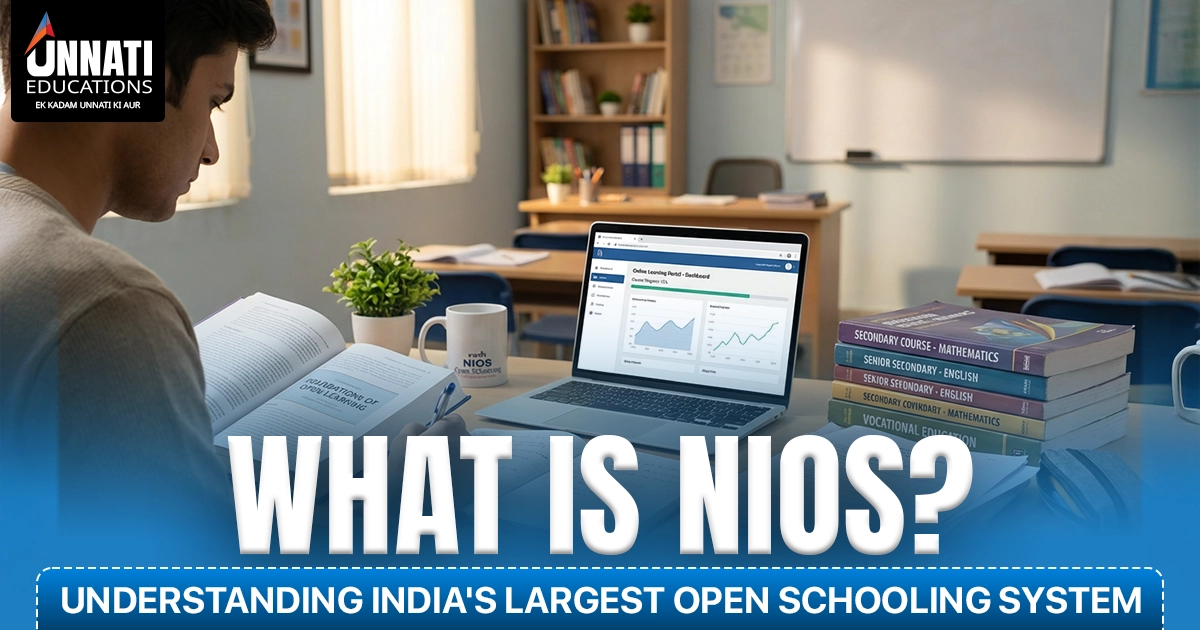
What is NIOS? Understanding India's Largest Open Schooling System
1. What is the Full Form of NIOS?
The official full form of NIOS is the National Institute of Open Schooling.
- Formerly Known As: National Open School (NOS).
- Authority: It is an autonomous institution under the Ministry of Education, Govt. of India.
- Global Standing: According to its official profile, NIOS is the "Largest Open Schooling System in the World."
Why is this important? Many students worry about validity. Since NIOS is established by the Government of India (Ministry of Education), its certificates are recognised everywhere—for IIT JEE, NEET, Government Jobs (UPSC, SSC), and further studies abroad.
NIOS Full Form (English & Hindi)
- NIOS Full Form in English: 👉 National Institute of Open Schooling
- NIOS Full Form in Hindi: 👉 राष्ट्रीय मुक्त विद्यालयी शिक्षा संस्थान
Quick Facts About NIOS
- Established: Started as a project in 1979; became NOS in November 1989
- Renamed: Changed to NIOS in July 2002
- Certification: ISO 9001:2015 Certified
- Headquarters: A-24/25, Institutional Area, Sector-62, Noida-201309
- Contact: 1800-180-9393 (Toll-Free)
- Website: www.nios.ac.in
- Total Enrollment: Over 1.4 million learners (2018-2020)
Is NIOS a Government Board?
Yes — 100% Government recognised.
NIOS:
- Operates under the Ministry of Education (MoE), Govt. of India
- Is recognised by UGC, AIU
- Is treated at par with CBSE, ICSE and State Boards for education and employment
NIOS certificates are valid for:
- Government jobs
- Private jobs
- Higher education
- Competitive exams (subject to eligibility rules)
What Does NIOS Do? Complete Overview
The National Institute of Open Schooling provides opportunities to interested learners through the following programs:
1. Open Basic Education (OBE) Programme
- Target: 14+ years age group, adolescents, and adults
- Levels: A, B, and C
- Equivalent: Classes III, V, and VIII of the formal school system
- Recent Enrollment (Feb 2020): 14,990 certified learners
2. Secondary Education Course (Class X)
- Total Subjects: Multiple options, including:
- Core: English, Hindi, Mathematics, Science, Social Science
- Additional: Painting, Economics, Home Science, Business Studies
- Enrollment (2020): Over 120,000 learners
- Examination: Twice yearly (April and October)
- Pass Rate: Consistently improving certification rates
3. Senior Secondary Education Course (Class XII)
- Total Subjects: 28 subjects across 8 mediums
- Popular Subjects:
- English (198,816 enrollments)
- Hindi (112,326 enrollments)
- Physics (72,665 enrollments)
- Chemistry (70,069 enrollments)
- Mathematics (50,973 enrollments)
- Biology (35,899 enrollments)
- Streams Available:
- Science (PCM/PCB)
- Commerce
- Arts/Humanities
- Vocational Stream
4. Vocational Education Courses/Programmes
- Certificate Courses: Short-term skill development
- Diploma Courses: Advanced vocational training
- Stand-alone Certificate Courses: Specialised skills
- Integrated Academic & Vocational: Sec/Sr. Sec with vocational component
- Vocational Stream: Complete vocational pathway
Popular Vocational Areas:
- Agriculture, Business, and Commerce
- Engineering and Technology
- Health and Paramedical
- Home Science and Hospitality Management
- Teacher Training
- Computer and IT
- Life Enrichment Programmes
- Life Skills Programme
3-Year Vocational Enrollment: 57,671 learners
- Female: 34,054
- Male: 23,617
5. Life Enrichment Programmes
- Skill-based courses for personal development
- Community engagement programs
- Lifelong learning opportunities
6. Teacher Education Programmes
- D.El.Ed: Diploma in Elementary Education
- Early Childhood Care and Education
- Yoga Teacher's Training
- Professional development for educators
How Does NIOS Function? Complete System Explained
NIOS Operating Structure
NIOS operates through a comprehensive network: 5 Major Departments:
- Academic Department
- Vocational Education Department
- Evaluation Department
- Administration Department
- Student Support Services Department
23 Regional Centres, including:
- Allahabad, Amethi, Bengaluru, Bhopal
- Bhubaneswar, Chandigarh, Chennai, Darbhanga
- Dehradun, Delhi, Dharamshala, Gandhinagar
- Gangtok, Guwahati, Hyderabad, Jaipur
- Jammu, Kochi, Kolkata, Kota
- Patna, Pune, Ranchi, Raipur
- Vishakhapatnam
4 Sub-Regional Centres:
- Darbhanga, Kota, Shillong, Port Blair
Total Study Centres: 7,400+
- 4,469 Accredited Institutes
- 1,782 Accredited Vocational Institutes
- 1,482 Accredited Agencies
- 187 Jail Study Centres
International Presence
NIOS Study Centres Abroad:
| Country | Accredited Institutes | Vocational Institutes | OBE Centers |
|---|---|---|---|
| UAE | 12 | 3 | - |
| Kuwait | 4 | - | 1 |
| Muscat | 2 | - | - |
| Nepal | 3 | 1 | - |
| Qatar | 2 | - | - |
| Saudi Arabia | 1 | - | - |
NIOS Admission Process: Complete Step-by-Step Guide
Eligibility Criteria
For Secondary (Class X):
- Minimum age: 14 years (as on 31st December of admission year)
- No upper age limit
- Can be a school dropout or a fresh learner
For Senior Secondary (Class XII):
- Should have passed Class X or equivalent
- No upper age limit
- Credit transfer facility available
How to Apply for NIOS Admission
Step 1: Online Registration
- Visit the official website: www.nios.ac.in
- Click on the "Admission" section
- Select your programme (Secondary/Sr Secondary/Vocational)
Step 2: Fill Application Form
- Provide personal details
- Select subjects (minimum 5 for academic programmes)
- Choose your nearest study centre
Step 3: Document Upload
- Recent photograph
- Age proof (Birth certificate/Transfer certificate)
- Previous qualification certificates
- ID proof (Aadhaar/PAN/Voter ID)
Step 4: Fee Payment
- Online payment through debit/credit card, net banking
- Fee varies by programme and subjects
- Keep the transaction receipt safe
Step 5: Submit & Get Enrollment Number
- Submit the completed form
- Download the acknowledgement receipt
- Note your enrollment number for future reference
Important Admission Dates
Admission Windows (Generally):
- April-June: For the October examination
- October-December: For the April examination
Examination Schedule:
- April/May Session: Theory exams
- October/November Session: Theory exams
- On-Demand Examination: Available throughout the year (select subjects)
2. Decoding Your Mark Sheet: NIOS Result Abbreviations (SYC, SYCT, etc.)
If you have checked your result on the official website (results.nios.ac.in) and see these codes, do not panic. Here is the official "Result Key" to understand what to do next.
| Abbreviation | Full Form | Meaning & Solution |
|---|---|---|
| SYC | Subject Yet to be Cleared | Failed. You have not secured the minimum passing marks in the subject (Total). You must pay the exam fee and reappear for this subject. |
| SYCT | Subject Yet to be Cleared in Theory | Theory Failed. You passed the practical (if applicable) and TMA, but failed the written theory exam. You need to retake the theory exam. |
| SYCP | Subject Yet to be Cleared in Practical | Practical Failed. You passed the theory but failed the practical. You must reappear for the practical exam. |
| TOC | Transfer of Credit | Marks from your previous board (CBSE/ICSE/State) have been officially transferred to NIOS. You do not need to retake these exams. |
| AB | Absent | You were marked absent. If you were present, contact your Regional Centre immediately with proof of attendance. |
| RL | Result Later | Your result is on hold (usually due to delays in checking or administrative checks). Wait for 10-15 days. |
| RW | Result Withheld | Result stopped due to a specific reason (documents missing or unfair means). Contact the regional centre. |
| XXXX | Incomplete/Failed | You have not passed the course yet. |
| IMP | Improvement | You appeared for an exam to improve your score (passed previously). |
Pro Tip: If you see SYC or SYCT, you don't have to wait a whole year. You can apply for On-Demand Exams (ODES) to clear that single subject immediately. Need help applying for On-Demand? Contact Unnati Educations for instant seat booking.
3. How to Check Your NIOS Result (Step-by-Step)
(Based on the result window interface)
- Visit the Official Portal: results.nios.ac.in.
- Enter Enrollment Number: Type your 12-digit roll number (e.g., 270...).
- Enter Captcha: Type the security code exactly as shown in the image.
- Click Submit: Your mark sheet will appear on the screen.
- Download: Save the PDF for future reference.
4. Important NIOS Terminology (Official Prospectus)
To survive and score high in NIOS, you must know these three terms found in the 2025 Prospectus:
A. TMA (Tutor Marked Assignment)
- What it is: These are "home assignments" worth 20% of your theory marks.
- Why it matters: If you skip TMA, you lose easy marks, making it harder to pass the theory exam.
- Action: Download questions from the dashboard, solve them, and upload the PDF online before the deadline.
B. PCP (Personal Contact Programme)
- What it is: These are practical/theory classes held at your AI (Study Centre) on weekends/holidays.
- Why it matters: For subjects with Practicals (like Physics, Chemistry, Data Entry, Painting), attending PCP is mandatory (usually 50% attendance is required) to get your Formative Assessment marks.
C. ODES (On-Demand Examination System)
- What it is: A unique facility by NIOS where you choose the exam date.
- Who is it for? Students who failed in other boards or want to clear NIOS subjects quickly without waiting for the Public Exam (April/October).
NIOS Key Features: Why Choose NIOS?
1. Flexibility & Accessibility
24x7 Admission: Enrol anytime during the admission window No Upper Age Limit: Education for all age groups Registration Valid for 5 Years: Complete at your own pace Study at Your Own Place and Time: Home-based learning
2. Academic Benefits
Choose a Study Centre Near Your Place: Convenience Choose Any Subject: Mix and match subjects Transfer of Credits from Other Boards: Seamless transition Credit Accumulation: Build credits over time Free Self Learning Material (SLM): Comprehensive study materials
3. Examination Benefits
Public Examinations Twice a Year: April and October On-Demand Examinations Round the Year: For select subjects Examination as Per Choice: Flexible scheduling Take Examination in Any Scheduled Language: Multiple language options
4. Support & Services
Face-to-Face Contact Sessions at Study Centres: Personal guidance Massive Open Online Courses (MOOCs): Digital learning Multi-Media Support for Learning: Video, audio, interactive content Special Provisions for Learners with Special Needs: Inclusive Education
5. Recognition & Equivalence
Recognised Certificates: Equivalent to CBSE/State Boards Integration of Academic and Vocational Subjects: Holistic development Sec. and Sr. Sec. for ITI Learners: Skill + Academics
6. Additional Support
Virtual Open School (Live Interactive Classes): Launched August 2021 Development of Educational Content in Indian Sign Language: Accessibility DAISY-Enabled Talking Books: For visually challenged learners ICT-Enabled Professional Development: Teacher Training
5. Why Choose NIOS? (Vision & Mission)
According to the Official 2022-2025 Profile, NIOS is designed for:
- Freedom: "Freedom to learn at your own pace."
- Flexibility: You can choose subjects from different streams (e.g., History with Physics).
- Validity: Certificates are valid for 5 years for admission.
Subscribe to our YouTube Channel: Unnati Educations for daily updates.
6. Benefits of Choosing NIOS: Complete Advantages
For School Dropouts
Second Chance Education: Continue from where you left off No Stigma: Respected certification Credit Transfer: Previous education counts Flexible Pace: Complete at your speed
For Working Professionals
Study While Working: No need to quit the job Weekend Classes: Convenient scheduling Home-Based Learning: Save commute time Career Advancement: Higher qualification while earning
For Homemakers
Learn from Home: No need to travel Family-Friendly Schedule: Balance home and study Self-Paced Learning: Manage as per home commitments Empowerment: Complete pending education
For Differently-Abled Learners
Special Provisions: Accommodations in the examination Accessible Materials: DAISY books, Sign language content Supportive Environment: Inclusive study centres Extended Time: Extra time in examinations if needed
For Rural & Remote Learners
Study Centres in Villages: Local accessibility Regional Language Support: Learn in the mother tongue Low Cost: Affordable education Community Radio: Local content delivery
For Sports Persons & Artists
Flexible Examination: Choose your dates Practice-Friendly: Study during the off-season 5-Year Validity: Complete alongside career No Attendance Pressure: Focus on training
NIOS vs Regular Board: Comparison
| Feature | NIOS | Regular Board (CBSE/State) |
|---|---|---|
| Age Limit | No upper age limit | Typically 14-18 years |
| Attendance | No compulsory attendance | 75% attendance mandatory |
| Admission | Year-round (admission windows) | Once a year |
| Subject Choice | Mix any subjects | Stream-based (Science/Commerce/Arts) |
| Credit Transfer | Allowed from other boards | Limited/Not available |
| Examination | Twice yearly + On-demand | Once a year |
| Validity | 5 years to complete | Must complete in 1-2 years |
| Study Mode | Self-learning + Contact classes | Daily school classes |
| Fee Structure | Lower (₹500-3000 approx) | Higher (₹5000-15000) |
| Recognition | Equivalent to CBSE/State Boards | Standard recognition |
| Flexibility | Maximum | Minimum |
| Best For | Working people, dropouts, adults | Regular school-going children |
NIOS Fee Structure (Approximate)
Academic Programmes
Secondary (Class X):
- Registration Fee: ₹100
- Subject Fee: ₹120-150 per subject
- Exam Fee: ₹120 per subject
- Practical Fee (if applicable): ₹120 per subject
- Total Approximate: ₹1,500 - ₹2,500 (for 5 subjects)
Senior Secondary (Class XII):
- Registration Fee: ₹200
- Subject
🚀 Still Confused? Get Expert Help! Don't let technical terms like SYC or TOC ruin your year. Whether you need admission in the October 2025 Session, want to book an On-Demand Exam, or need solved TMA & Practical Files, we are here to help. Unnati Educations is your trusted partner for:
- Guaranteed Admission Assistance (Stream 1 & Stream 2).
- Solved TMAs & Practical Files (Upload & Submit).
- On-Demand Exam Booking.
- Result Correction Guidance.
📞 Contact Unnati Educations Today! ( WhatsApp / 9899436384 )
FAQ: Quick Answers
- Q: What is the full form of NIOS Board? o A: National Institute of Open Schooling.
- Q: What does SYC mean in the NIOS result? o A: It means "Subject Yet to be Cleared" (You failed that subject).
- Q: Is NIOS valid for Government Jobs? o A: Yes, absolutely. It is a central government board under the Ministry of Education.
- Is NIOS better than CBSE? NIOS is not “better” or “worse” — it is more flexible than CBSE.
- Who should choose NIOS?
- School dropouts
- Working students
- Sports persons
- Students who failed exams
- Learners needing flexibility
- What is the full form of NIOS board? NIOS Board = National Institute of Open Schooling Board.
Final Word: Should You Take NIOS Admission?
NIOS is ideal for students who value flexibility over rigid schooling, without compromising recognition or validity. However, subject selection, TOC eligibility, and exam planning are critical — wrong choices can delay results. 📞 Need Help with NIOS Admission? If you are confused about:
- NIOS admission process
- Subject selection
- TOC eligibility
- TMA & exam strategy
👉 Unnati Education can guide you step-by-step with accurate, official-based counselling to help you make the right decision before applying.