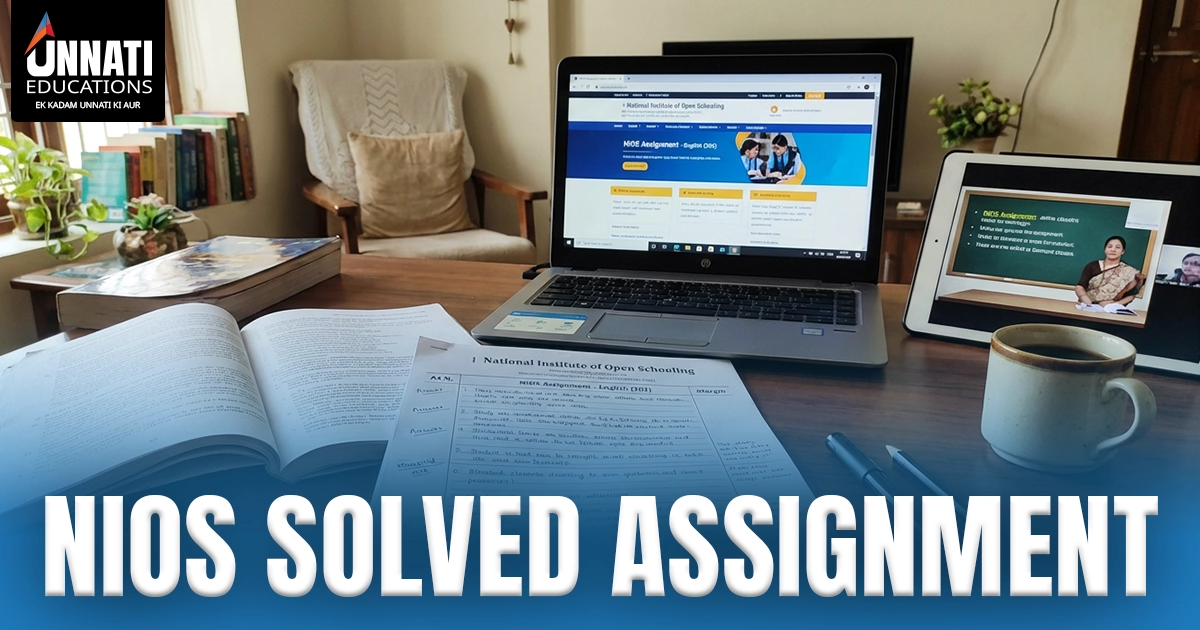
What NIOS solved assignment matter
The primary keyword must appear in H2 (as required). The total mark for many subjects in NIOS is 30%. Teachers can use them to evaluate the clarity of your conceptual understanding and writing. Each question is meant to measure how you express and interpret ideas. The assignment questions often require neat formatting, structured responses, real-life scenarios, and structured examples. Assigning work forces you to think more clearly and comprehend the topic rather than memorizing it all at the end. Assignments are a great way for students to keep up with their syllabus while juggling home responsibilities, work and personal obligations. Solved assignments can help you learn how to do the right thing. These solved assignments show you how to structure your answers and provide clarity about the writing styles accepted by NIOS.Understanding the NIOS Solved Assignment requirements
TMA is a Tutor Marked assignment. Each learner is required to submit TMAs prior to the examination cycle. The assignments must be original and handwritten. They are based on the current NIOS curriculum. These assignments must be handed in at the study center before the due date. You must adhere to the following:- Proper cover page format
- Full question numbering
- Clean handwriting
- Answers in Steps
- Brief explanations
- Logical flow
- Copying is not allowed on the Internet.
The Most Common Problems Students Face
There are many learners who face similar difficulties.- Answers that are not clear
- Confusing answers about short and long responses
- With difficulty explaining concepts using their own words
- Other responsibilities can cause time pressure.
- The fear of incomplete or incorrect solutions
NIOS 10th assignment Needs
The basic structure is often a problem for students preparing solutions to NIOS Class 10 assignments. The class 10 assignments form the foundation. These assignments test basic understanding, reasoning skills, short explanations, and simple examples. Students in Class 10 need additional support:- Simple Answers
- Breaking up long questions into smaller pieces
- Use everyday examples
- Writing style NIOS
NIOS 12th assignment Needs
The Class 12 problems require more detailed explanations. These include diagrams, explanations, logic, and sometimes even practical knowledge. Many students in the Senior Secondary need assistance with:- Longer answers
- The structure of paragraphs
- Theory and practice: a link between the two
- Subject weighting
What makes a good assignment answer?
The following are some of the most important elements of a strong NIOS answer:1. Clarity
Direct explanations and simple sentences.2. Structure
Intro - Explanation - Examples - Conclusion.3. Handwriting
Pages that are readable and clean create a good impression.4. Grammar
Understanding is affected by basic grammar.5. Presenting
The readability of your document is improved by using neat margins, headers and spacing. It's not just about long, wordy pages. You'll need to explain what you know.NIOS Assignment Syllabus Summary
Each subject's assignment syllabus is based on the NIOS credits system. The assignment questions are grouped by chapter, with key concepts and skills combined. Structure balances questions based on reasoning, explanation, or application. This design helps students review essential topics and think logically. It also encourages them to connect concepts across chapters. Assigning assignments to students helps them cover the syllabus in a gradual manner, improving their final exam preparation.Types of TMAs that NIOS offers
1. Theoretical-based TMA
They ask for short explanations or notes.2. Application-based TMAs
They require small case studies and real-time scenarios.3. The TMA can be represented as a diagram
Certain subjects need diagrams and graphical representations.4. The TMA based on analysis
Students in Class 12 may be asked to use deeper reasoning when studying economics, political science or other subjects.What We do to Guide Students from 0 to 100 in their Assignments
Support for NIOS TMAs is structured:- Understanding question types and how to help students better understand them
- Answering questions in a structured way
- How to Break Long Answers into Smaller Parts
- Subject-wise directions
- Study plans
- Writing methods assistance
- Correcting mistakes and improving answers
The most common mistakes students make in TMA
The students often make the same mistakes, which can lead to low marks on assignments.- Write too much or not enough.
- Copying others' work
- Leaving diagrams incomplete
- Not writing question numbers.
- Ignoring word limits
- Use shortcuts rather than explanations
Step-by-Step NIOS Assignment Preparation Guide
Here are some steps to help you confidently prepare TMAs:Step 1: Read the question properly
Understanding the questions asked is important.Step 2: Create a rough outline
Prepare your introduction, explanation and examples.Step 3: Write simple answers
Use short, clear sentences.Step 4: Use real examples
Examples improve clarity.Step 5: Re-examine the answer
Grammar and Structure CheckStep 6: Create a neat and fair copy
Writing that is clear and concise improves grades.Details Tips for Students in Class 10
- Use simple vocabulary
- Shorten your explanations
- Give short examples
- You can write in your own words
- Keep handwriting neat
- Be sure to number your answers correctly.
Detailed Tips for Class 12 Students
- Clear headings
- Answers with strong intros
- Real-world applications
- Diagrams are included when necessary.
- Bullet points are useful for answers that require a lot of space.
Why students prefer guidance for TMAs
Without guidance, assignments can be confusing. If guided properly:- Learn how to write better.
- Understand how to prepare for tests.
- You avoid mistakes
- Complete your submissions by the deadline.