NIOS Class 12 Physics 312 Practical Files (Handwritten & Solved for 2026)
NIOS Class 12 Physics 312 Practical Files handwritten and fully solved for the 2026 session, all 15 experiments with diagrams, readings and a 15-page sample.
NIOS Class 12 Physics 312 Practical Files (Handwritten & Solved for 2026)
NIOS Class 12 Physics 312 Practical Files are the written record of every experiment a learner performs in the laboratory, and they carry real weight in the final practical assessment.
This page shows you exactly what our handwritten file holds for the 2026 session, the full list of experiments inside it, and a fifteen-page sample so you can judge the quality for yourself before you decide anything.
What the NIOS Class 12 Physics 312 Practical Files Cover
The practical component of NIOS Physics (subject code 312) asks you to record a set of laboratory experiments in a proper file, then face an external examiner for the viva and the record marks. Those marks are yours to lose if the file is thin, messy, or copied word for word from a friend.
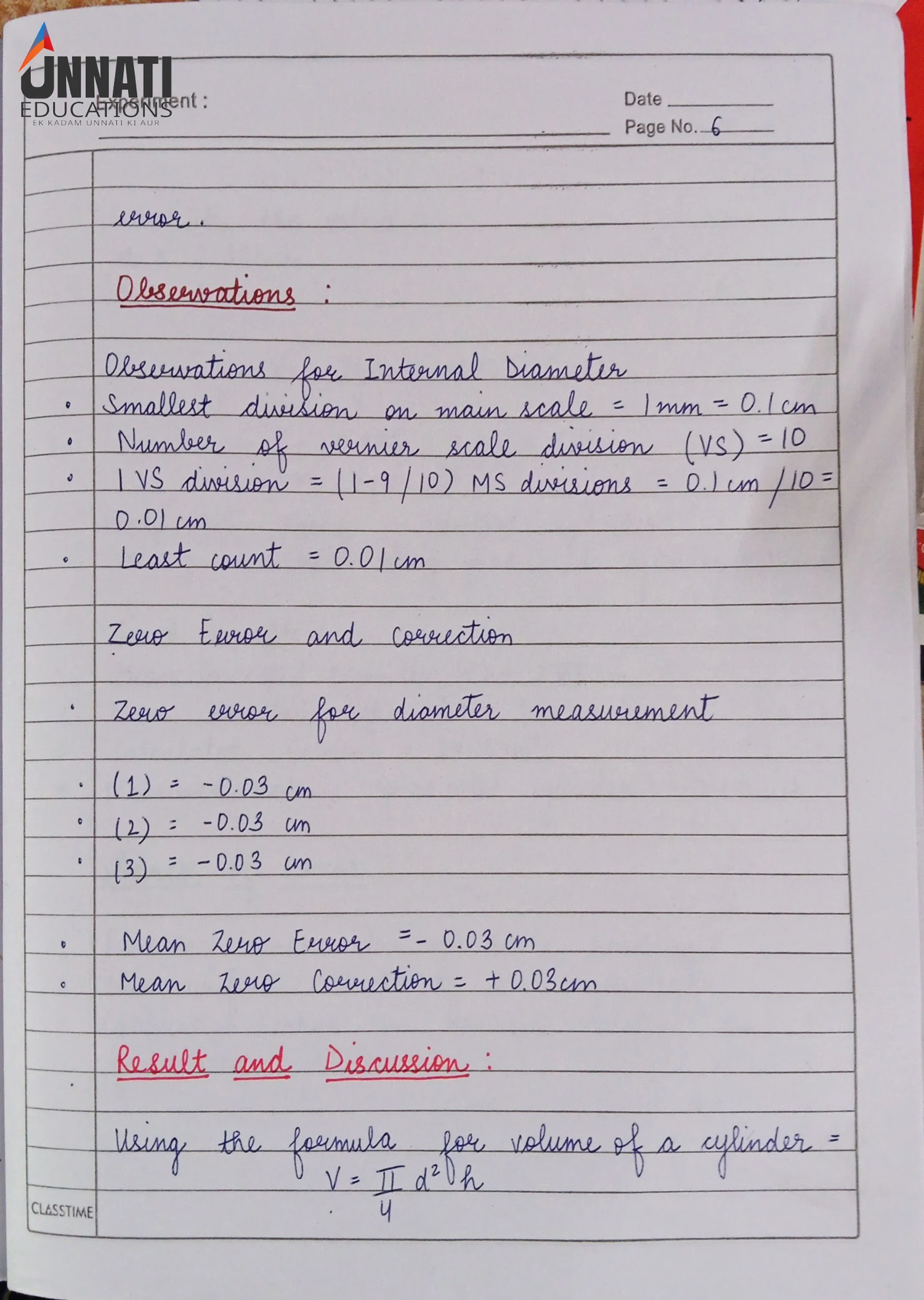
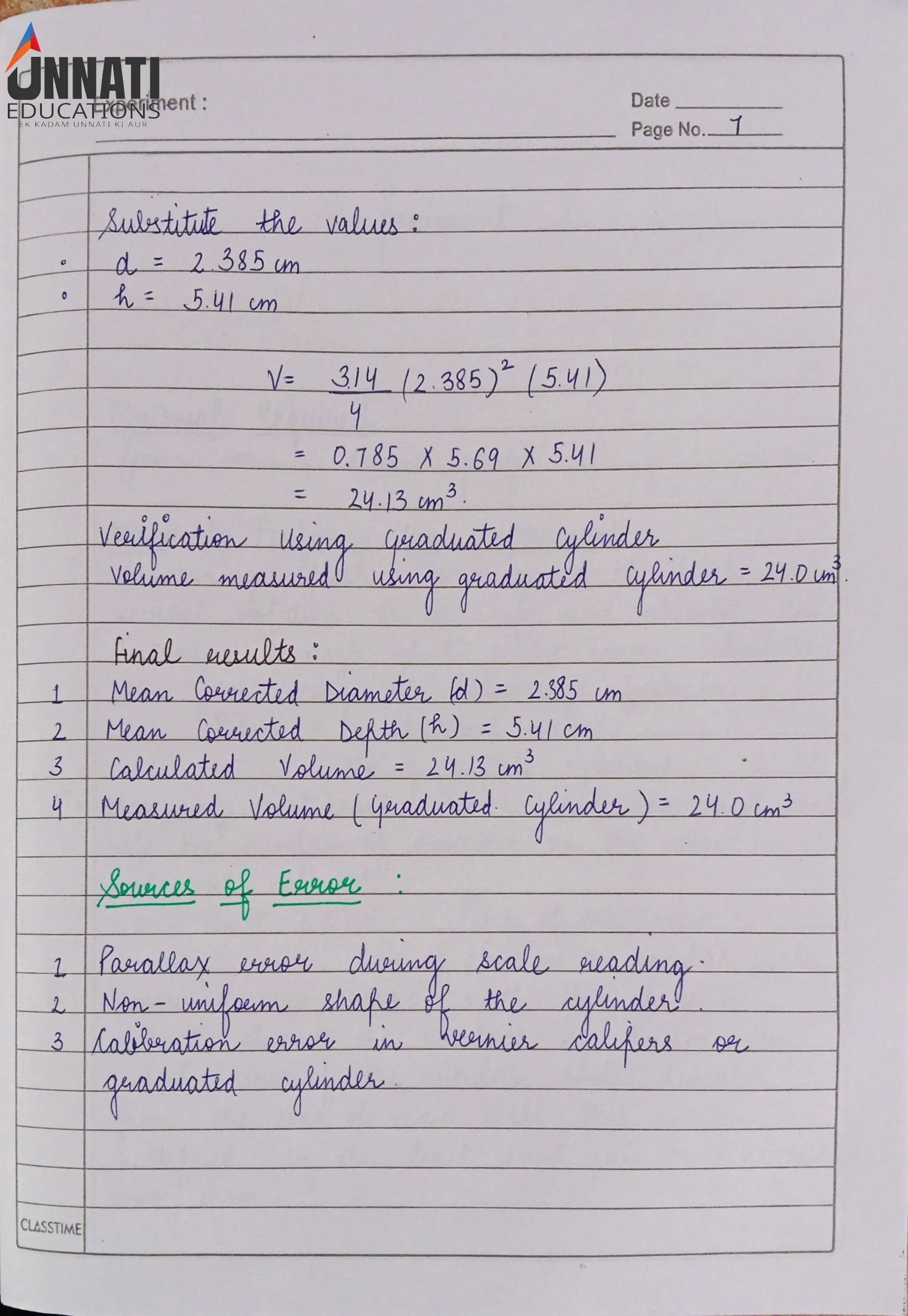
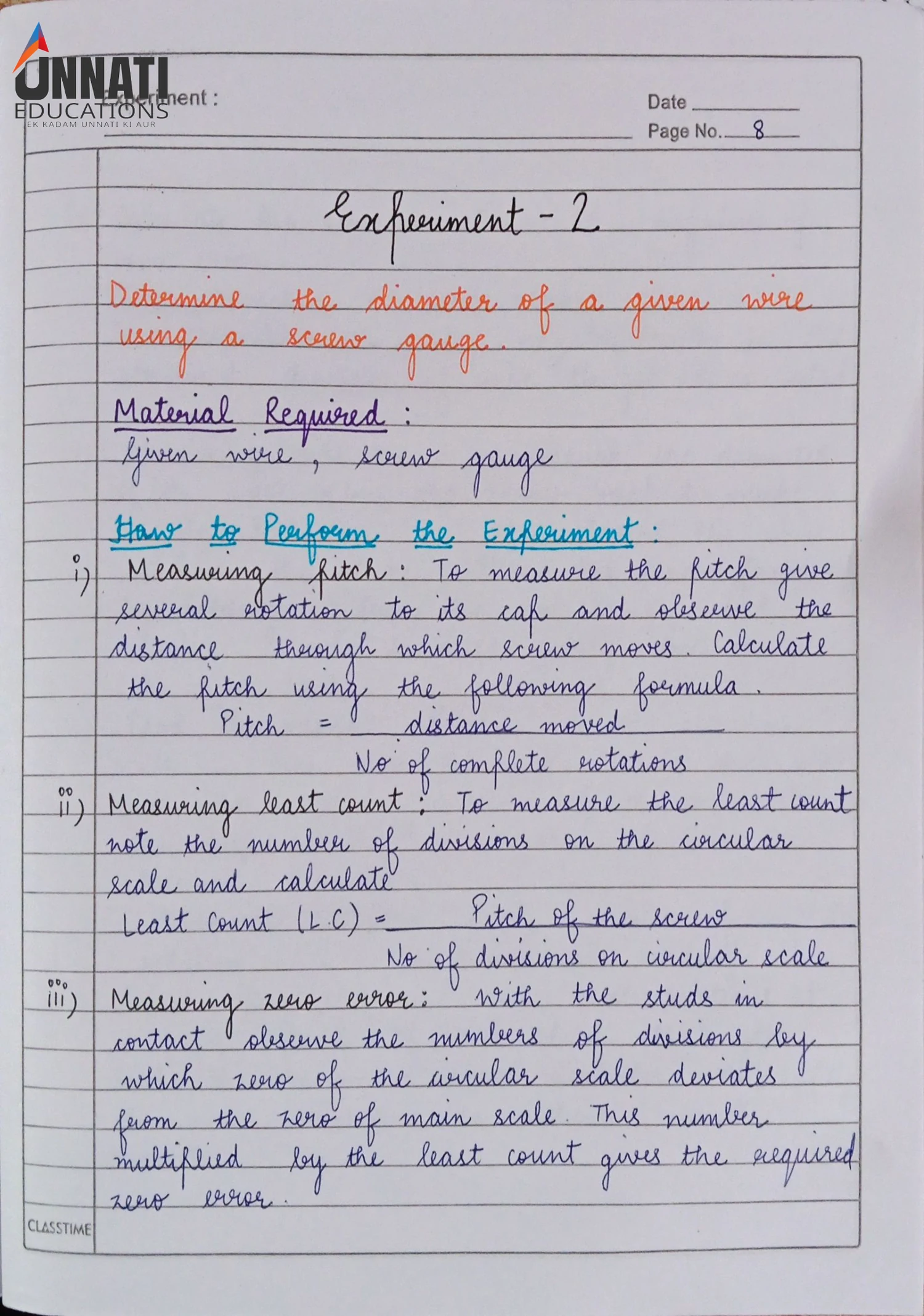
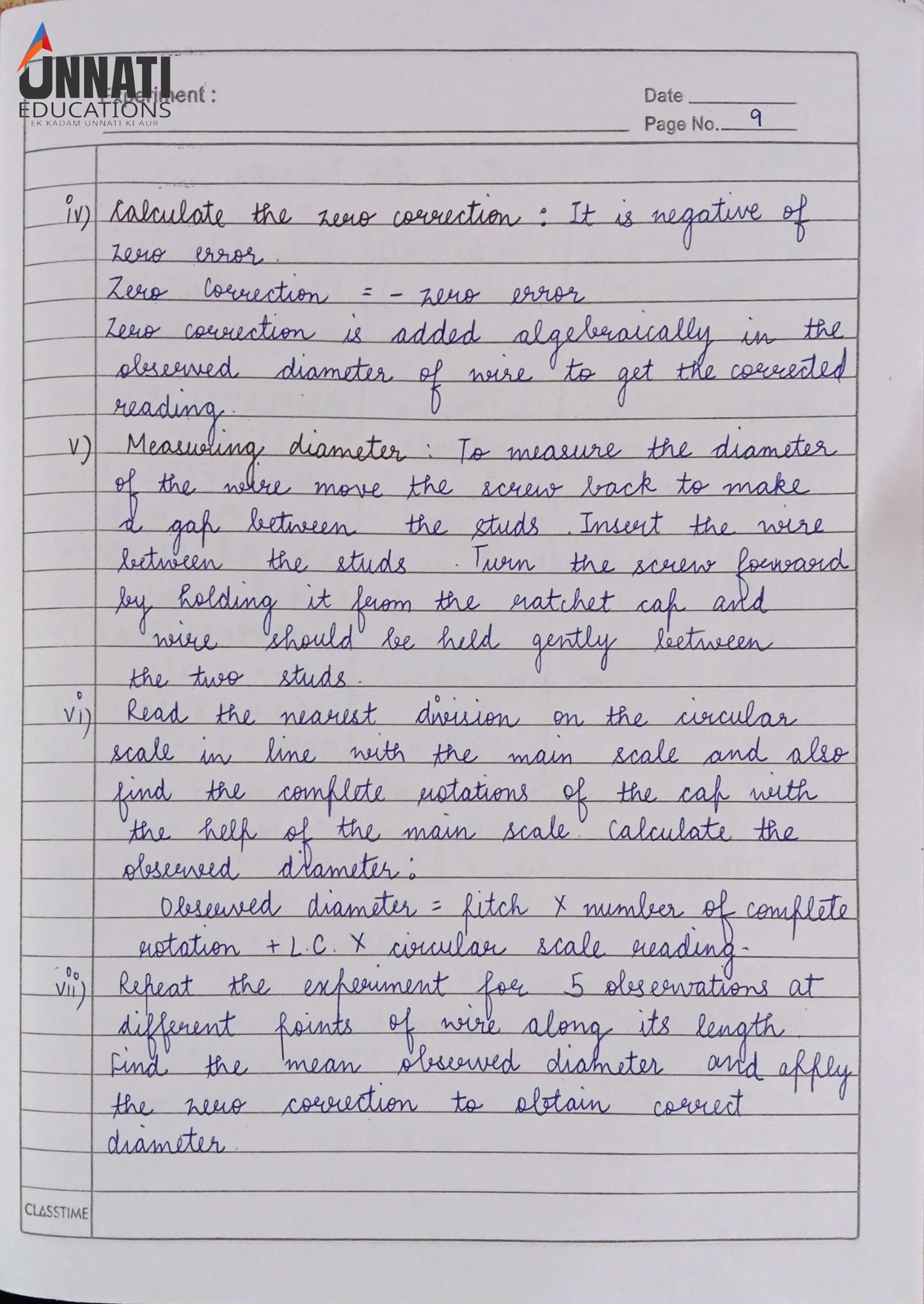
Our file covers all fifteen experiments that the 312 practical scheme expects you to perform, spread across measurement, mechanics, heat, oscillations, sound, optics, current electricity and semiconductors. Each write-up follows the format the examiner looks for: aim, materials required, a labelled diagram, the procedure, an observation table, the working, the result and the precautions.
Nothing here is a stock template. Every experiment carries its own instrument, its own set of readings and its own formula, which is exactly why the file reads like genuine bench work rather than a filled-in worksheet.
Physics 312 Practical File at a Glance
| Subject and code | Physics (312), NIOS Senior Secondary |
|---|---|
| Class | Class 12 (Senior Secondary) |
| Practical work in the file | 15 experiments, fully solved |
| Format | Handwritten record with diagrams, graphs and labelled figures |
| Session | Prepared for the 2026 practical exam |
| Medium | English (Hindi medium on request) |
| Delivery | Ready file shared and dispatched after you message us on WhatsApp |
See a 15-Page Sample of the Physics 312 Practical File
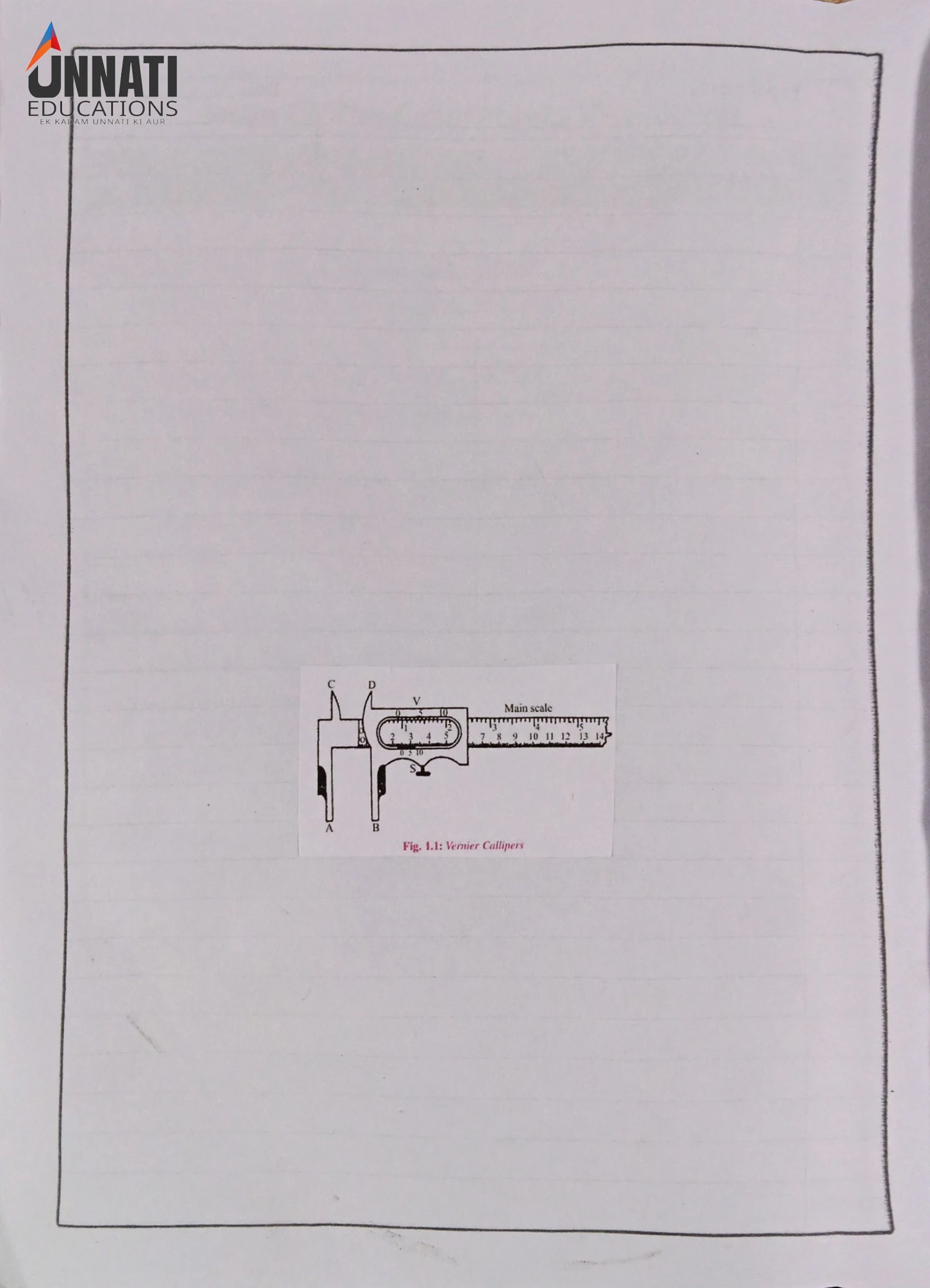
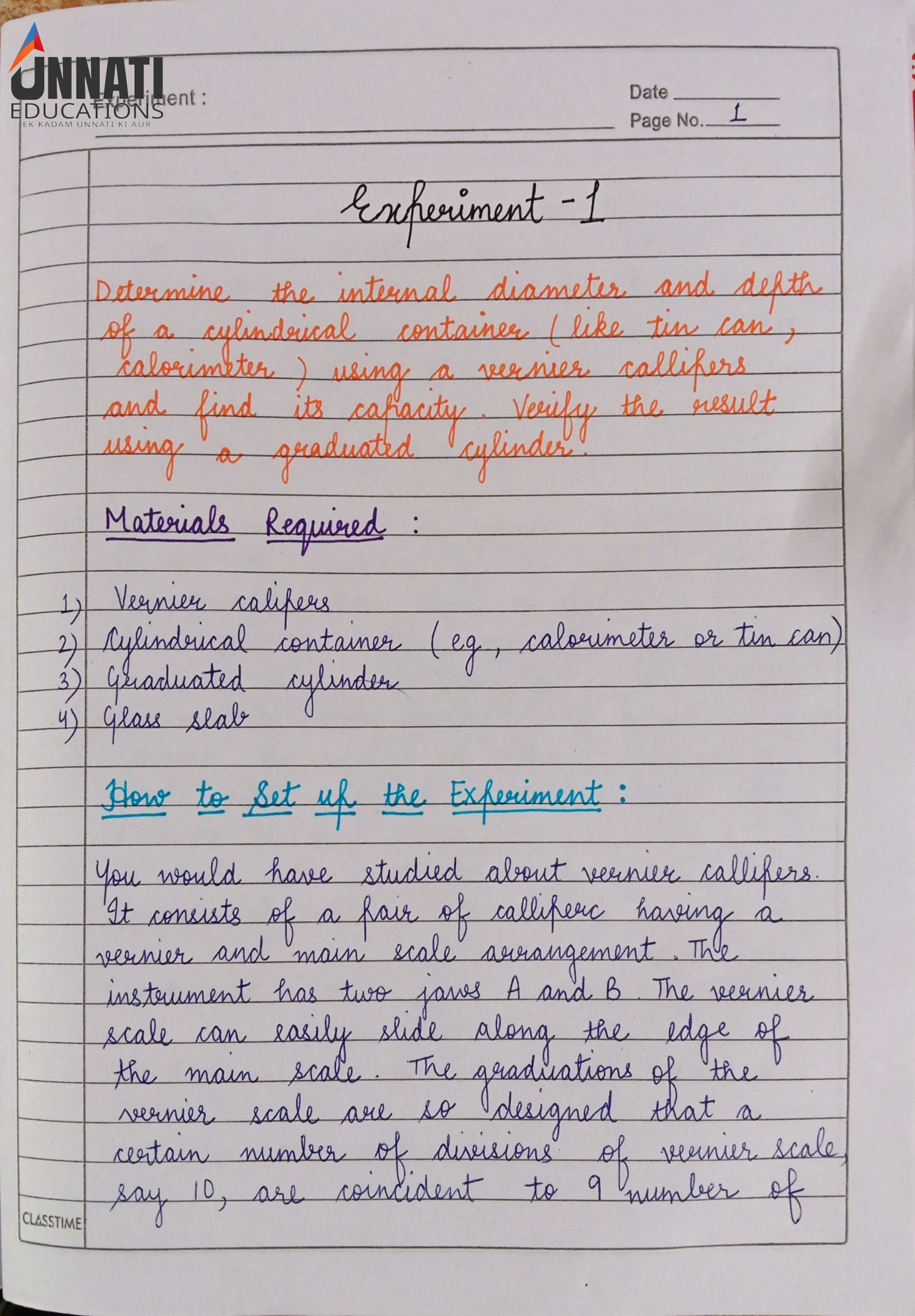
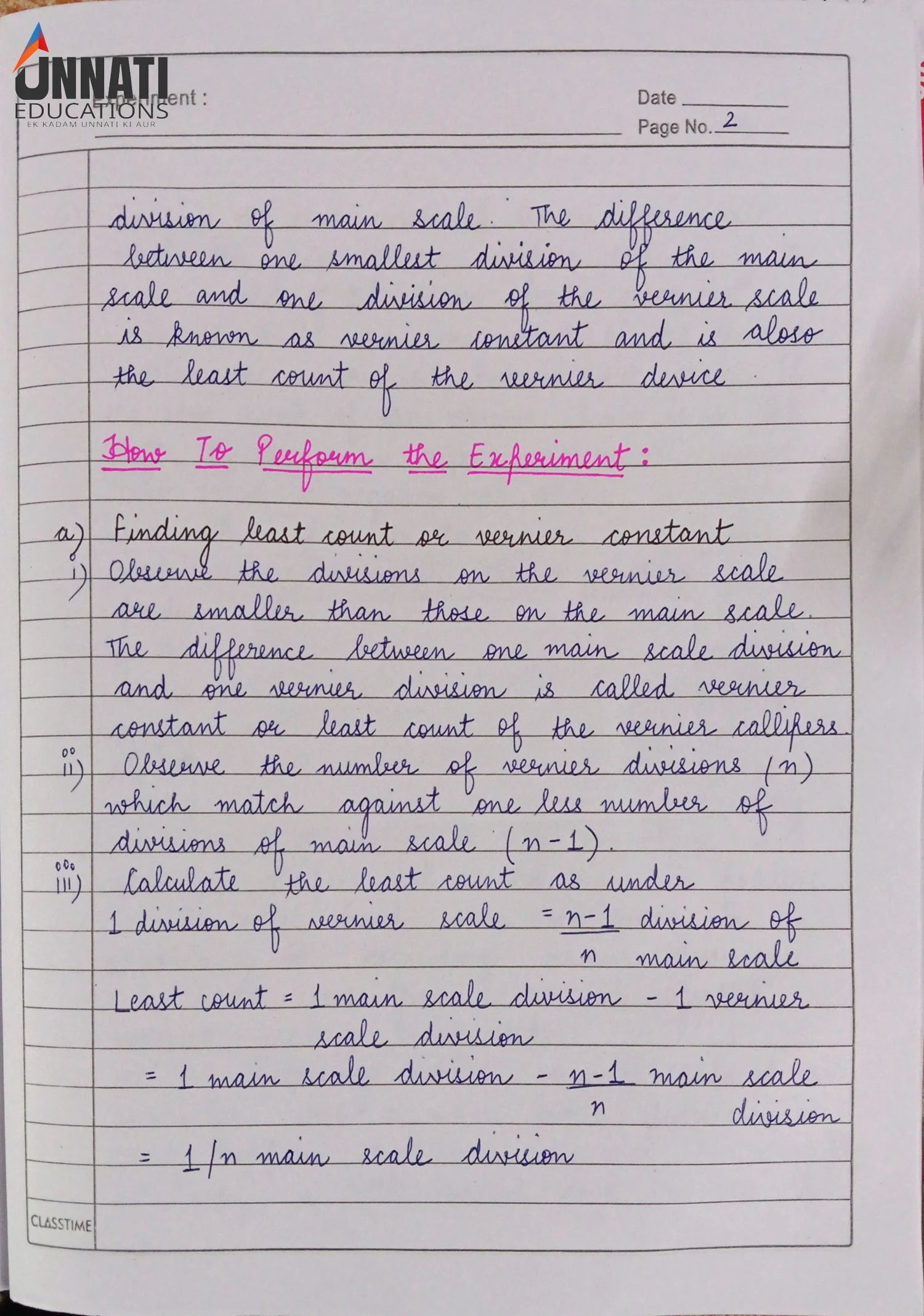
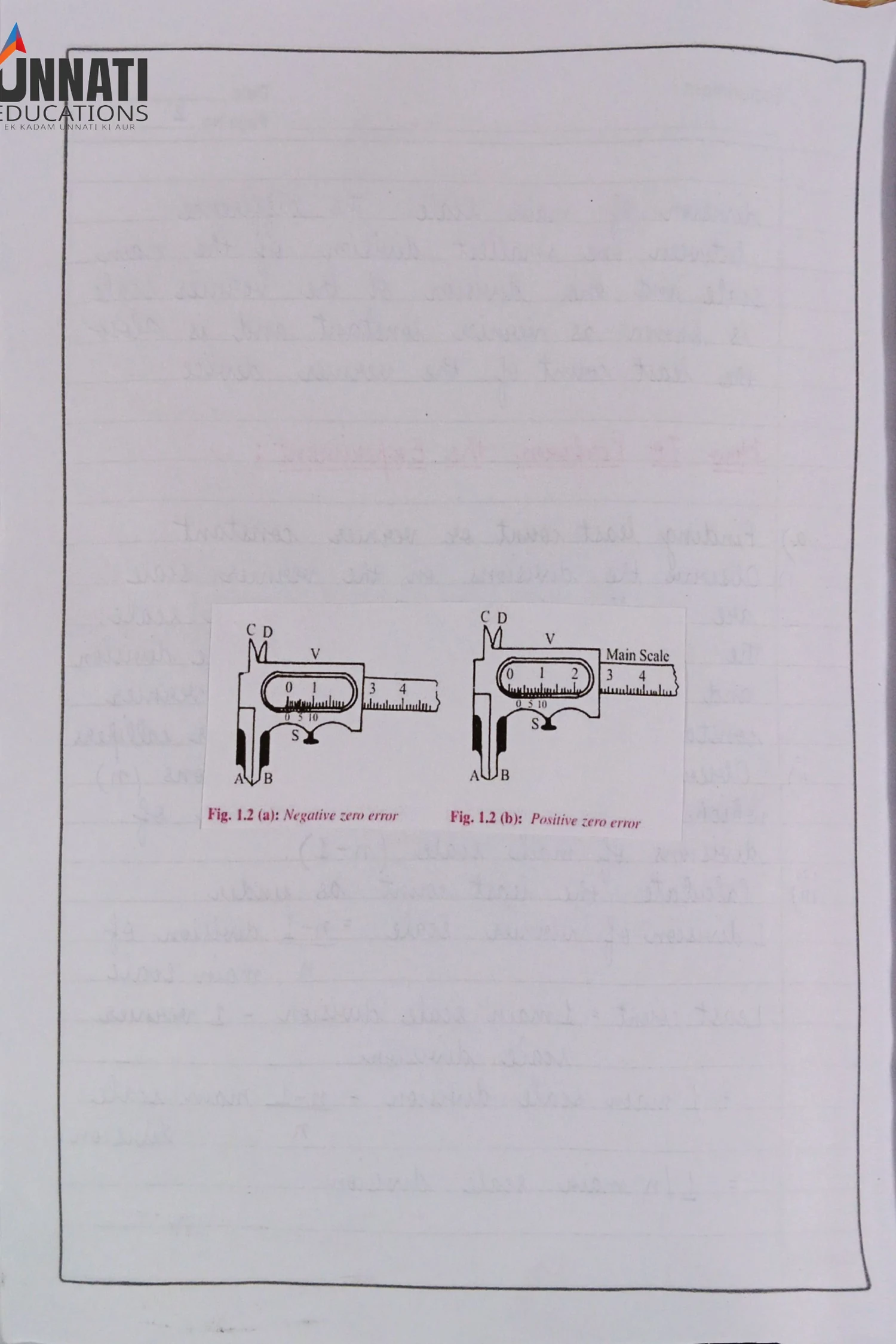
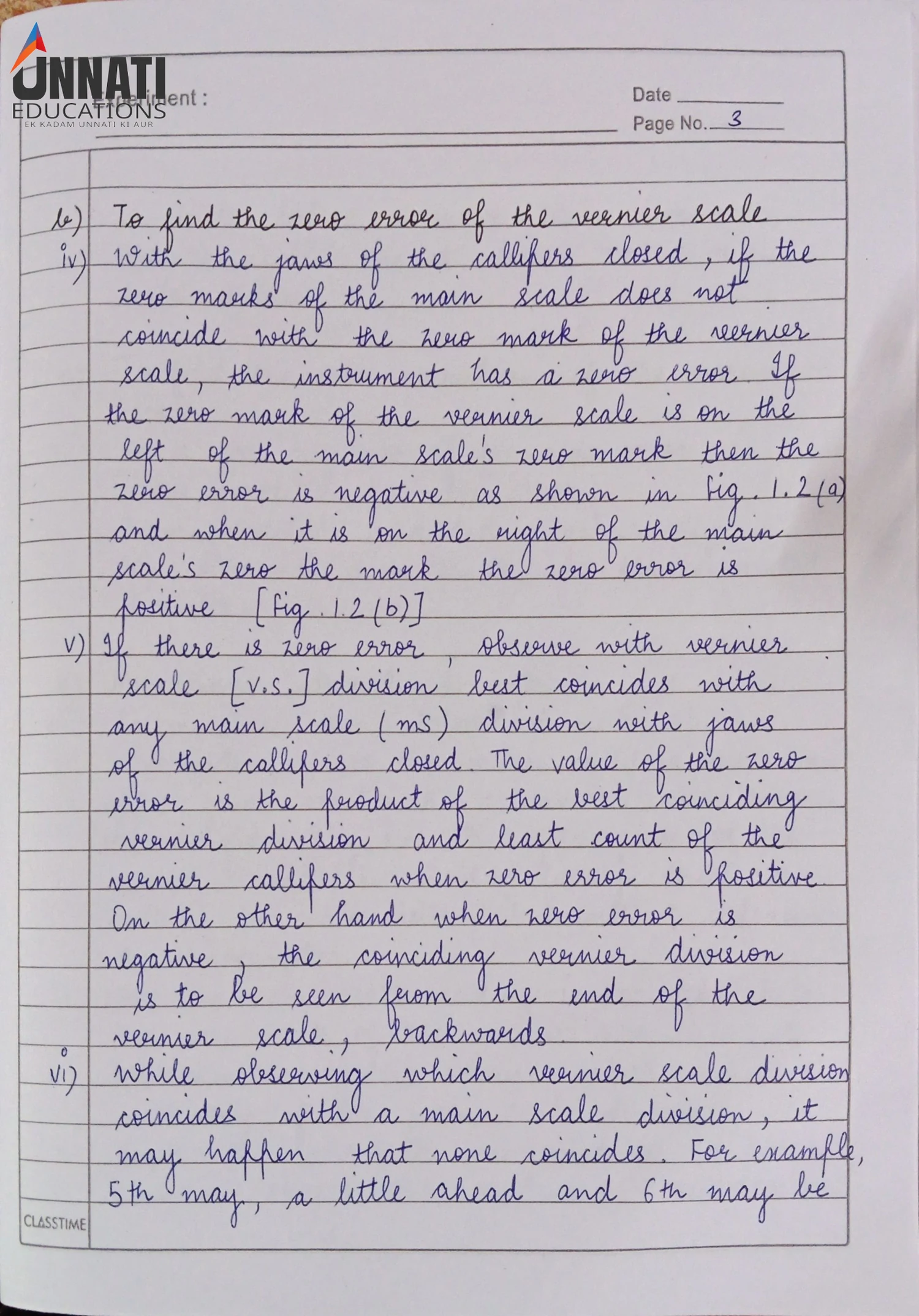
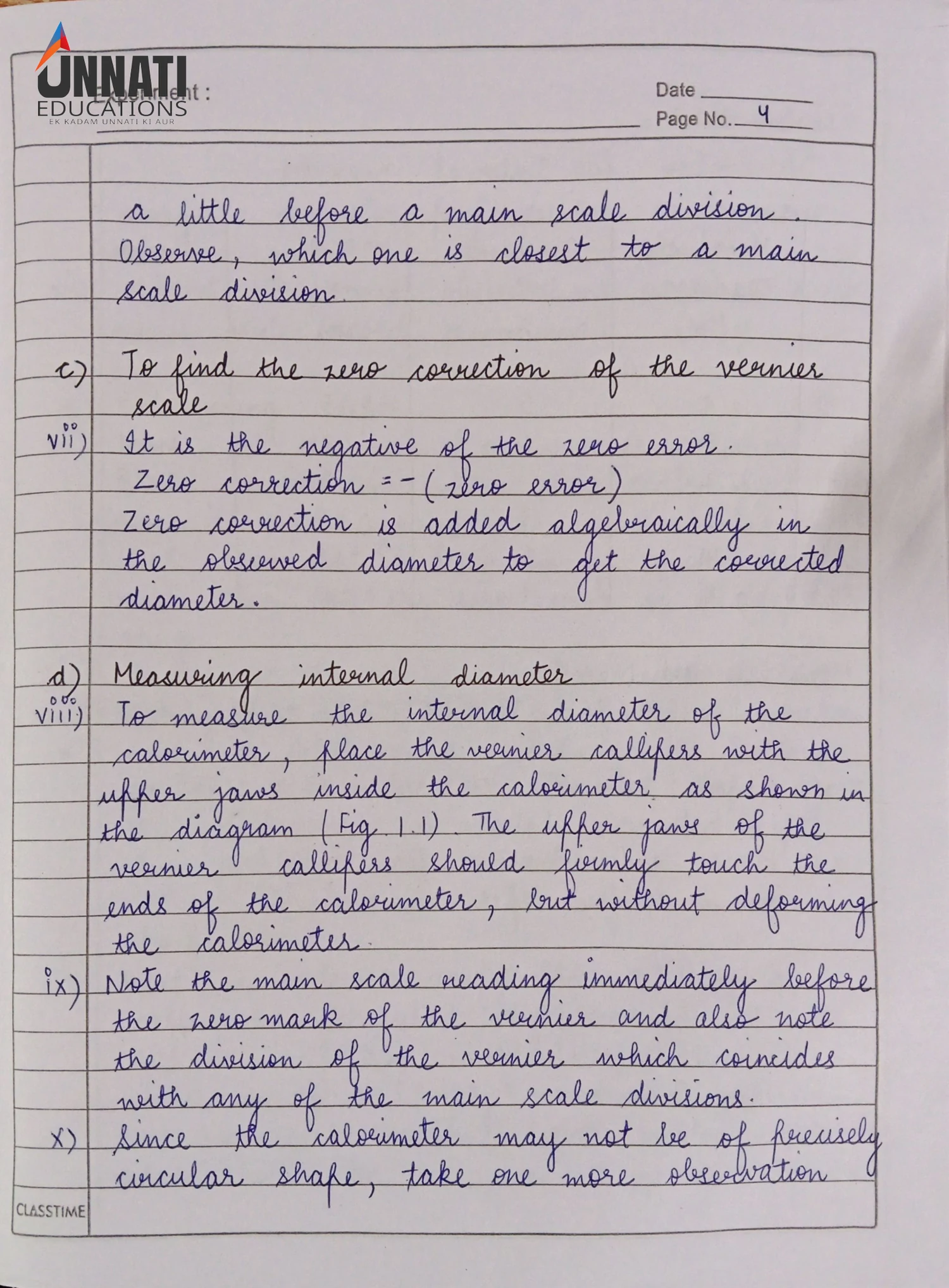
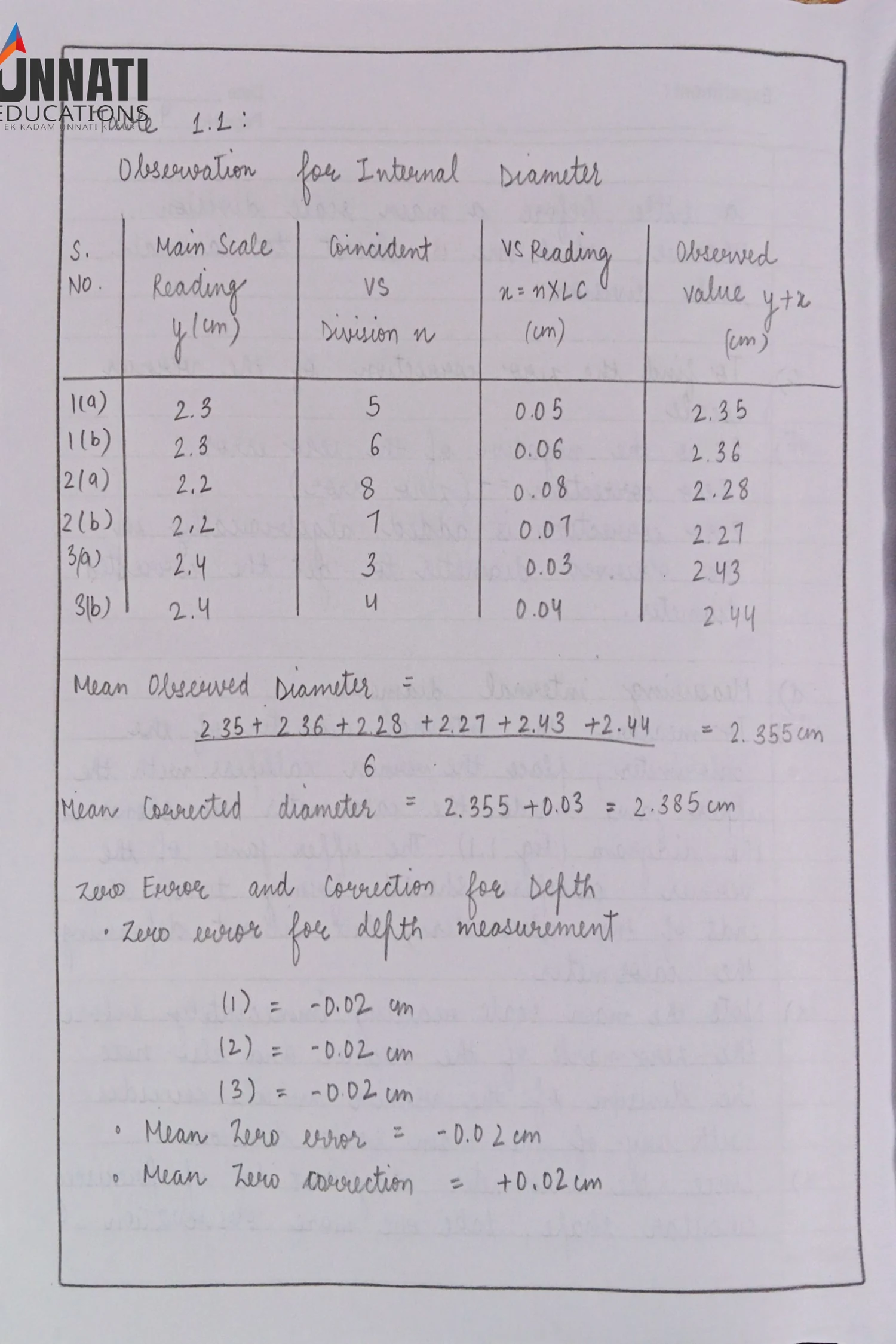
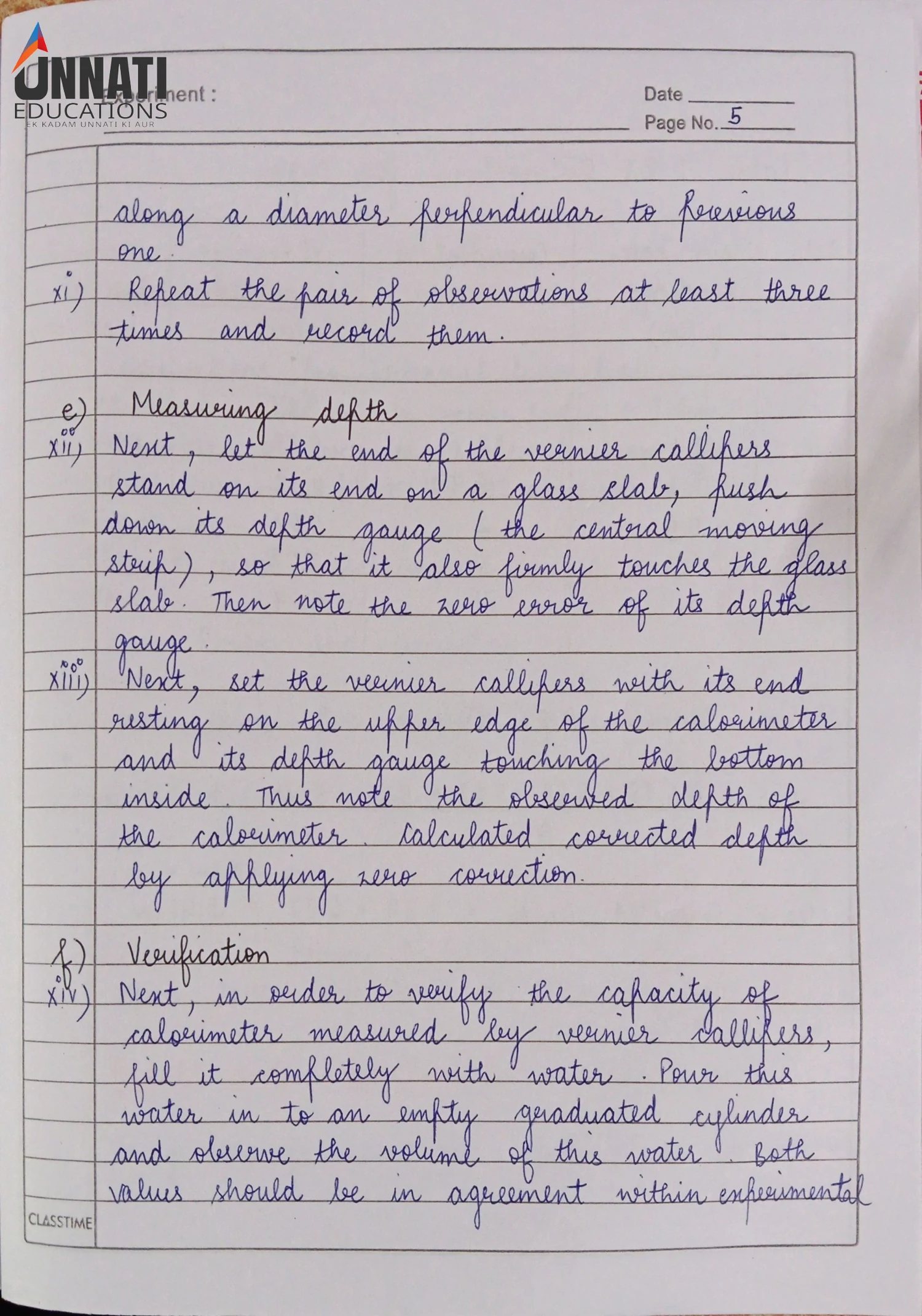
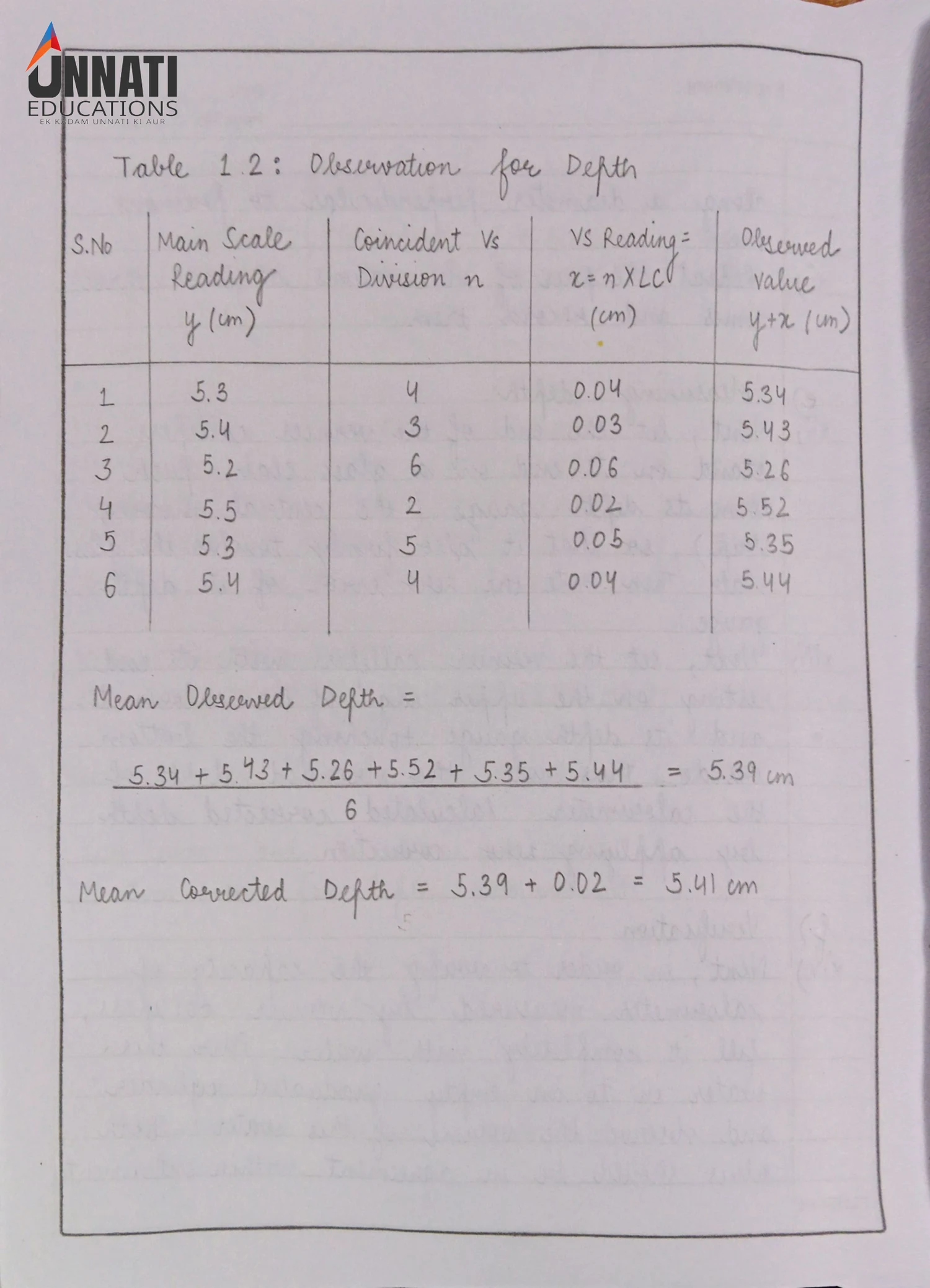
You should never buy a file blind. That is why we show fifteen full sample pages from the NIOS Physics 312 practical file, pulled from real experiments across the record, so you can check the handwriting, the diagrams and the layout before ordering.
Look at how the aim is set off in colour, how the observation tables line up, and how each diagram is labelled. If the sample reads clearly to you, the full file will read clearly to your examiner.
These are only the first 15 sample pages from the full practical file. The complete file contains all 15 experiments with full observation tables, calculations, diagrams and viva-voce for every experiment.
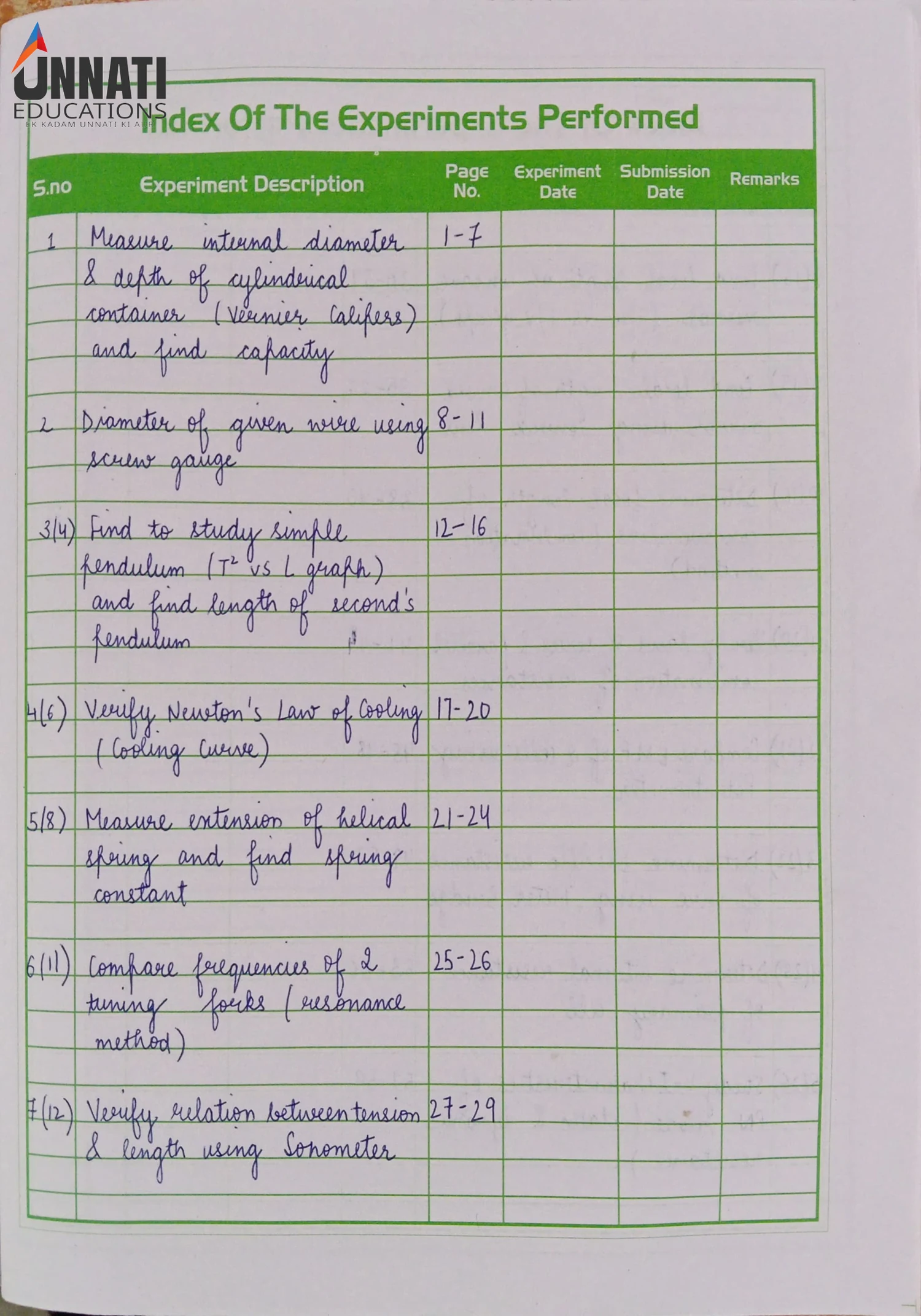
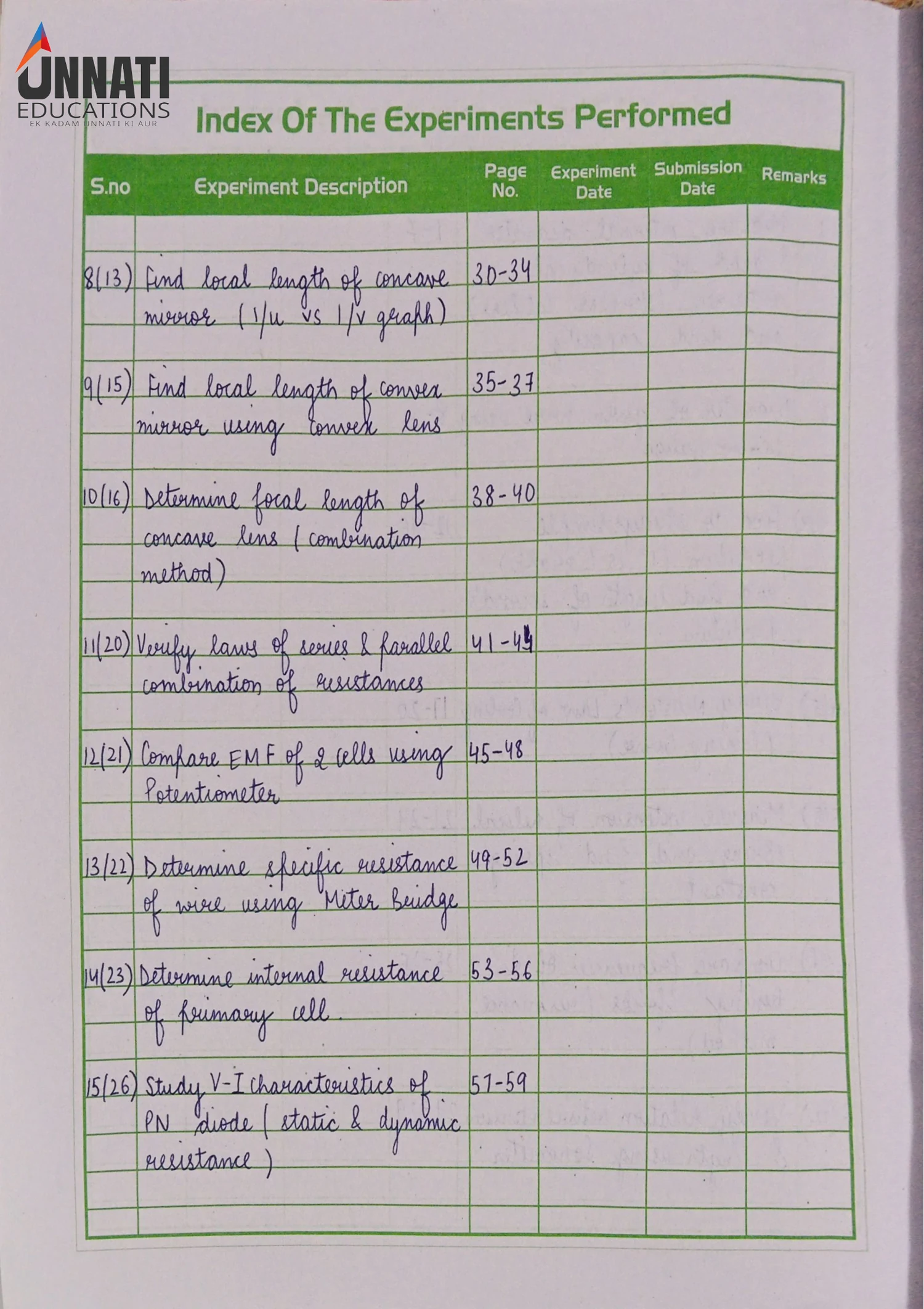
Every Experiment Solved in the NIOS Physics 312 Practical File
This is where a good file earns its marks. Below, each experiment is broken down by the instrument you actually handle and the single idea the examiner wants you to show you understand. Read across a few rows and you will see there is no repeated filler, because no two experiments in Physics 312 test the same thing.
If you have already looked at a plain NIOS Solved Lab Manual, treat this file as the finished, examiner-ready version of that manual, written out by hand with your readings in place.
| Experiment | Apparatus you handle | Key idea you demonstrate |
|---|---|---|
| 1. Capacity of a cylindrical container | Vernier callipers, graduated cylinder, glass slab | Least count and zero error of the callipers, then volume V = πr²h checked against a measuring cylinder |
| 2. Diameter of a wire | Screw gauge (micrometer) | Pitch and least count 0.01 mm, mean diameter and the cross-sectional area of the wire |
| 3. Simple pendulum | Bob, thread, split cork, stopwatch, metre scale | A straight-line T² against L graph, value of g from the slope and the length of a second’s pendulum |
| 4. Newton’s law of cooling | Calorimeter, thermometer, stopwatch, hot water | A cooling curve of temperature against time showing rate of cooling falling with excess temperature |
| 5. Helical spring | Helical spring, slotted weights, pointer, scale | Hooke’s law from a load-extension graph and the spring constant k read from the slope |
| 6. Two tuning forks | Resonance tube, two tuning forks, water column | Resonating air-column lengths used to compare the frequencies of the two forks |
| 7. Sonometer | Sonometer, hanging weights, tuning fork, paper rider | The law of length, that frequency varies inversely with the resonating length at fixed tension |
| 8. Concave mirror | Concave mirror, optical bench, object and image pins | The mirror formula 1/f = 1/u + 1/v and focal length from the intercept of the 1/u against 1/v graph |
| 9. Convex mirror | Convex mirror, convex lens, optical bench | Locating the virtual image with an auxiliary lens to find the focal length of a diverging mirror |
| 10. Concave lens | Concave lens, convex lens, optical bench | Focal length of a diverging lens found from a lens combination using 1/F = 1/f₁ + 1/f₂ |
| 11. Series and parallel resistances | Resistance coils, ammeter, voltmeter, battery | Verifying R = R₁ + R₂ in series and 1/R = 1/R₁ + 1/R₂ in parallel through Ohm’s law |
| 12. Comparing EMF of two cells | Potentiometer, two cells, galvanometer, jockey | Balancing lengths at the null point giving E₁/E₂ = l₁/l₂ |
| 13. Specific resistance | Metre bridge, resistance box, galvanometer, test wire | The Wheatstone principle and resistivity ρ = RA/L from the balancing length |
| 14. Internal resistance of a cell | Cell, resistance box, potentiometer or voltmeter | Terminal potential difference used to work out the internal resistance r of the cell |
| 15. PN diode characteristics | PN junction diode, milliammeter, voltmeter, rheostat | Forward and reverse bias curves, the knee voltage, and static against dynamic resistance |
How the Physics 312 Practical File Maps to the Theory Syllabus
The experiments are not random. They sit on top of the units you study in theory, which is why doing them well quietly strengthens your written paper too.
Measurement and error handling feed the callipers, screw gauge and pendulum work. Heat and thermodynamics sit behind the cooling curve. Oscillations and waves cover the spring, the tuning forks and the sonometer. Ray optics runs through the mirror and lens experiments, while current electricity and semiconductors carry the potentiometer, metre bridge and diode. If you want to line each experiment up against its unit, keep the NIOS Class 12 Syllabus open beside the file.
Why Handwritten Physics 312 Practical Files Score Better
A printed sheet stapled into a record book is the fastest way to lose the examiner’s trust. Handwriting signals that the experiment passed through your own hand, and it is what the NIOS record format was designed around in the first place.
Our writers use clear cursive, coloured headings for the aim and sub-headings, and ruled observation tables so the readings sit neatly in their columns. Diagrams such as the vernier scale, the ray paths for the mirror and lens, and the diode circuit are drawn by hand and labelled properly, not pasted in.
If you specifically want that written-by-hand finish across your record, our wider set of NIOS Handwritten Practical Files follows the same standard for every subject, not only Physics.
What Makes Our NIOS Class 12 Physics 312 Practical Files Different
Plenty of files float around study groups every session. Most are photocopies of a photocopy, with faded diagrams and readings that no longer match the working. That is the sort of file examiners have seen a hundred times.
Ours is built fresh for the 2026 session. The observation tables carry sensible, consistent readings, the calculations actually follow from those readings, and the precautions are specific to the instrument rather than a generic line repeated everywhere. Every experiment has its own labelled figure.
We also keep the explanation simple. Each experiment opens with a short, plain description of what you are doing and why, so the file doubles as revision before the viva. For the wider approach we take to record work, our guide to NIOS Practical Files explains how a strong file is put together section by section.
How to Order Your NIOS Physics 312 Practical File for 2026
Ordering is simple and the whole thing happens over WhatsApp, so you can ask questions before you commit. Message us on 9654279279, or on 9899436384 if the first line is busy, and tell us it is the Physics 312 file you need.
Let us know your session and how soon you need it, and we confirm the price, the delivery window and the format. The file is prepared by hand for you, so ordering a little ahead of your submission date always helps.
How the Physics 312 Practical File Fits Your Wider NIOS Prep
The practical file is one piece of a bigger record book. If you are also handling Chemistry or Biology practicals this session, our full range of NIOS Class 12 Practical Files keeps the same handwriting and layout across every science, so your record looks consistent from cover to cover.
Alongside the record work, most students want their theory sorted too. Our NIOS Study Material pairs naturally with the file, so the concept you write about in an experiment is one you have already revised for the written paper.
Getting the file and the theory from the same place also means the terminology matches, which quietly saves you from the small contradictions examiners notice during a viva.
Common Mistakes Students Make in the Physics 312 Practical File
The most common slip is copying readings that do not agree with the calculation. An examiner only has to check one line of working to spot it, and once trust is gone the record marks follow.
The second is skipping the diagram or drawing it without labels. In optics especially, an unlabelled ray path tells the examiner you did not really follow what the image was doing.
The third is a bare result with no units and no precautions. A result like 1.5 means little, whereas a focal length of 15 cm with two sensible precautions shows you understood the whole experiment. Our file is written to avoid all three from the start.
FAQs on the NIOS Physics 312 Practical Files
What do the NIOS Physics 312 Practical Files include for the 2026 session?
They include all fifteen experiments in the 312 scheme, each written with an aim, materials required, a labelled diagram, the procedure, an observation table, the calculation, the result and precautions. Every write-up is done by hand for the 2026 session with readings already filled in, so the file is ready to submit and matches the format your external examiner expects to see.
How many experiments are there in the Physics 312 Practical File?
There are fifteen experiments in the file, matching the NIOS Physics 312 practical scheme. They run from vernier callipers and the screw gauge through the simple pendulum, cooling curve, helical spring, tuning forks and sonometer, into ray optics with mirrors and lenses, then current electricity with the potentiometer and metre bridge, and finish with the V-I characteristics of a PN junction diode.
Are the Physics 312 Practical Files handwritten or printed?
They are fully handwritten, not printed. Each experiment is written in clear cursive with coloured headings, hand-drawn diagrams and ruled observation tables. NIOS record work is built around handwriting, and an examiner trusts a written file far more than a printed one, so the handwritten format directly protects the marks you get for the record.
Can I see a sample of the NIOS Physics 312 Practical File before ordering?
Yes, fifteen full sample pages are shown on this page, taken from real experiments across the record. You can check the handwriting, the diagrams and the way the observation tables are laid out. If you want to see more before deciding, message us on WhatsApp and we will share additional sample pages so you are confident about the quality first.
How do the Physics 312 Practical Files help in the NIOS practical exam?
A neat, correct file earns you the record marks and gives you a strong base for the viva. Because each experiment opens with a plain explanation of what you did and why, the file doubles as quick revision before you face the examiner. Walking in with consistent readings and labelled diagrams makes the whole practical assessment far smoother.
How will I receive my NIOS Physics 312 Practical File?
The whole process runs over WhatsApp. You message us on 9654279279, confirm your session and timeline, and we arrange the file and the delivery format for you. Because each file is prepared by hand, ordering a little ahead of your submission date is wise. We will confirm the price and the delivery window before anything is finalised.
Do the Physics 312 Practical Files include diagrams and readings?
Yes, every experiment carries its own hand-drawn, labelled diagram and a filled observation table. You get the vernier scale, the ray diagrams for the mirror and lens work, circuit diagrams for the electricity experiments and the diode graph, each with readings that agree with the calculation shown below them. That agreement between diagram, readings and result is what examiners check for.
Disclaimer: Unnati Educations is an independent academic support platform and is not affiliated with, endorsed by, or connected to the National Institute of Open Schooling (NIOS). All subject codes and references to NIOS are used only to describe the material we prepare.
Contact Unnati Educations - Your Academic Lifeline
If you're eager to begin your journey or need guidance in the NIOS admissions process, we're just a message away.