NIOS Class 12 Chemistry 313 Practical Files | All 10 Experiments Solved (Latest 2026)
NIOS Class 12 Chemistry 313 Practical Files are the one part of the course most learners keep pushing to the end, and then the submission date arrives and the scramble begins. We have prepared a complete handwritten file for the 2026 session that covers every prescribed experiment, with the observation tables already filled in, the calculations worked out step by step, and the diagrams drawn neatly enough to copy straight into your record book.
NIOS Class 12 Chemistry 313 Practical Files (Latest 2026)
Written by Prateek Talwar · Reviewed by Jyoti Sharma, Senior NIOS Counsellor · Updated for the 2026 session
NIOS Class 12 Chemistry 313 Practical Files are the one part of the course most learners keep pushing to the end, and then the submission date arrives and the scramble begins. We have prepared a complete handwritten file for the 2026 session that covers every prescribed experiment, with the observation tables already filled in, the calculations worked out step by step, and the diagrams drawn neatly enough to copy straight into your record book.
Everything below is built around the actual NIOS lab manual for subject code 313, so what you read here matches what your examiner expects to see on submission day. We have kept the language plain, shown you a proper sample of the pages, and explained how each experiment is written up so you can judge the quality before you ask for it.
If you are still mapping out the wider course, our guide to NIOS Class 12 Practical Files shows how the Chemistry record fits alongside the other science subjects, which helps when you are planning submissions for more than one paper in the same session.
Chemistry 313 Practical File at a Glance
| Subject and code | Chemistry (313), NIOS Senior Secondary |
|---|---|
| Class | Class 12 (Senior Secondary) |
| Practical work in the file | 10 experiments, fully solved |
| Record book | Filled observation tables, worked calculations, labelled diagrams |
| Viva preparation | Short, correct answers for every experiment included |
| Format | Handwritten on ruled practical paper, one-sided |
| Session | Prepared for the 2026 practical exam |
| Medium | English (Hindi medium on request) |
| Delivery | Ready file shared and dispatched after you message us on WhatsApp |
Sample Pages From Our Chemistry 313 Practical File
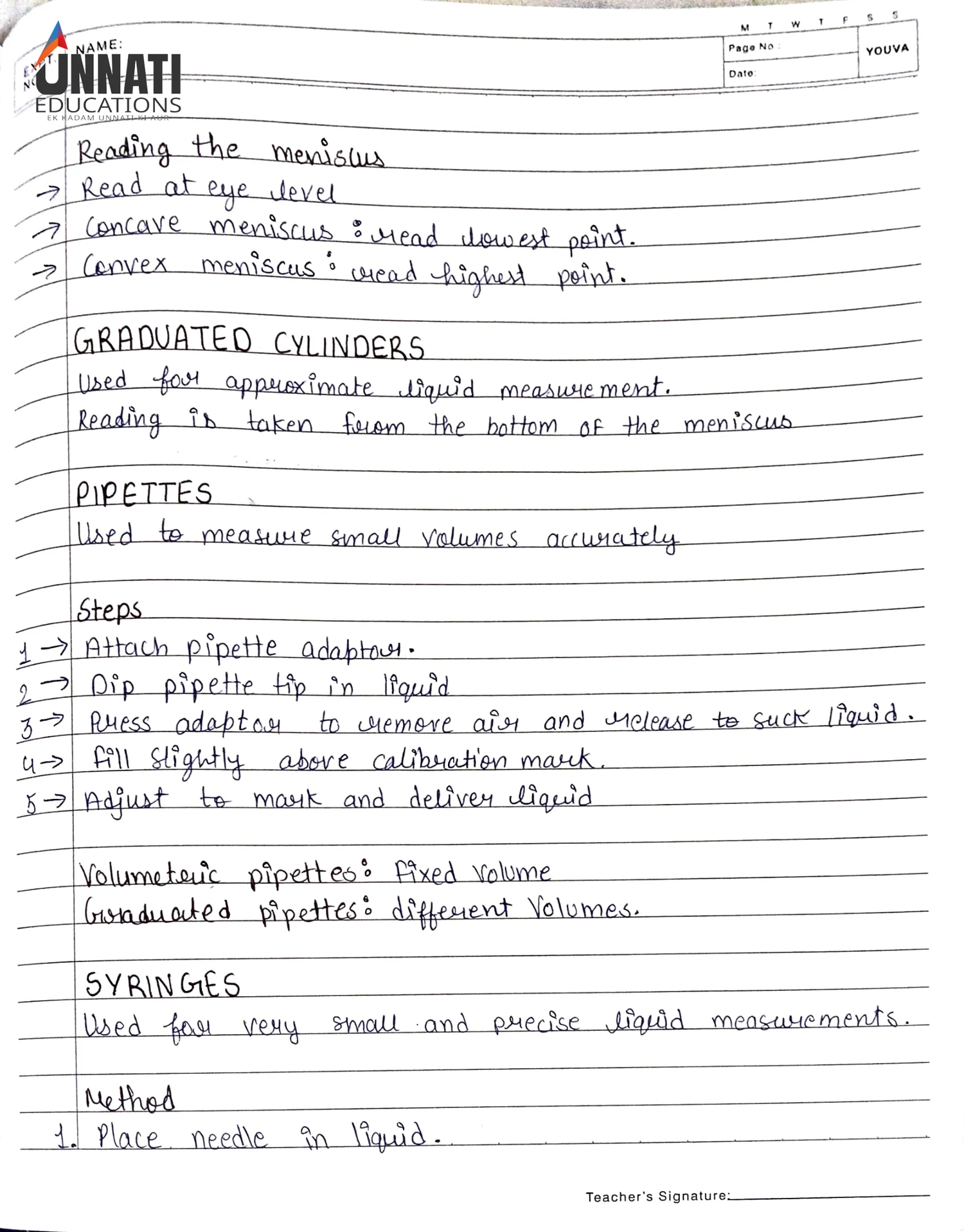
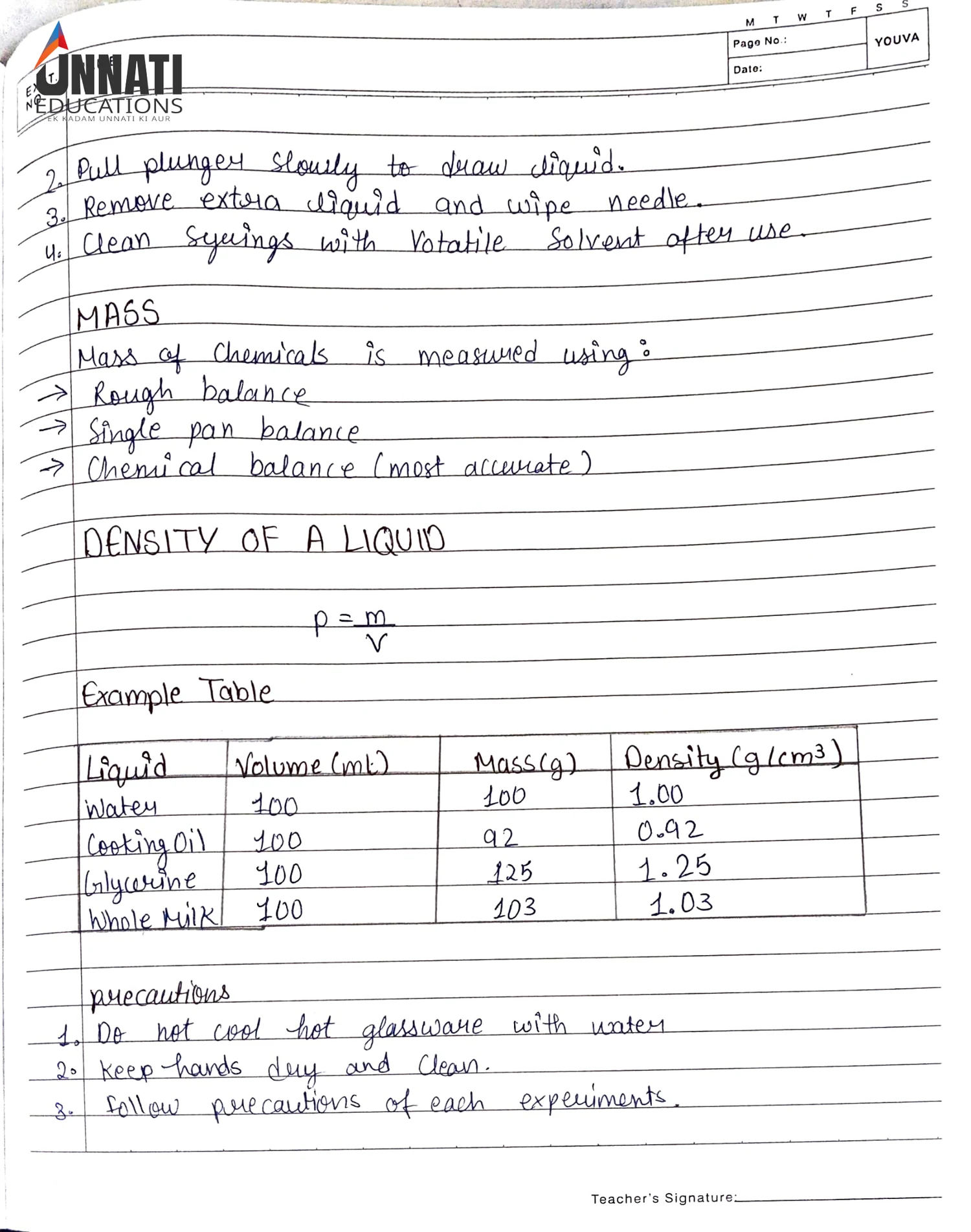
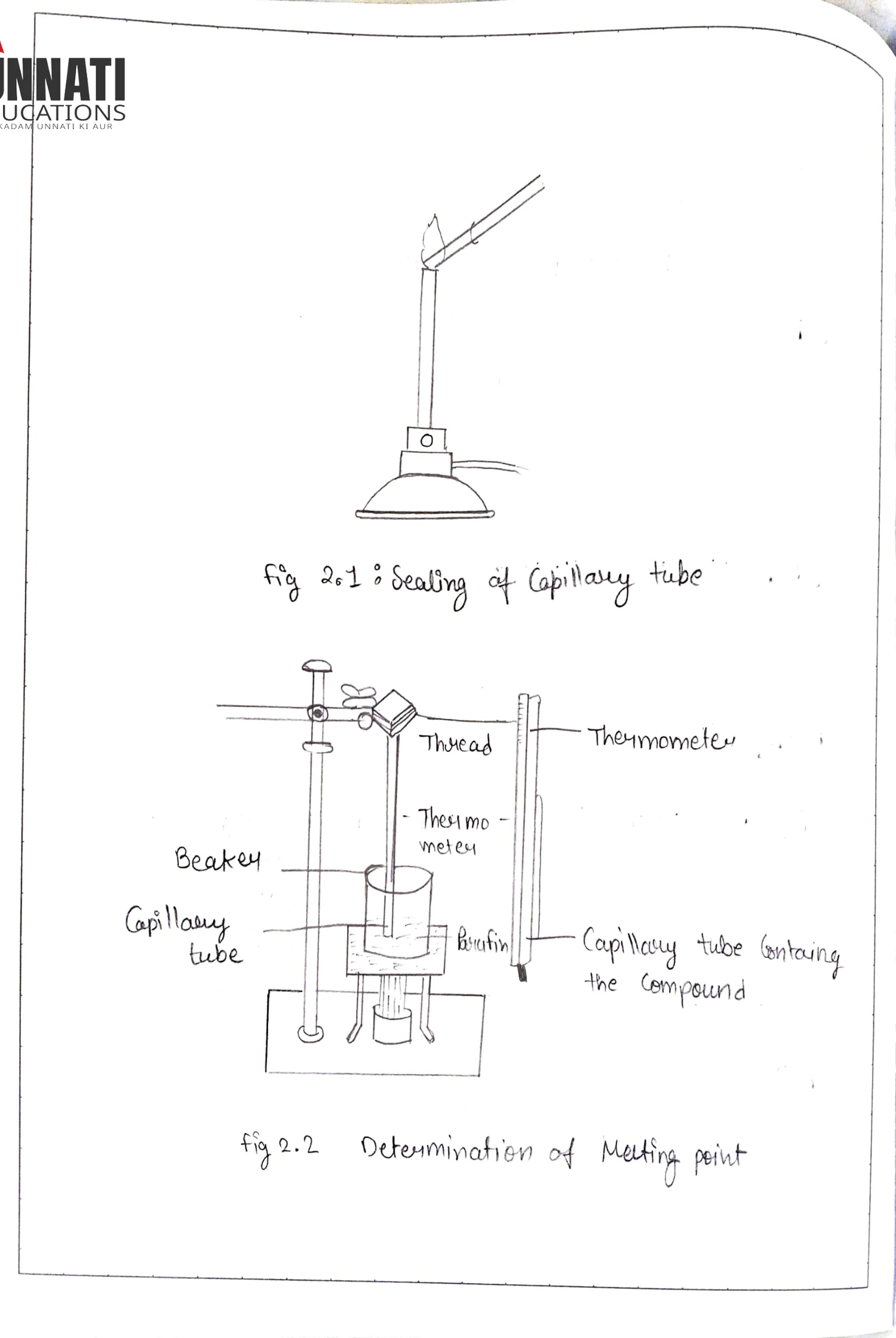
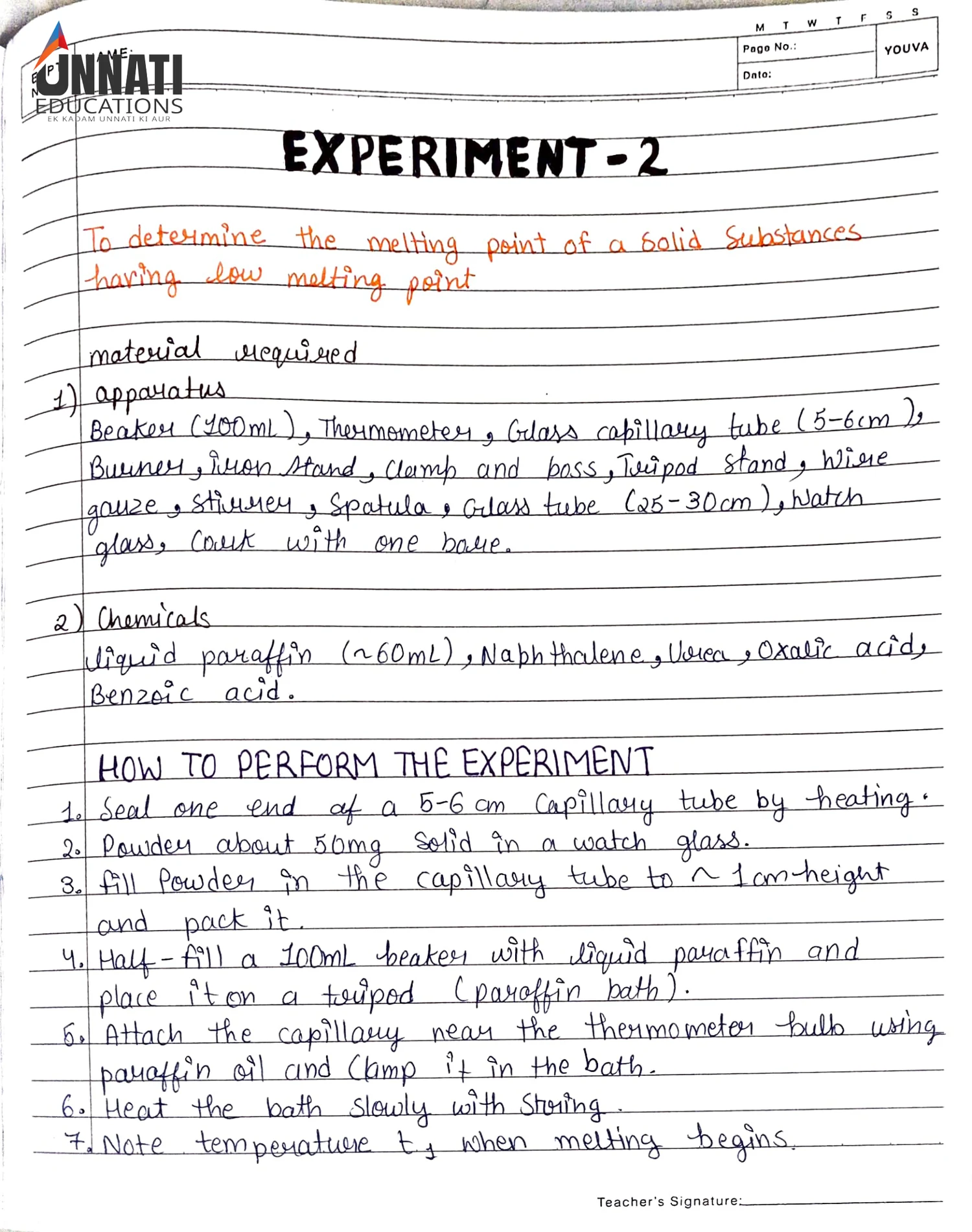
Rather than ask you to trust a description, we show you fifteen sample pages pulled straight from the completed file. Look at the handwriting, the labelled diagrams and the filled tables, and decide the quality for yourself before you request the full copy.
These are only the first 15 sample pages from the complete Chemistry 313 practical file. The full file includes all 10 experiments with the complete solved observations, chemical reactions, worked calculations, results, precautions and viva preparation for every practical.
What the NIOS Class 12 Chemistry 313 Practical Files include
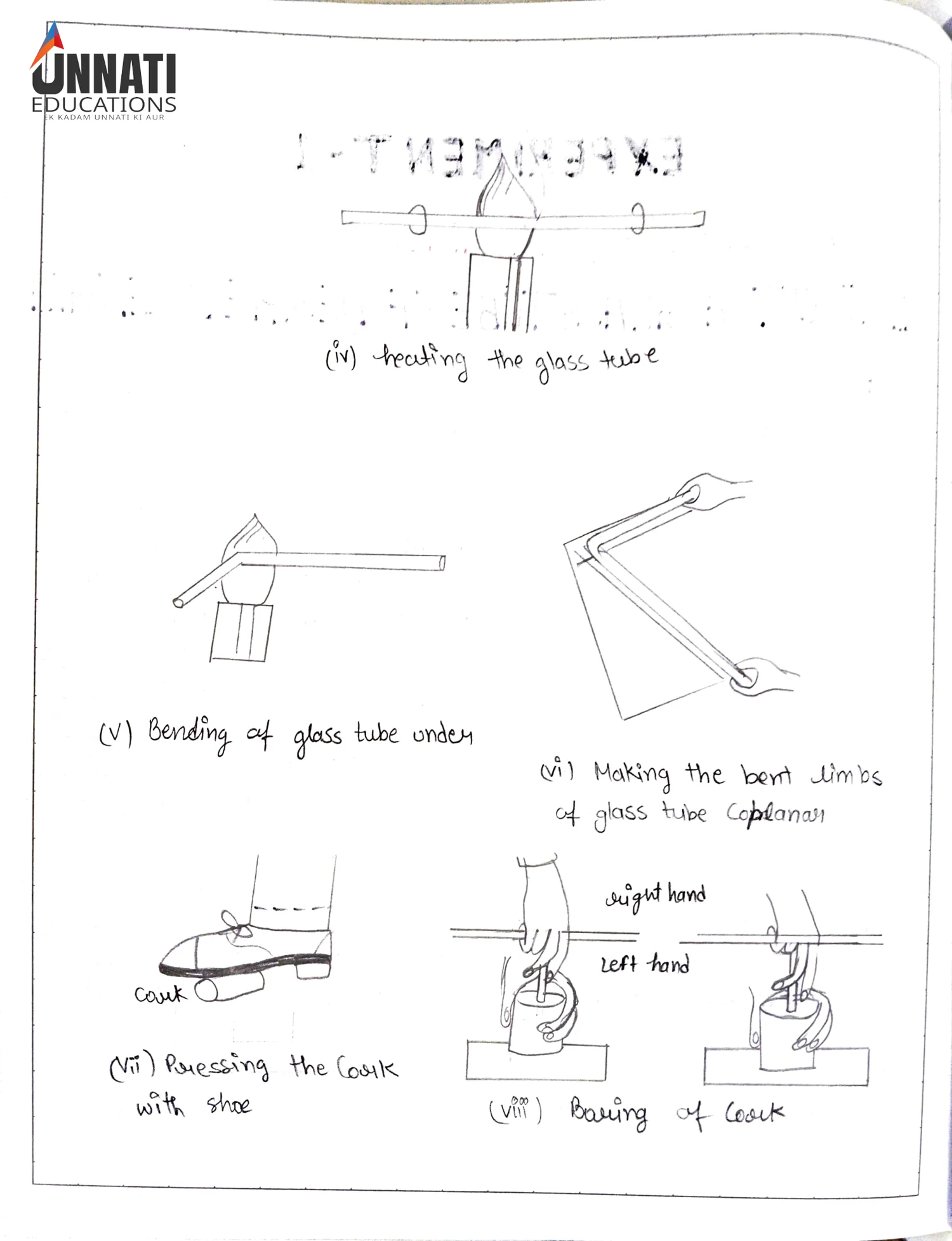
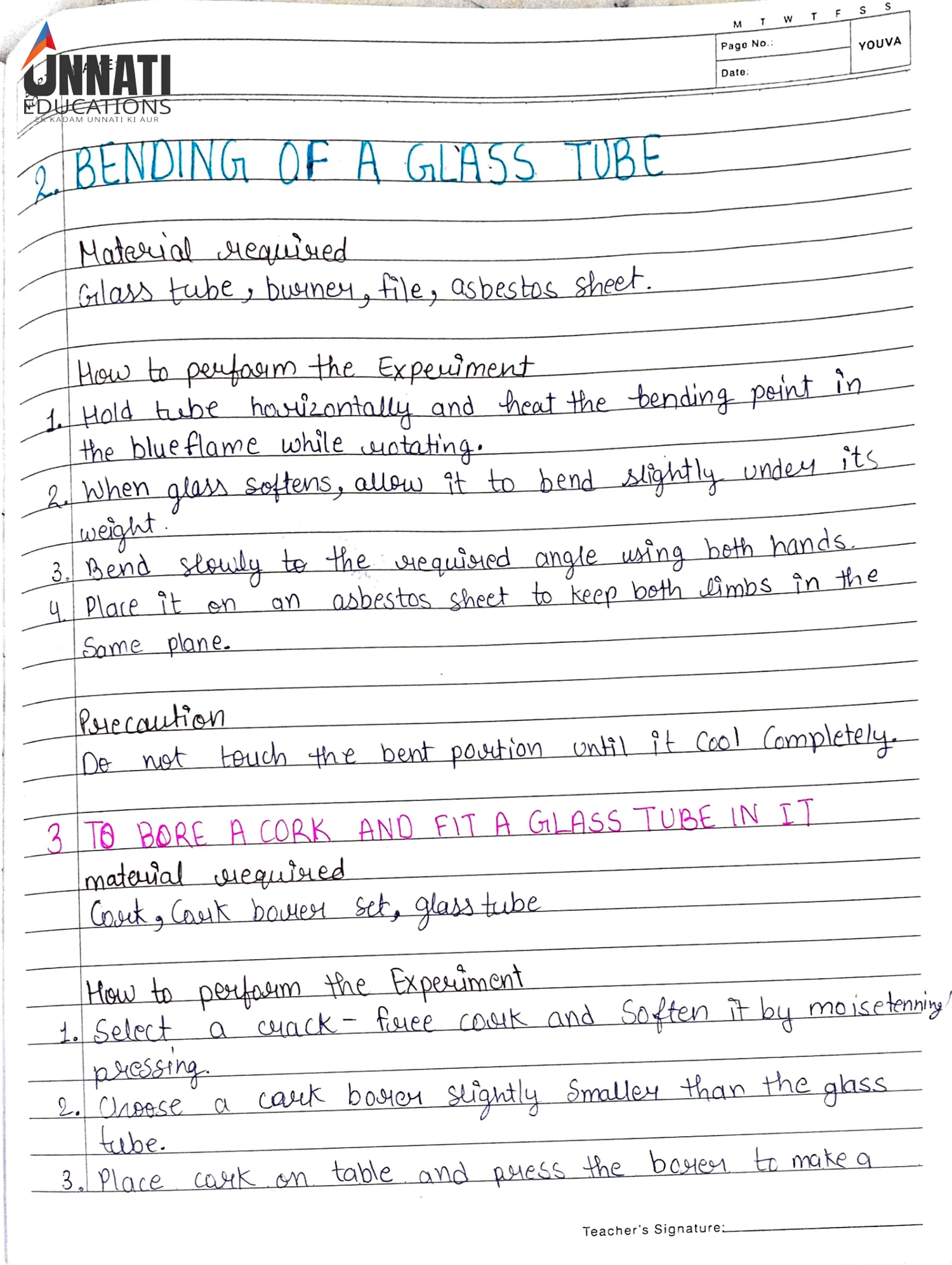
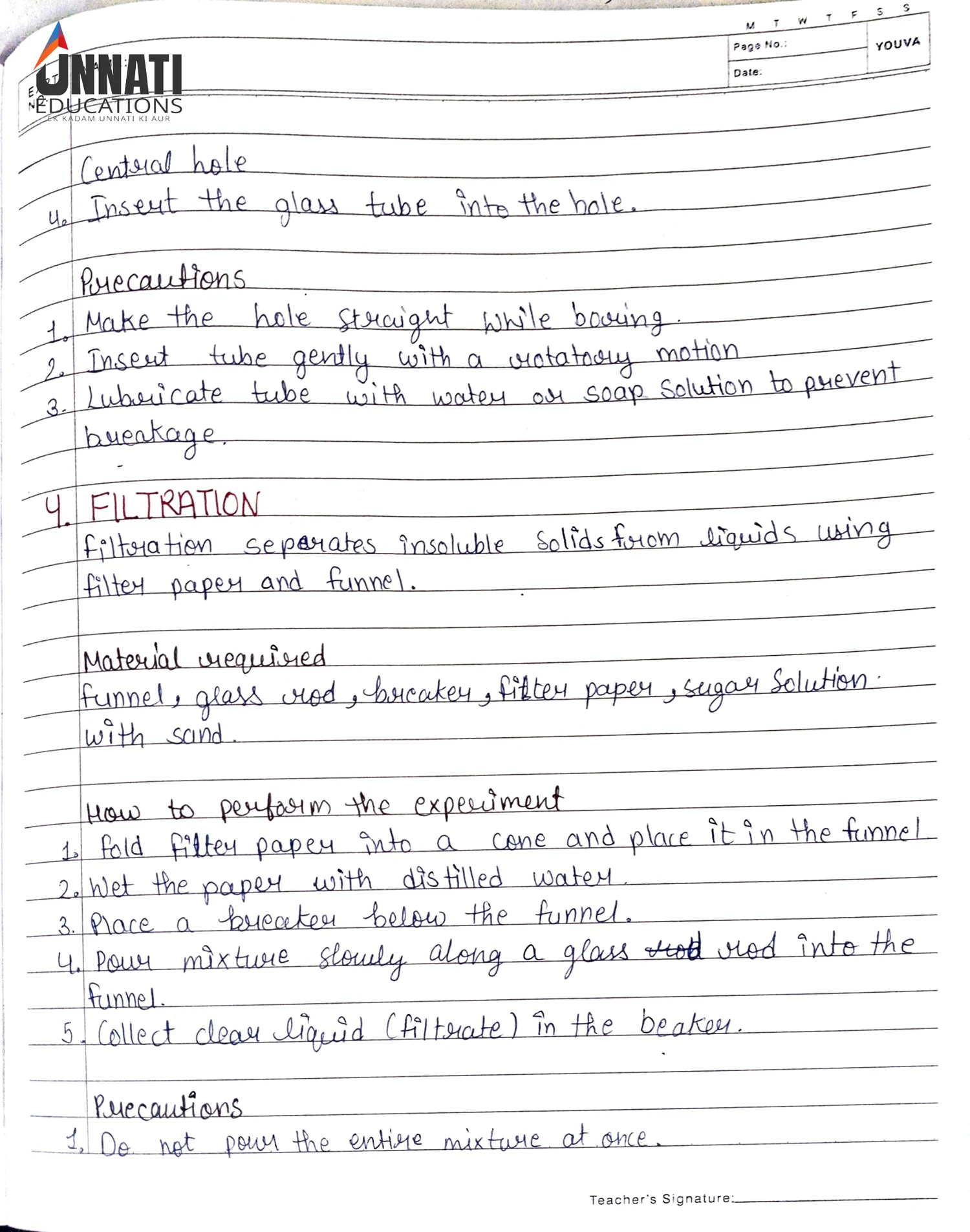
The file follows the ten experiments laid down in the official NIOS lab manual for Chemistry 313, running from basic glass-working skills all the way to crystal preparation. Each experiment carries its aim, materials, method, observation table, calculation where needed, precautions and a clear conclusion, so nothing is left half done.
We write the whole thing by hand on one-sided ruled practical paper, the way NIOS asks for it. The diagrams are drawn with pencil and labelled properly, the readings sit inside real tables, and the tone stays simple enough that you actually understand what you are copying rather than blindly reproducing lines.
Here is what lands in your hands when you order the 2026 file:
- All ten prescribed experiments solved end to end with aims, materials, method, observations, calculations, precautions and conclusions.
- Filled observation tables and worked calculations (dilution, enthalpy, electrochemistry, reaction rate) shown step by step.
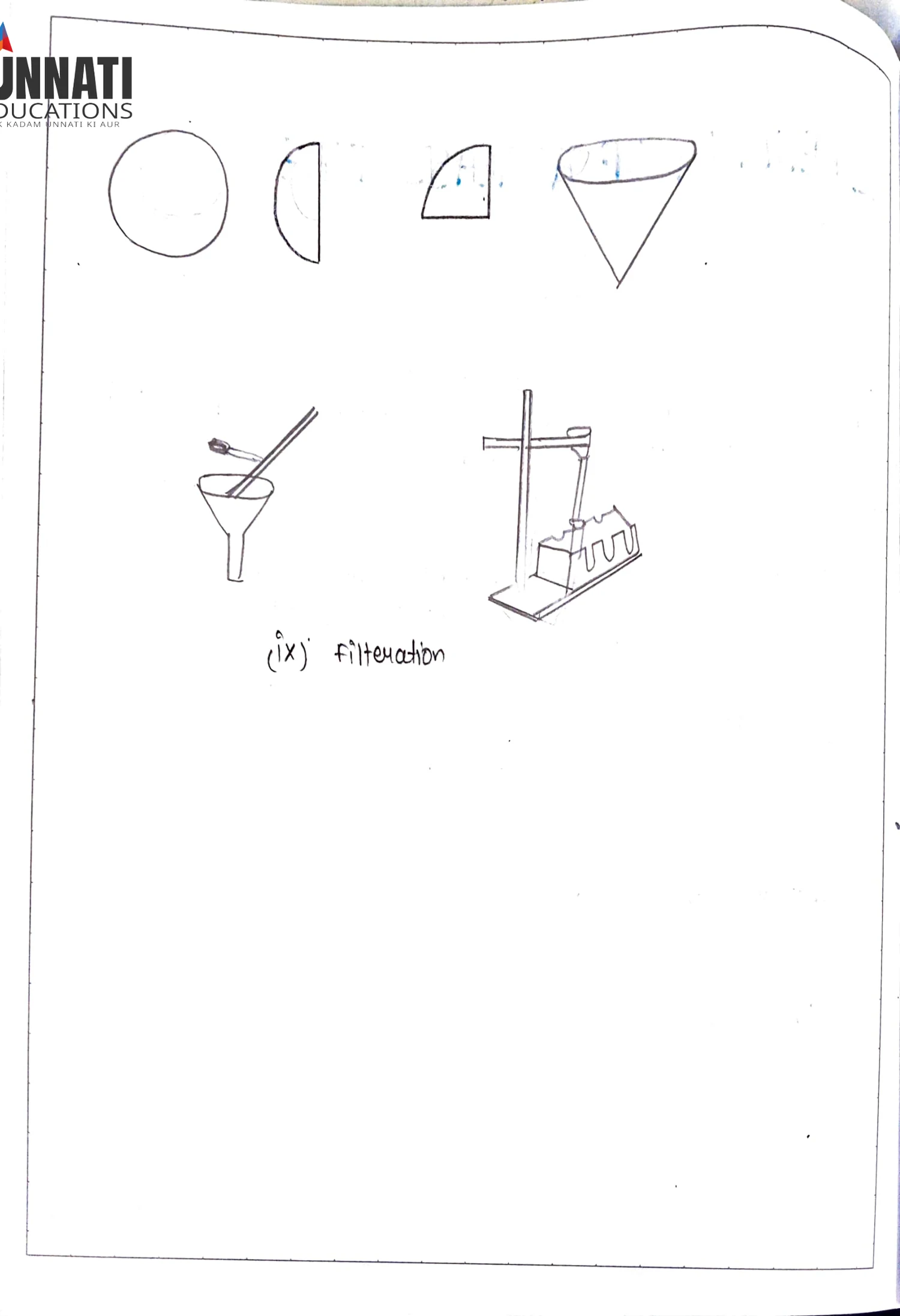
- Hand-drawn and labelled diagrams for every experiment, from glass-tube bending to crystal structures.
- Viva questions with short, correct answers so you are ready for the oral round with the examiner.
- Neat, readable handwriting on ruled practical paper, available in English or Hindi on request.
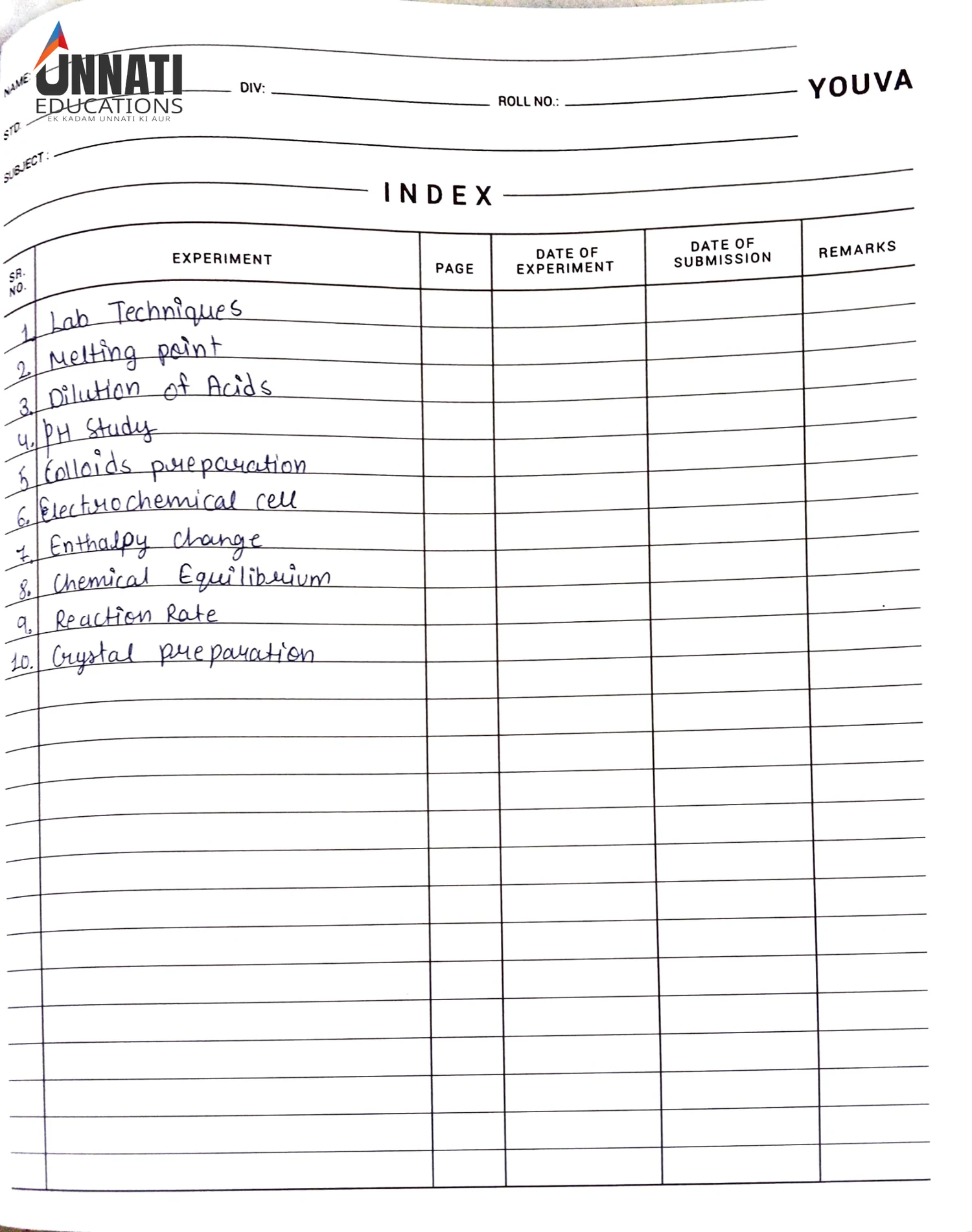
Complete Index of the Chemistry 313 Practical File
Here is the full index of the practical file exactly as it appears at the front of the record book. Every row lists what you write for that experiment and, more usefully, the specific work that is already solved and shown inside our copy.
| No. | Experiment | What is solved and shown in the file |
|---|---|---|
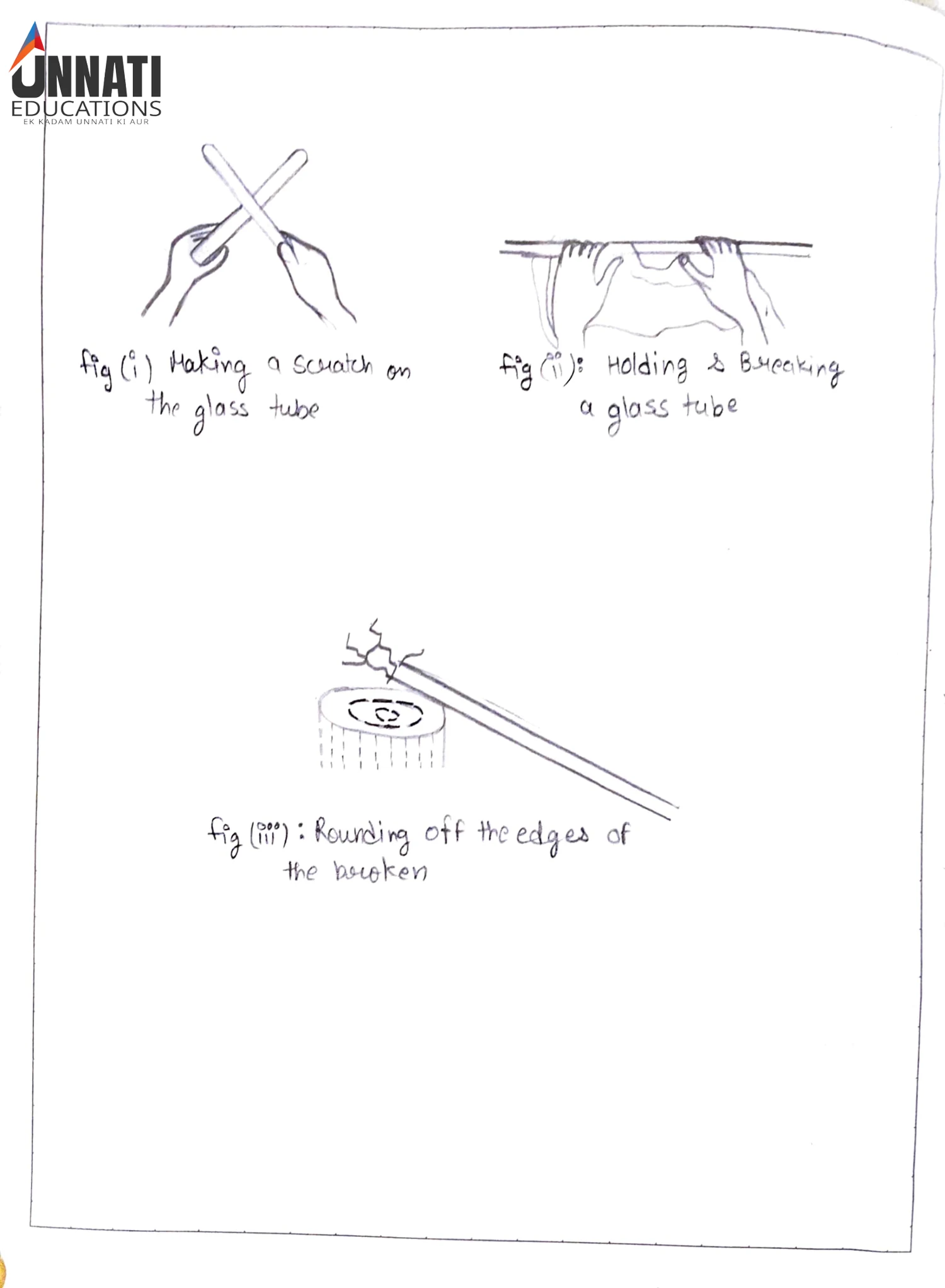
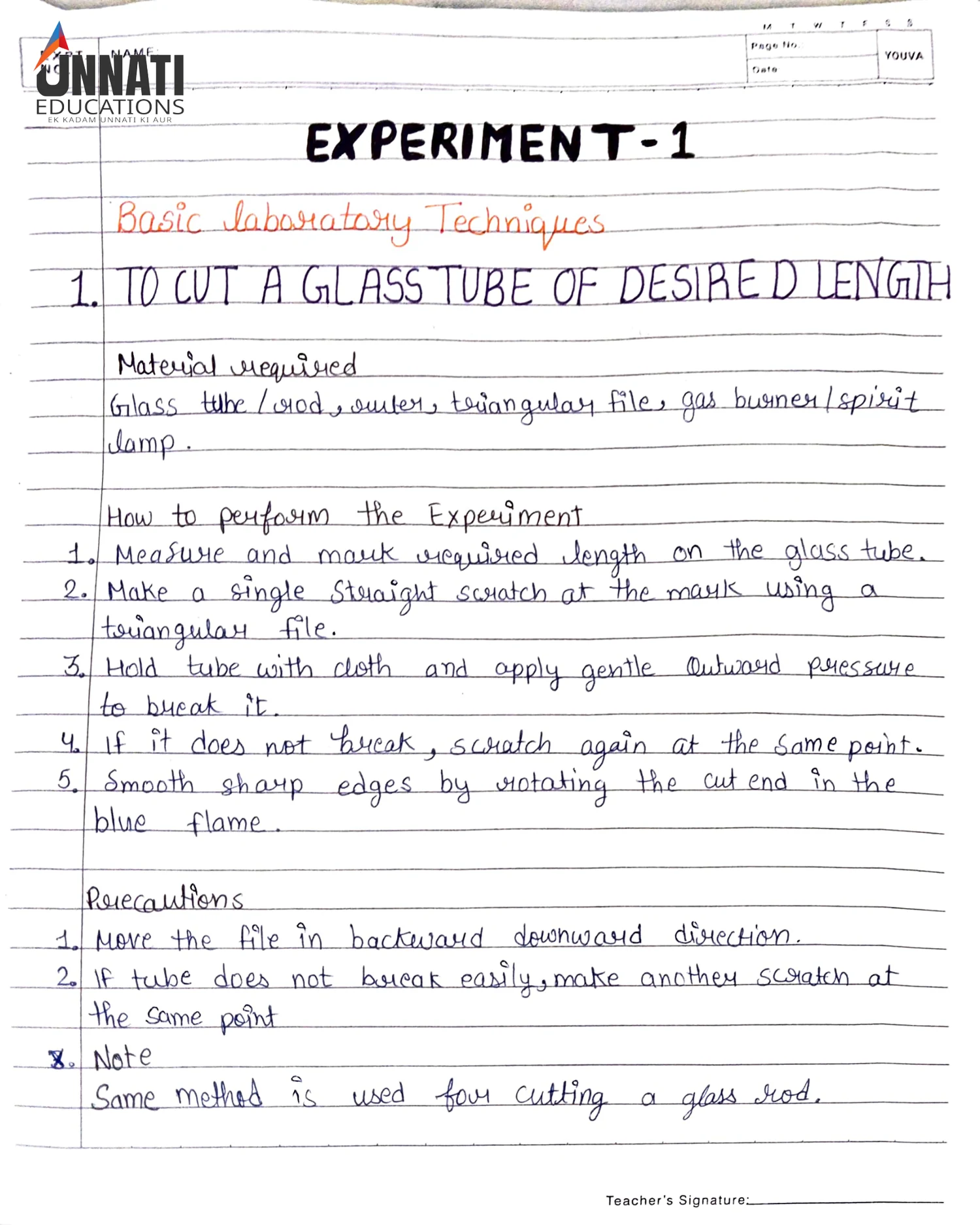
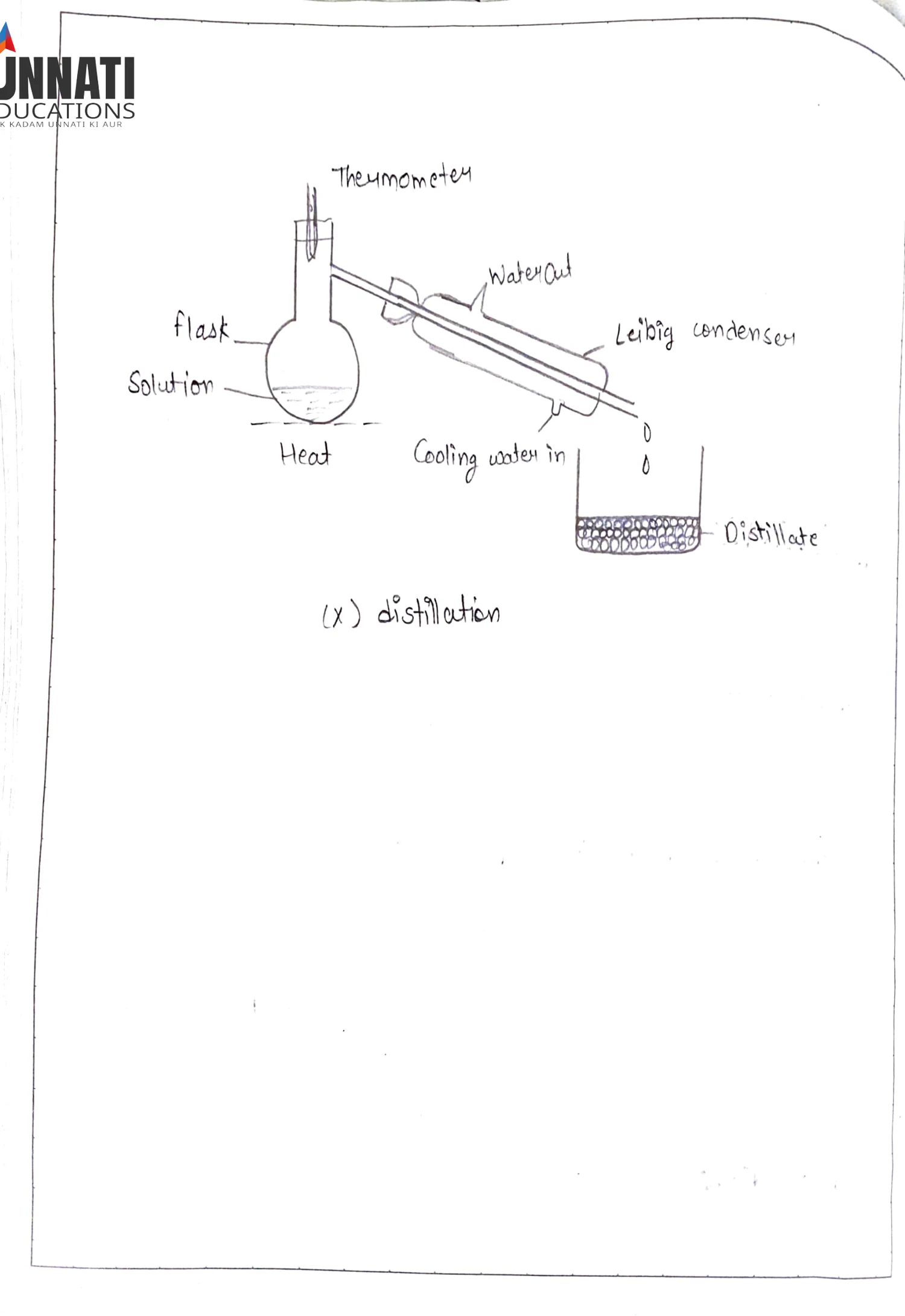
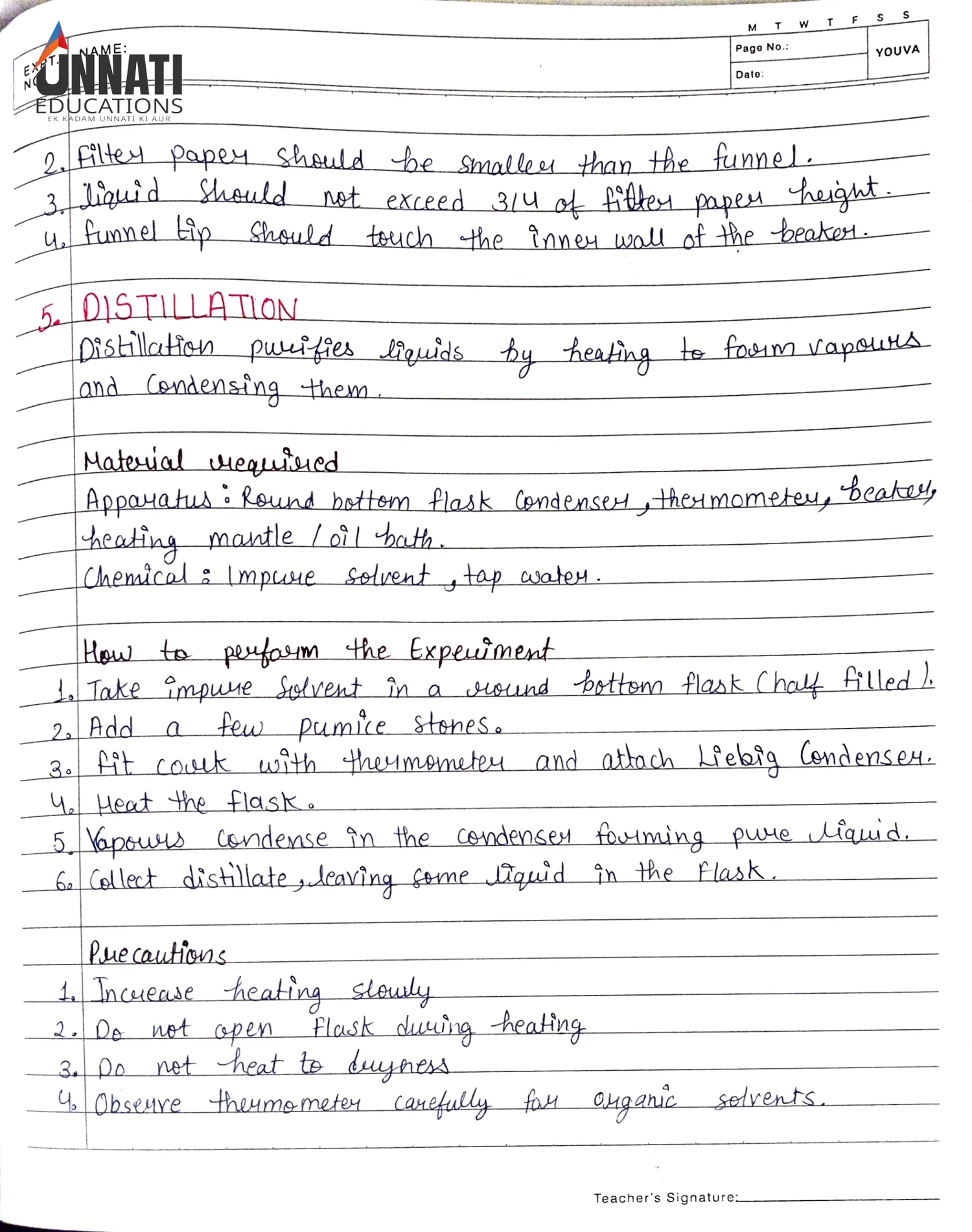
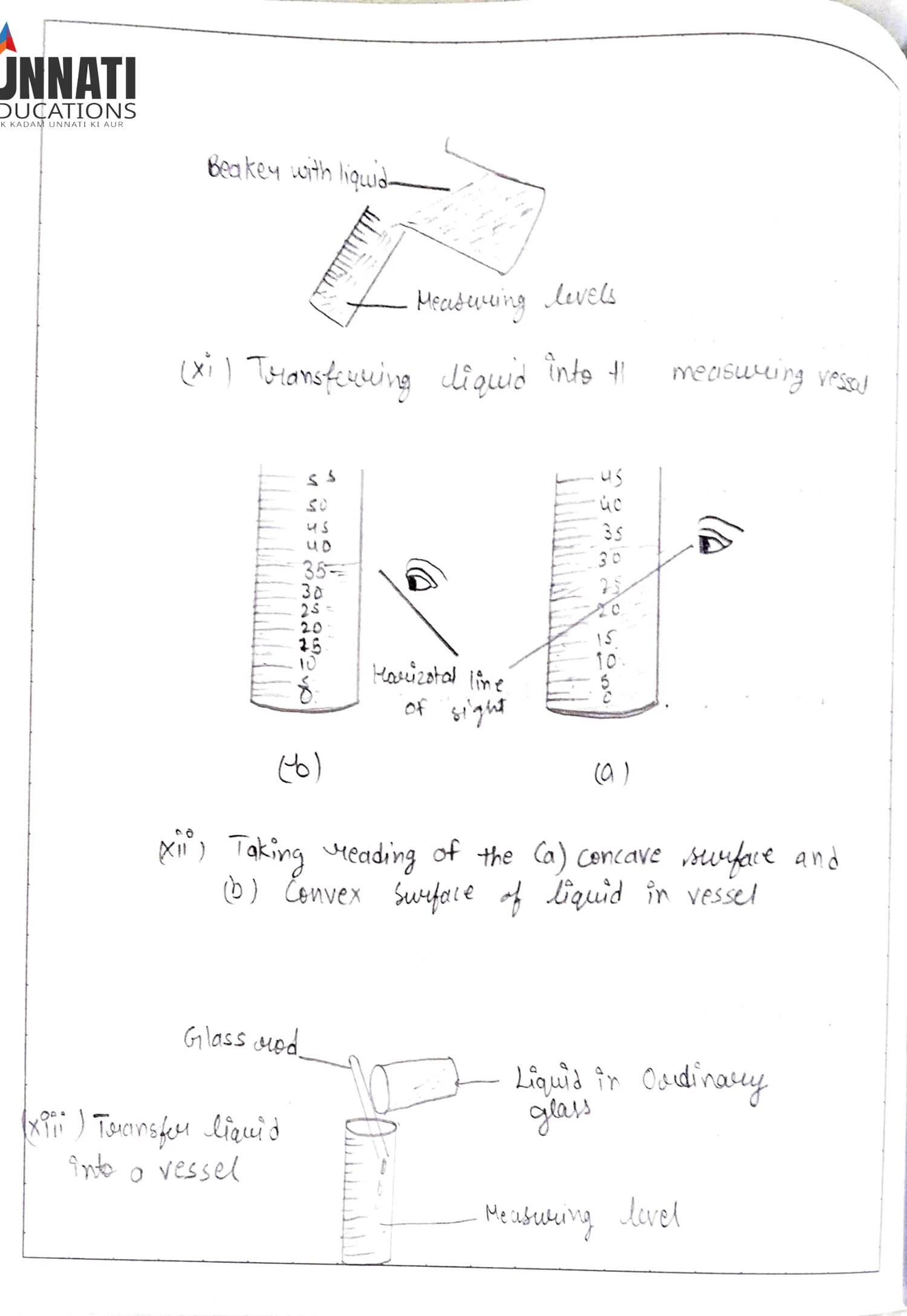
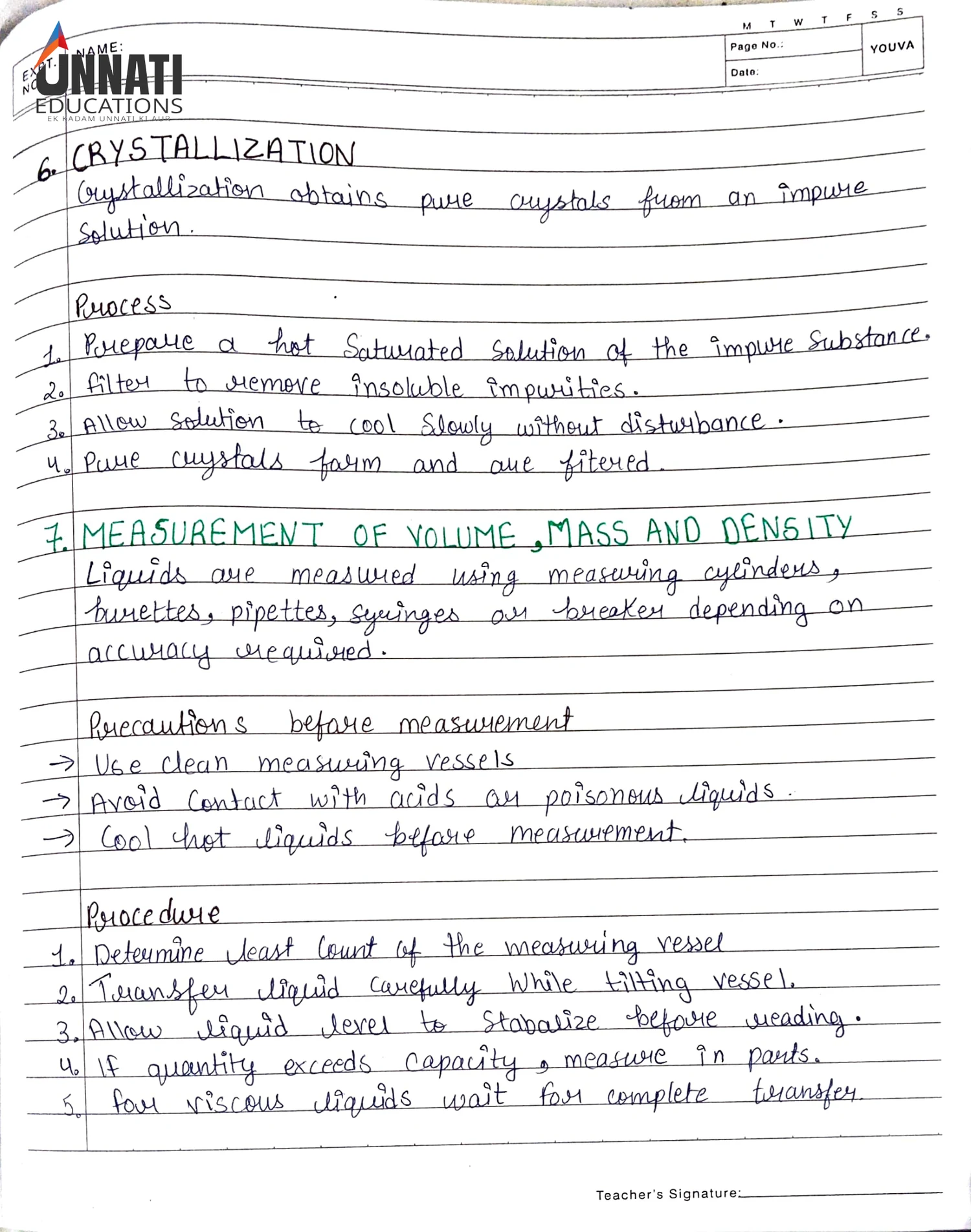
| 1 | Basic Laboratory Techniques | Cutting, bending and boring of glass tubes, boring a cork, filtration and distillation set-ups, plus reading concave and convex menisci for volume, mass and density. |
| 2 | Melting Point of a Low-Melting Solid | Sealing a capillary tube, packing the sample, paraffin-bath heating, recording t1 and t2, and the worked example giving Tm = (t1+t2)/2 = 55 C. |
| 3 | Dilution of Acids | Preparing 1 M HCl, 0.5 M H2SO4 and 2 M HNO3 from 12 M, 18 M and 16 M stock, with full M1V1 = M2V2 calculations (8.3 mL, 2.78 mL, 12.5 mL). |
| 4 | pH Study | pH of salt solutions, dilute acids and bases and fruit juices by universal indicator, plus the common-ion-effect readings for acetic acid with sodium acetate. |
| 5 | Colloids and Sol Preparation | Starch sol, ferric hydroxide sol and aluminium hydroxide sol, the hydrophilic against hydrophobic behaviour, and Tyndall-effect confirmation of the colloidal nature. |
| 6 | Electrochemical Cell | The Zn-Cu cell EMF measured as CuSO4 concentration falls, the Nernst working, and the Ecell against log[Zn2+]/[Cu2+] straight-line graph. |
| 7 | Enthalpy Change | Enthalpy of neutralisation of HCl with NaOH, water equivalent of the bottle, heat evolved of 2864.4 J and deltaH of -57.29 kJ per gram-equivalent with percentage error. |
| 8 | Chemical Equilibrium | The Fe3+ and thiocyanate shift, forward and backward movement on changing either concentration, with the colour-intensity observation tables completed. |
| 9 | Reaction Rate | The sodium thiosulphate and HCl clock reaction, the effect of concentration and of temperature on rate, and the 1/t values tabulated at 40, 50 and 60 C. |
| 10 | Crystal Preparation | Mohr's salt, potash alum and potassium ferric oxalate crystals, with actual against theoretical yield recorded for all three compounds. |
This index doubles as a revision checklist. Once you can recall what each of these ten entries actually involves, the viva questions stop feeling random, because the examiner draws straight from this list. If you want to line the file up against the theory paper, our NIOS Class 12 Syllabus pages show which modules feed into these experiments.
Inside our handwritten Chemistry 313 practical file
Open the file and the first thing you notice is that it reads like a student wrote it, not a machine. The headings are underlined, the aims are stated in one clean line, and the method steps are numbered so an examiner can follow your logic without hunting for it.
The observation sections are where most files fall apart, and where ours holds up. The dilution calculations show the working, the enthalpy page carries the heat-evolved figure and the negative sign for an exothermic change, and the electrochemistry pages include both the reading table and the plotted graph on squared lines.
Because the whole record is drawn and written by real people, our NIOS Handwritten Practical Files avoid the flat, printed look that invites a second glance from an examiner. Neat, human handwriting is quietly one of the strongest marks-savers in the practical component.
How We Prepare Each Handwritten Chemistry 313 Practical File
We do not template these files or photocopy an old one and swap the name. Each order is written afresh, because handwriting, ink shade and the little imperfections in a hand-drawn diagram are exactly what tell a checker the work is a student's own. A file that looks mass-produced invites more questions, not fewer.
The glass-working experiments are the fiddliest part, and we take our time with them. Glass tubes are cut to the correct lengths, bends are smooth and even, and the boring of corks is shown with the tool held at the right angle. The diagrams then read honestly instead of being forced.
Calculation experiments are worked out on scratch paper first, then copied into the record book with every step visible. The dilution page carries the arithmetic for all three acids, and the enthalpy page walks from heat evolved to the molar figure and then to the percentage error. Small touches like this are the difference between a file that scores and one that merely exists.
Every activity we build follows the same official sequence used across the NIOS Solved Lab Manual, so your Chemistry file sits comfortably next to files for your other practical subjects without looking out of place.
How Every Chemistry 313 Experiment Is Solved and Explained
We do not just fill blanks. Each experiment is written so the reasoning behind the reading is visible. The melting-point page explains why a close range between t1 and t2 means a pure substance, and the reaction-rate page ties a shorter time to a faster rate through the 1/t column.
The tricky calculation experiments get extra attention. The dilution page carries the arithmetic for all three acids, and the enthalpy page walks from heat evolved to the molar figure and then to the percentage error against the standard value near 57.3 kJ. That is the depth an examiner rewards in the viva.
For learners who like to cross-check the method against the prescribed source, our NIOS Solved Lab Manual lays out the standard procedure for each experiment, so you can see that the file and the manual agree before you write a single word in your own copy.
Why Students Trust Our Chemistry 313 Practical Files for 2026
The honest reason students come back is that the file simply works on submission day. It follows the current lab manual, the tables are complete, and the handwriting looks like a genuine student effort rather than a downloaded printout, which keeps the examiner comfortable.
There is also the time it saves. Copying a well-made record takes an evening, whereas building one from scratch, working out three sets of dilution figures and plotting an electrochemistry graph, can eat a full week you probably do not have close to your exam.
Families across many states rely on the same standard, and our wider set of NIOS Practical Files follows the identical approach for other subjects, so once you know how the Chemistry file is built you know exactly what to expect elsewhere.
How the Chemistry 313 Practical Exam and File Are Assessed
The Chemistry 313 practical carries 20 marks and runs alongside the 80-mark theory paper for a total of 100. The practical examination itself is a three-hour session where you perform an experiment, present readings and face a short viva with the examiner.
Your practical file, the record book you submit, is a marked component in its own right. A complete, neat and correctly filled file makes a strong first impression and supports you in the viva, because the examiner questions you directly from the experiments you have recorded.
This is exactly why a thin or half-finished record hurts more than students expect. A well-kept file backs up your spoken answers, and the two together are where most of the practical marks are quietly won or lost.
How to Get Your Chemistry 313 Practical File Delivered
Getting the file is simple. Message us on WhatsApp with your medium and the session you are appearing in, and we send the completed NIOS Class 12 Chemistry 313 Practical Files ready for you to copy into your own record book by hand.
We prepare it for the 2026 session on the current lab manual, cover all ten experiments with filled observations and diagrams, and keep the delivery quick so you are not left waiting close to your submission date.
NIOS Study Material That Works Well With Chemistry 313
A practical file lands best when the rest of your preparation is in place, so it is worth pairing it with the theory support for the same paper. Reading the concepts behind each experiment makes the viva far easier, because you can explain a reading instead of only reciting it.
For that side of the work, our collection of NIOS Study Material gathers solved assignments, notes and previous papers in one place, which rounds out the Chemistry 313 record with the written preparation your board exam needs.
FAQs About the NIOS Chemistry 313 Practical File
Do the Chemistry 313 practical files cover all ten NIOS experiments?
Yes, the file covers every one of the ten experiments in the NIOS lab manual for Chemistry 313, from basic laboratory techniques through to crystal preparation. Each experiment includes its aim, materials, method, filled observation table, calculation where required, precautions and conclusion, so nothing is left incomplete when you sit down to copy it into your own record book.
Are the Chemistry 313 practical files handwritten or printed?
Our Chemistry 313 files are fully handwritten by real people on one-sided ruled practical paper, exactly as NIOS expects. Diagrams are drawn and labelled by hand, and readings sit inside proper tables. This human handwriting looks genuine to an examiner, which is a quiet advantage over printed or clearly machine-produced records that can invite unwanted scrutiny during submission.
How many marks does the Chemistry 313 practical carry?
The Chemistry 313 practical carries 20 marks, which sit alongside the 80-mark theory paper to make 100 in total. Your record book is a marked component, and the viva draws directly from the experiments you have written up. A complete, neat and correct file therefore supports both the file assessment and your spoken answers on the day of the examination.
Is the Chemistry 313 practical file valid for the 2026 session?
Yes, the file is prepared for the 2026 session and follows the current NIOS lab manual for Chemistry 313. The experiment list, procedures and observation formats all match the latest pattern, so whether you appear in the April or October 2026 cycle, the record you copy stays aligned with what your examiner expects to see at the centre.
Can I see the Chemistry 313 practical file before requesting it?
Yes, the sample section on this page shows fifteen real pages from the completed Chemistry 313 file, spanning skill-based, calculation-based and preparation-based experiments. Those pages let you judge the handwriting, diagrams and filled tables for yourself. Once you are satisfied with the quality, you can request the full set through WhatsApp and receive it ready to copy.
How do I receive my Chemistry 313 practical file?
You receive the Chemistry 313 practical file after messaging us on WhatsApp with your medium and exam session. We share the completed record so you can reproduce it by hand in your own copy. Delivery is kept quick so you have enough time to write, paste any required images and submit the file comfortably before your practical date.
Disclaimer: Unnati Educations is an independent academic support platform and is not affiliated with, endorsed by, or officially connected to the National Institute of Open Schooling (NIOS). NIOS names and course codes are used only to describe the subjects our solved practical files support. Always cross-check submission requirements with your own NIOS study centre.
Contact Unnati Educations - Your Academic Lifeline
If you're eager to begin your journey or need guidance in the NIOS admissions process, we're just a message away.