NIOS Class 10 Economics 214 Question Paper April 2025 (Set A) – Complete Analysis, Weightage, and 2026 Preparation Strategy
If you are preparing for Economics (214) in 2026, the NIOS Class 10 Economics 214 Question Paper April 2025 (Set A) is one of the best papers to understand what NIOS actually asks. This paper is not about fancy answers. It tests clear concepts, basic numeracy, and your ability to write short, correct explanations on demand.
Download Solved Question Paper PDF
What this guide covers (and why it matters in 2026)
This analysis is written to help you study smarter for the 2026 exam cycle using a real paper pattern. It explains the structure, identifies recurring question themes, and shows you where marks are concentrated, so you can plan your revision and answer-writing properly.
Overview Table: NIOS Class 10 Economics (214) Question Paper April 2025 – Set A
| Paper Detail | What does it mean for your preparation |
|---|---|
| Subject | Economics (214) |
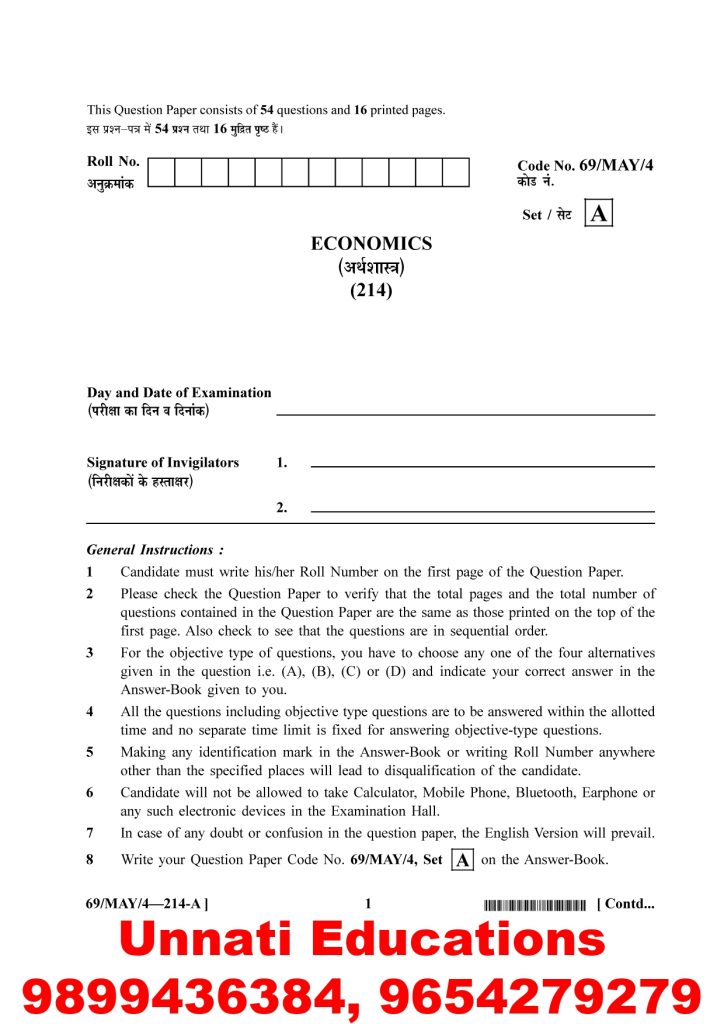
| Set / Code | Set A, Code No. 69/MAY/4 |
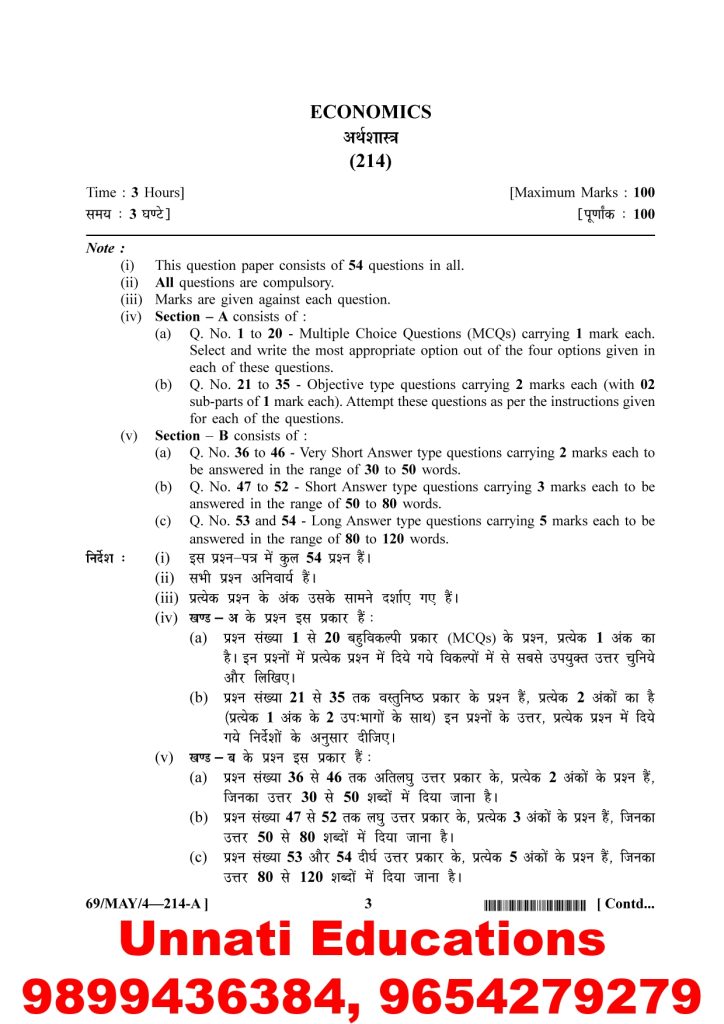
| Total Questions | 54 questions |
| Total Marks | 100 marks |
| Time | 3 hours (plus 15 minutes reading time) |
| Sections | Section A (Objective) + Section B (Descriptive) |
| Best use for 2026 | Practice paper pattern + topic priority + answer length control |
NIOS Class 10 Economics 214 Question Paper April 2025 (Set A)
Download Solved Question Paper PDF 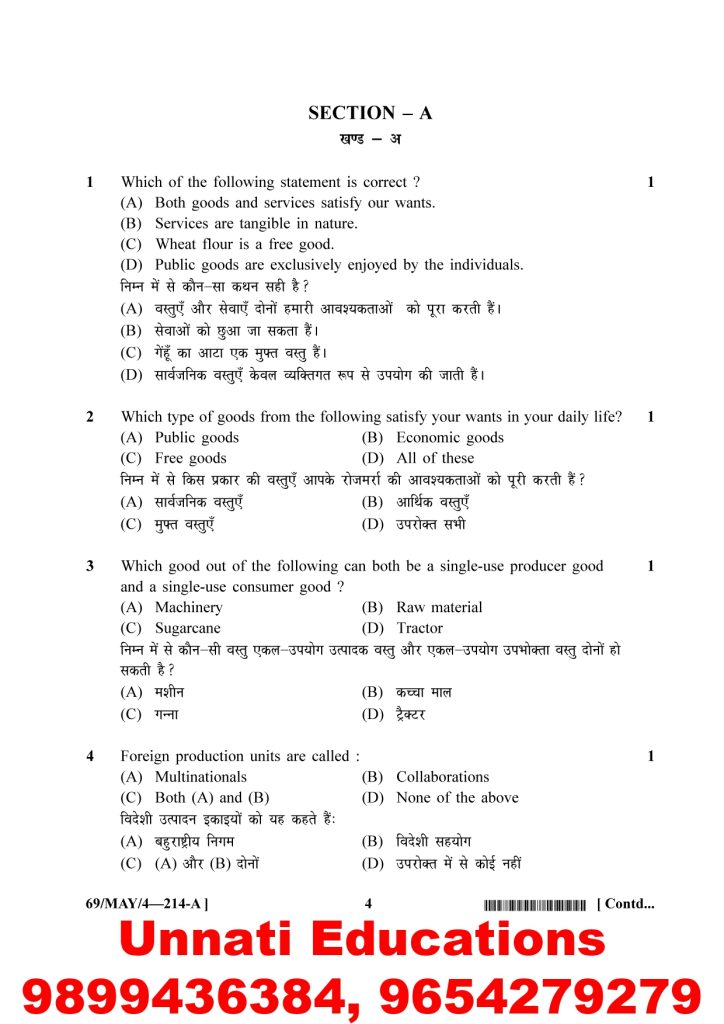
Download Solved Question Paper PDF 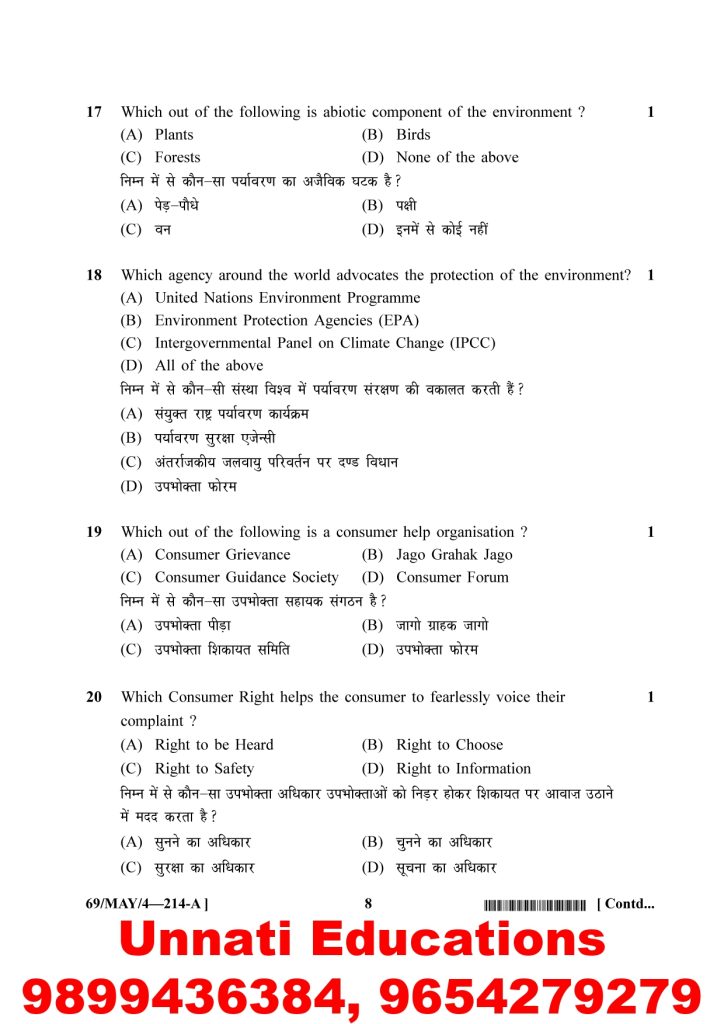



If you want another sets of question papers and its solution, then click on this Button.
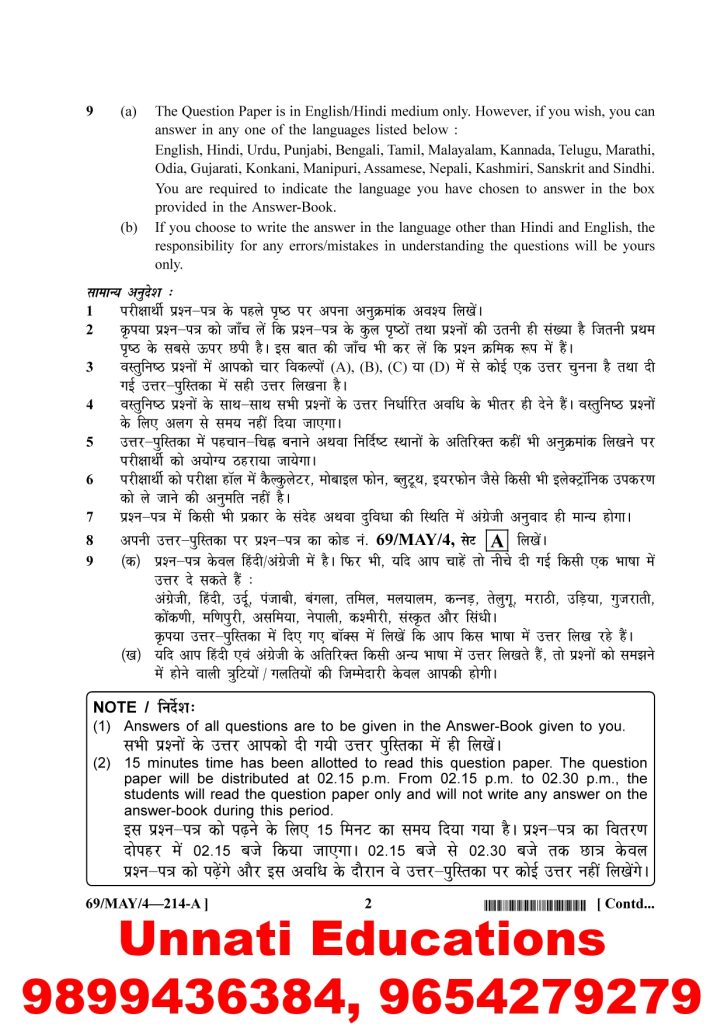
Paper Rules and format you must follow in the exam hall
The instructions in the paper are not just formalities. NIOS is strict with exam discipline, and many students lose marks due to avoidable mistakes.
- You must write your roll number only in the specified place.
- You must attempt all questions because the paper is entirely compulsory.
- You must not carry a calculator, mobile phone, Bluetooth, or any electronic device.
- You get 15 minutes only to read the paper before writing starts.
- If any confusion happens, the English version is treated as final.
These points are clearly mentioned in the first pages of the paper.
Exam Context: What this paper tells you about NIOS Economics (214)
This paper makes one thing clear: NIOS Economics is designed for students who can explain simple economic ideas in simple words. It avoids heavy theory and focuses on definitions, differences, basic numerics, and real-world issues such as the environment, consumer rights, and trade. If you prepare with only reading, you will feel confident but still lose marks in the exam. This paper demands writing practice because Section B is about short answers with word limits, not long stories.
Structure of the NIOS Class 10 Economics (214) Question Paper (April 2025 Set A)
On the instruction page, NIOS clearly divides the paper into Section A and Section B with fixed question types and marks.
Section A: Objective and semi-objective (50 marks total)
Part (a): Q1 to Q20 – MCQs (20 marks)
- 20 multiple-choice questions
- 1 mark each
- Four options (A, B, C, D)
- You pick the most appropriate option
Part (b): Q21 to Q35 – Objective type (30 marks)
- 15 questions
- 2 marks each
- Usually split into two sub-parts of 1 mark each
- Includes True/False, Fill in the blanks, Match the following
Section B: Descriptive answers (50 marks total)
Q36 to Q46 – Very Short Answer (22 marks)
- 11 questions
- 2 marks each
- Expected length: 30 to 50 words
Q47 to Q52 – Short Answer (18 marks)
- 6 questions
- 3 marks each
- Expected length: 50 to 80 words
Q53 and Q54 – Long Answer (10 marks)
- 2 questions
- 5 marks each
- Expected length: 80 to 120 words
- Includes table-based and list-based questions
This distribution is explicitly printed in the question paper.
Section A (MCQ) Analysis: What NIOS tested in April 2025 (Set A)
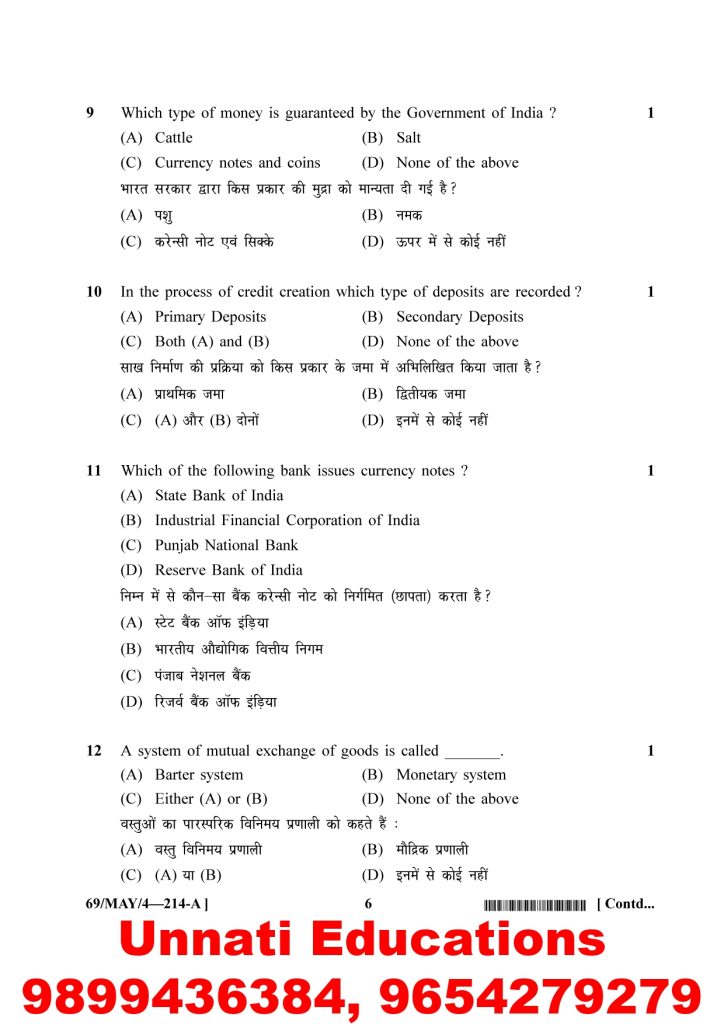
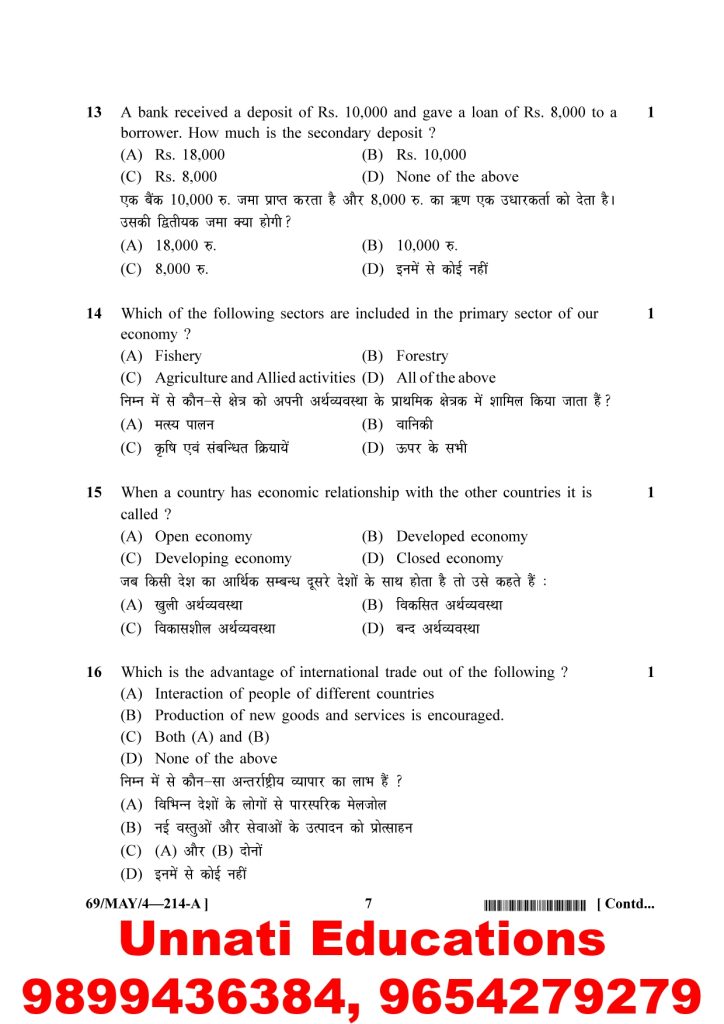
MCQs look easy, but they reveal what NIOS considers “core concepts.” In Set A, the MCQs cover the basics of economics, production, cost and revenue, money and banking, sectors of the economy, international trade, environment, and consumer protection.
MCQ themes you must master for 2026
- Basic economic terms like goods, services, and wants.
- Classification of goods, including economic goods and free goods.
- Producer goods versus consumer goods in daily examples.
- Production units like multinationals and indigenous units.
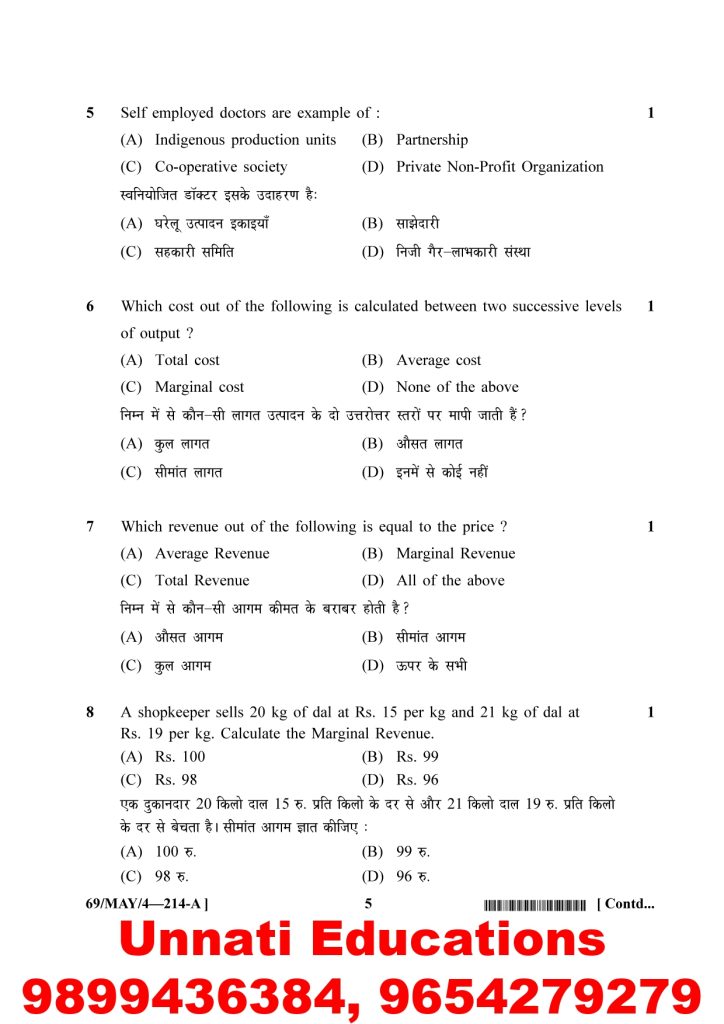
- Cost concepts, including marginal cost and its calculation, and meaning.
- Revenue concepts, including marginal revenue and average revenue.
- Money basics: legal tender and who issues currency.
- Banking: deposits and credit creation logic.
- Sectors: primary sector and open economy concept.
- International trade advantages and interaction effects.
- Environment: abiotic components and global agencies.
- Consumer rights and consumer help organisations.
One MCQ that signals NIOS’s style clearly
The marginal revenue MCQ where a shopkeeper sells dal at two prices is a classic NIOS move. It checks whether you understand “change in total revenue,” not whether you can solve a tough maths problem. For 2026, expect similar “small calculation” questions where the steps are simple, but the concept must be clear.
Section A (Q21–Q35) Objective Type: What NIOS expects beyond MCQs
This part is where many students lose marks because they treat it casually. In Set A, this section includes:
- True/False statements
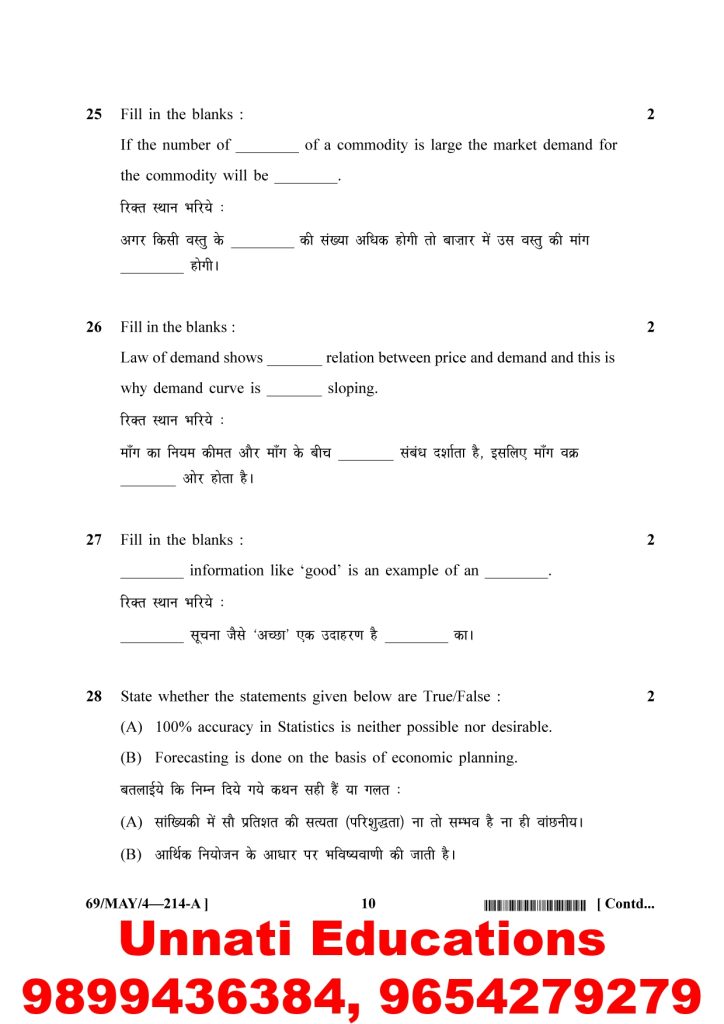
- Fill in the blanks
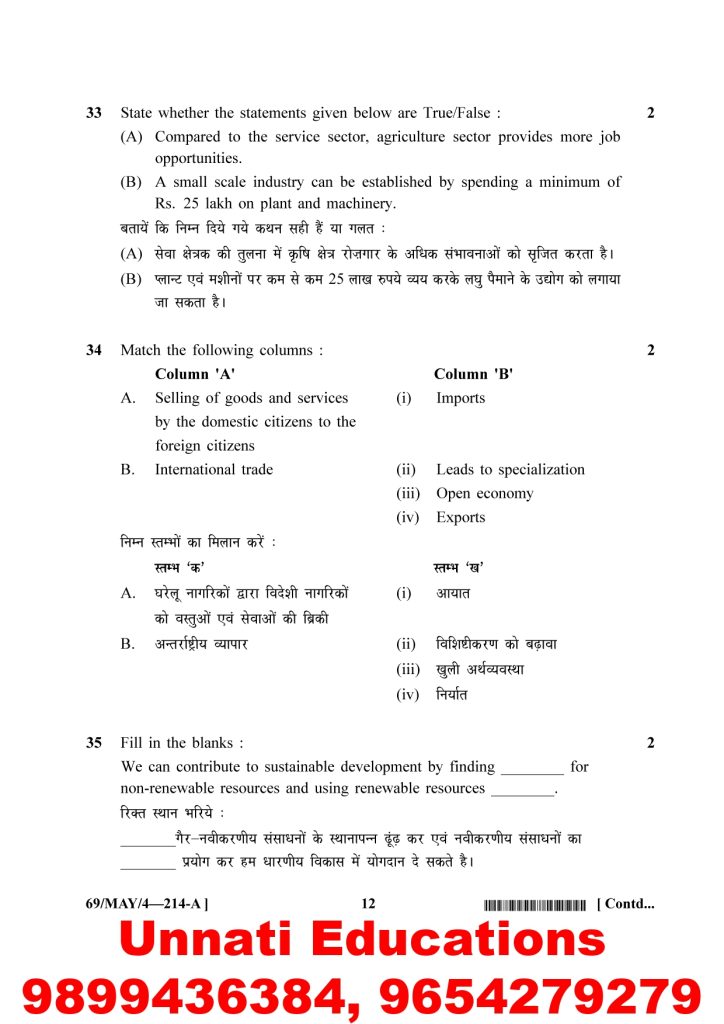
- Match the following
And the topics jump across units quickly.
What topics appeared in Q21–Q35 (Set A)
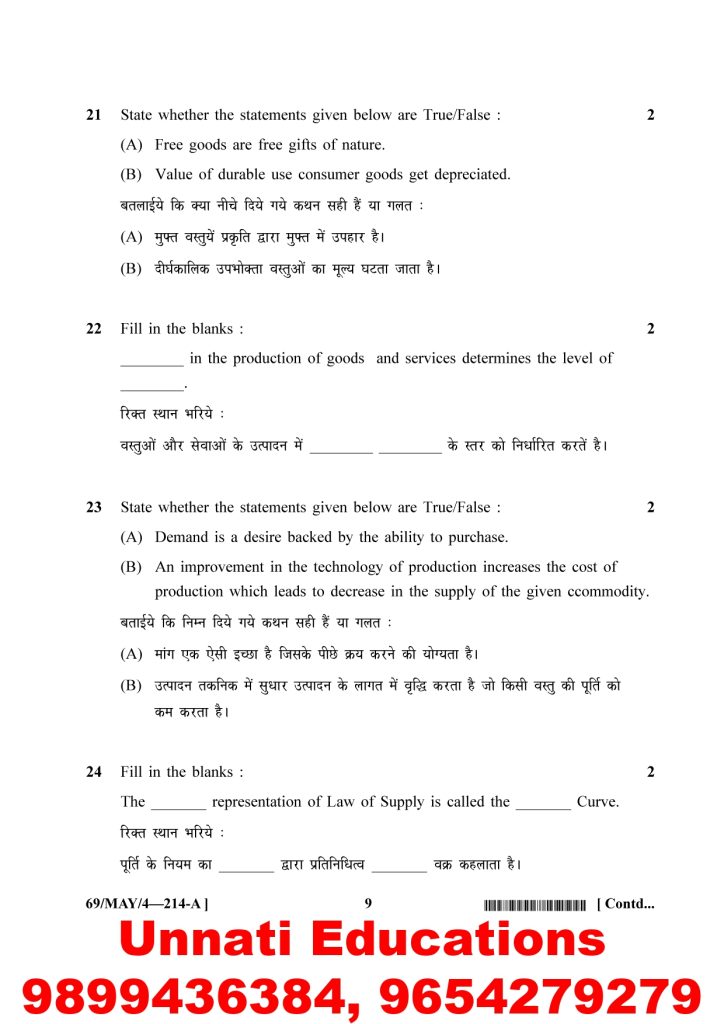
- Free goods and durable goods depreciation concepts
- Production and employment linkage via fill in the blanks.
- Demand definition and technology effect statement.
- Law of supply curve representation.
- Market demand is linked to the number of consumers.
- Law of demand relation and downward slope reasoning.
- Statistics: accuracy, forecasting, variables, and investigation methods.
- Sectors and employment comparison statements.
- Small-scale industry setup statement with investment mention.
- Trade definitions: exports and open economy via matching the following.
- Sustainable development blanks: alternatives and careful use.
What this means for 2026
If you want easy marks, this section is your scoring zone. But only if you revise definitions and “standard lines” properly. NIOS repeats these patterns, just changes the wording.
Section B preview: What kind of writing does the paper force you to do
Set A Section B covers definitions, differences, and simple explanations with OR options in some places. Here is what the Set A questions clearly demand:
- Meaning-based answers, not long stories.
- Different questions in short format with clear points.
- Money functions are explained with clarity and examples.
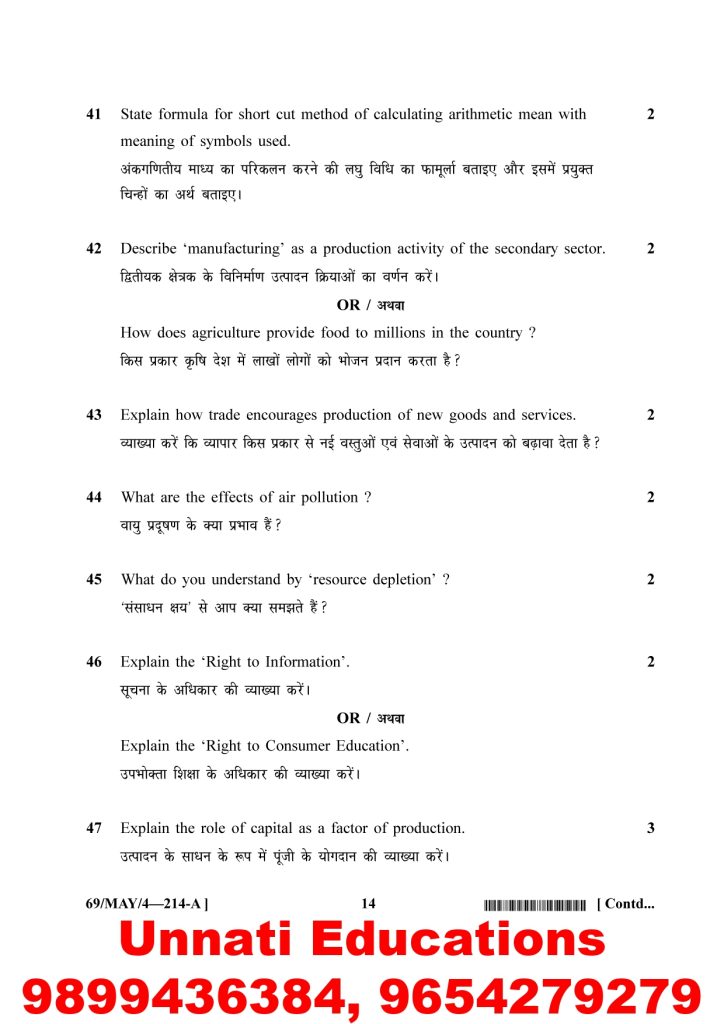
- Statistics mean formula and symbol meanings.
- Environment and resource depletion explained practically.
- Consumer rights explained in everyday language.
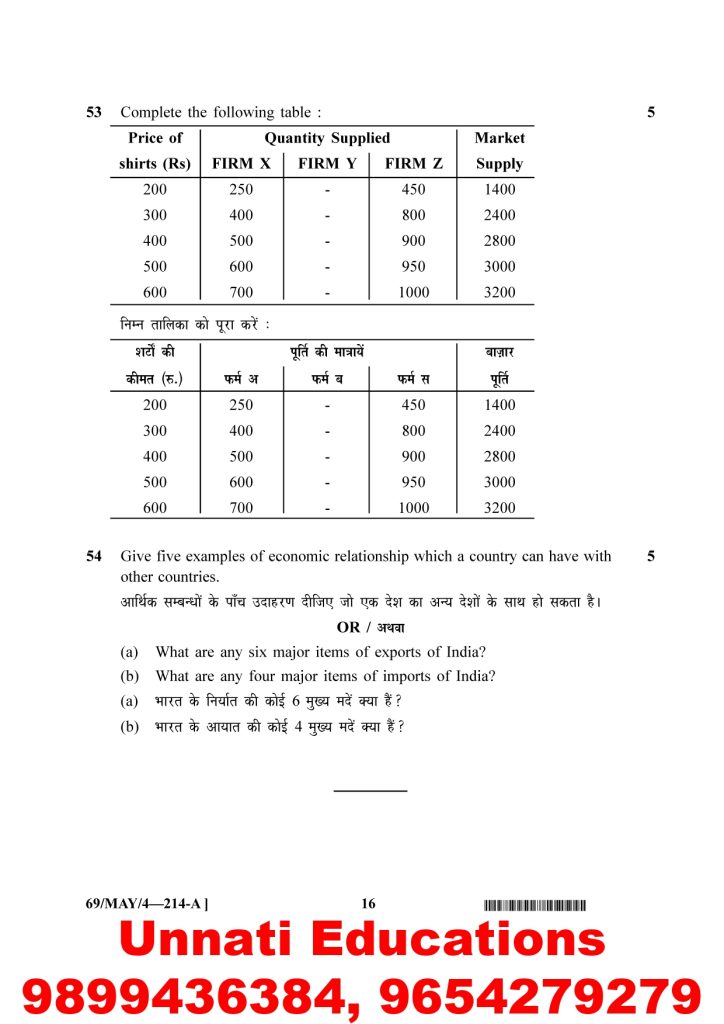
- Long answers include table completion and trade relationship lists.
In Part 2, we will do a full breakdown of Section B question-by-question with an answer approach and 2026 trends.
Topic Clusters: What got repeated across sections in Set A
This paper is not random. It keeps rotating around a few high-priority clusters.
Cluster 1: Basic economic activities and production system
You can see this in questions on consumption, production units, division of labour, technology types, and manufacturing as a secondary sector activity. For 2026, prepare these with:
- Meaning of production, consumption, and capital formation.
- Examples of production units and their real-life forms.
- Division of labour types with one clear example each.
- Labour-intensive versus capital-intensive with comparison points.
Cluster 2: Demand, supply, cost, and revenue fundamentals
Set A tests this cluster through direct definitions and also through tiny numericals and table-based logic. For 2026, revise:
- Demand versus desire difference in one tight paragraph.
- Law of demand relation and why the curve slopes down.
- Law of supply, supply curve idea, and factors.
- Marginal cost and marginal revenue mean clearly.
Cluster 3: Money, banking, and credit basics
This cluster appears in MCQs and descriptive questions through money functions, barter limitations, RBI role, and deposits. For 2026, focus on:
- Functions of money with one example each.
- The measure of value and deferred payment is explained simply.
- What barter lacks and why money solved it.
- Primary deposit versus secondary deposit idea.
Cluster 4: Statistics and data thinking
A lot of students ignore statistics in Economics 214, and then the paper surprises them. Set A includes average, the arithmetic mean shortcut formula, variables, forecasting, and investigation methods. For 2026, prepare:
- Why is the average calculated, and what does it show?
- A shortcut means the formula and symbols' meaning.
- Variable types and basic interpretation.
- Data collection methods and when they apply.
Cluster 5: International trade and sectors of the economy
Trade shows up through advantages, exports/imports, an open economy, and relationships with other countries. Sectors show up through primary sector items and manufacturing comparisons. For 2026, prepare:
- The advantages of international trade are clear.
- Meaning of exports and imports with examples.
- Open economy, meaning in one line, and an example.
- Sectors and examples that NIOS uses commonly.
Cluster 6: Environment and consumer rights
This paper combines economics with civic awareness, covering environmental agencies, abiotic components, air pollution effects, resource depletion, and consumer rights. For 2026, prepare:
- Consumer rights with a short explanation and one example.
- Right to Information and Right to Consumer Education.
- Effects of air pollution on health and the environment.
- Resource depletion and sustainable development actions.
NIOS Class 10 Eco 214 Question Paper Weightage 2025 (Set A) – Practical estimation for 2026
NIOS does not publish a “this chapter = this many marks” inside the paper. So the honest way is to estimate weightage based on how many questions came from each theme in this Set A paper. Below is a practical weightage map based on the visible question distribution in Set A.
| Topic Area (as seen in Set A) | Where it appeared | Estimated impact on total marks |
|---|---|---|
| Basic economic concepts and activities | MCQs + short definitions | Moderate to high scoring zone |
| Demand, supply, cost, revenue, numericals | MCQs + objectives + long table | High scoring and repeated often |
| Money, banking, credit creation | MCQs + descriptive functions | High scoring with direct questions |
| Statistics and averages | Objectives + formula questions | Moderate but easy marks if prepared |
| Sectors of economy and manufacturing | MCQs + descriptive comparisons | Moderate weightage and predictable |
| International trade and open economy | MCQs + long answer options | Moderate to high if attempted |
| Environment and sustainable development | MCQs + very short answers | Moderate and concept based |
| Consumer rights and protection | MCQs + 2-mark explanations | Easy marks with fixed definitions |
How to use this paper for 2026: A real scoring strategy
Most students waste this paper by only reading the questions once. If you want marks, use it as a repeat practice tool.
- Solve MCQs with a timer to build exam speed.
- Write objective answers in a clean, one-line format.
- Practice 2-mark answers in exactly 35 to 45 words.
- Train 3-mark answers with three clear points only.
- Do table completion questions without skipping steps.
- Learn two examples of trade and consumer rights.
If you do this properly, you stop guessing what NIOS will ask.
NIOS Class 10 Economics 214 Question Paper download PDF (Set A)
If you are collecting papers for practice, keep the Set A paper saved and revise it twice: once during syllabus completion, and once in final revision before exams. This is how toppers use previous papers, not by reading them like notes.
Eligibility and important dates for 2026 (NIOS Class 10 context)
Economics (214) is typically taken at the NIOS Secondary (Class 10) level. For 2026 planning, these are the practical points students should keep aligned:
- You should verify your stream and session when you register.
- You must track assignment and exam form windows early.
- You should not wait until the last week to upload tasks.
- You must keep your subject combination compliant.
- You should follow the official NIOS notices for deadlines.
Exact dates can change by session, so in 2026, your safest plan is to check updates monthly and keep your documents ready early.
Unnati Education: Study support built around real NIOS patterns
Unnati Education works in a simple way: we focus on what actually improves marks in NIOS, not what looks good on paper.
- We provide NIOS previous year question papers for pattern clarity.
- We provide solved TMAs aligned with NIOS standards.
- We provide practical files that match submission needs.
- We provide notes made for quick revision cycles.
- We share real-time updates, so you miss nothing.
For support, you can contact Unnati Education at 9654279279 or 9899436384.
Section B: Descriptive Questions – What NIOS Actually Tested
Section B carries 50 marks, which means this section alone can decide whether to pass, distinction, or improvement. The April 2025 Set A paper shows that NIOS prefers clarity, structure, and relevance over decorative language.
Q36–Q46: Very Short Answer Questions (2 marks each)
These questions look small, but are dangerous if you write vaguely. NIOS expects direct definition-based answers. Common themes asked in Set A included:
- Meaning of consumption and its role in economic activity.
- Difference between labour-intensive and capital-intensive techniques.
- Definition of demand with a real-life connection.
- Meaning of average and why it is calculated.
- Explanation of consumer awareness in daily life.
- Short explanation of the air pollution impact.
How to score full marks here in 2026:
- Write one definition sentence + one explanation sentence.
- Do not exceed 45 words.
- Avoid examples unless asked.
- Keep handwriting clean and spacing clear.
These questions reward students who revise textbook language properly.
Q47–Q52: Short Answer Questions (3 marks each)
This is where most students either gain confidence or lose control. In Set A, these questions required three clear points, not paragraphs. Topics covered included:
- Functions of money.
- Limitations of the barter system.
- Advantages of international trade.
- Role of statistics in economics.
- Effects of resource depletion.
- Consumer rights explanation.
Correct structure for 3-mark answers:
- Heading or key term in the first line
- Three bullet-style points written in sentence form.
- No storytelling, no repetition.
If you write four points, the marks are not increased. If you write two, marks are cut.
Q53–Q54: Long Answer Questions (5 marks each)
These questions separate average students from high scorers. Set A included:
- A table-based question on cost and revenue.
- A list-based question on trade relations and benefits.
Long Answer Strategy for 2026
For table-based questions:
- Read the table heading carefully.
- Calculate step-by-step without skipping.
- Show working clearly.
- Do not overwrite corrections.
For list-based questions:
- Write a short introduction line.
- Present five clear points.
- Each point must be distinct, not reworded.
NIOS gives marks per point, not for length.
What Set A Tells Us About 2026 Exam Trends
NIOS does not change its philosophy suddenly. The April 2025 Economics paper gives strong signals for 2026.
Expected Trends for 2026 Economics (214)
- Continued focus on basic definitions and clarity.
- Repetition of demand, supply, money, and trade concepts.
- Small numericals instead of heavy calculations.
- Statistics will remain scoring, but will be ignored by many.
- Environment and consumer rights will not disappear.
- Answer length discipline will matter more than creativity.
If you prepare from this paper, you are preparing in the right direction.
Common Mistakes Seen from This Paper
Learning from mistakes is faster than repeating them.
- Writing long paragraphs for 2-mark questions.
- Mixing two answers into one response.
- Forgetting formulas while knowing concepts.
- Ignoring statistics, thinking it is optional.
- Overwriting answers and making the examiner struggle.
NIOS examiners check hundreds of copies. Clear answers get checked faster and more positively.
How to Use This Paper as a Practice Tool for 2026
Do not treat this as reading material only.
- Solve Section A twice under time pressure.
- Rewrite Section B answers in your own words.
- Practice at least one full paper simulation.
- Compare answers with marking expectations.
- Improve handwriting spacing and speed.
This approach matters more than reading theory repeatedly.
Frequently Asked Questions (FAQs)
1. Is the NIOS Class 10 Economics 214 Question Paper April 2025 useful for 2026 preparation?
Yes, this paper is extremely useful for 2026 because it reflects the stable NIOS pattern of testing core economic concepts, definitions, and simple applications. When used with resources like NIOS TMA Class 10, it helps students understand exact answer length, common topics, and marking expectations without guesswork.
2. How important are previous year papers in NIOS Economics preparation?
Previous papers are crucial because NIOS repeats concepts even if questions are reworded. By studying a NIOS Class 10 previous year question paper , students learn the priority chapters, common mistakes, and real exam language that textbooks alone cannot provide.
3. What is the safest way to score in Section B of Economics 214?
The safest way is structured writing. Always stick to word limits, write point-wise answers, and use textbook terminology. Practising answers from the April 2025 paper, along with NIOS TMA Class 10, builds confidence and improves accuracy under exam pressure.
4. Are numericals important in NIOS Class 10 Economics?
Yes, numbers are important, but they are simple and concept-based. NIOS checks understanding, not speed mathematics. Solving table-based questions from an NCERT Class 10 previous year question paper helps students master these without fear.
5. Which topics should be prioritised most for 2026?
Demand and supply, money and banking, basic statistics, international trade, the environment, and consumer rights must be prioritised. These areas consistently appear across papers and are well supported by the NIOS TMA Class 10 for structured revision.
6. How long should answers be in the Economics exam?
Answers should strictly follow mark-based length. Two-mark answers are around 40 words, three-mark answers are around 70 words, and five-mark answers are around 100 words. Practising from a NIOS previous year question paper, Class 10, helps students control the length effectively.
7. Is Economics 214 scoring compared to other NIOS subjects?
Yes, Economics 214 is considered scoring if prepared correctly. Questions are direct and predictable. Using NIOS Class 10 TMA and solving previous papers improves writing confidence and helps secure consistent marks.
8. Should students memorise answers for Economics?
Memorisation alone is risky. Understanding concepts and then writing in your own simple words works better. Reviewing solved answers from an NIOS previous year question paper, Class 10, helps balance understanding with exam-ready phrasing.
Final Quick Summary: What This Paper Teaches You
The NIOS Class 10 Economics 214 Question Paper April 2025 (Set A) clearly shows that success depends on clarity, structure, and regular practice. It is not a subject of guesswork or heavy theory. Students who revise effectively, practise writing, and use authentic resources such as solved papers and TMAs always stay ahead. Unnati Education focuses on providing exactly these supports—solutions, guidance, and materials aligned with real NIOS exam patterns. If you need solved papers, TMAs, or structured help, you can reach out anytime and move forward with confidence toward your 2026 goals.