NIOS Class 10 Mathematics 211 Question Paper April 2025 – Complete Paper Analysis for 2026
The NIOS Class 10 Mathematics 211 Question Paper April 2025 gives a very clear message to students preparing for 2026: this exam is not about tricks or shortcuts. It is about understanding concepts, applying formulas correctly, and writing answers in a clean, step-wise manner. Students who prepared smartly found the paper scoring, while those who relied only on memorisation struggled. This detailed analysis is based on the actual April 2025 Set A paper and is written to help you understand how NIOS sets questions, what really matters, and how to prepare without wasting effort. Download Solved Question Paper PDF
Exam Context: Why the April 2025 Maths Paper Matters for 2026
NIOS does not change its Mathematics blueprint suddenly. Each session builds on patterns seen in previous exams. The April 2025 Maths 211 paper is important because it reflects the current evaluation mindset of NIOS, which will continue into 2026. This paper clearly shows:
- Focus on method and steps, not just final answers
- Balanced coverage of Algebra, Geometry, Mensuration, Statistics, and Trigonometry
- Predictable structure but application-based questioning
If you understand this paper properly, you automatically understand what NIOS expects from you in the next exam cycle.
NIOS Class 10 Mathematics 211 Question Paper April 2025 (Set A)
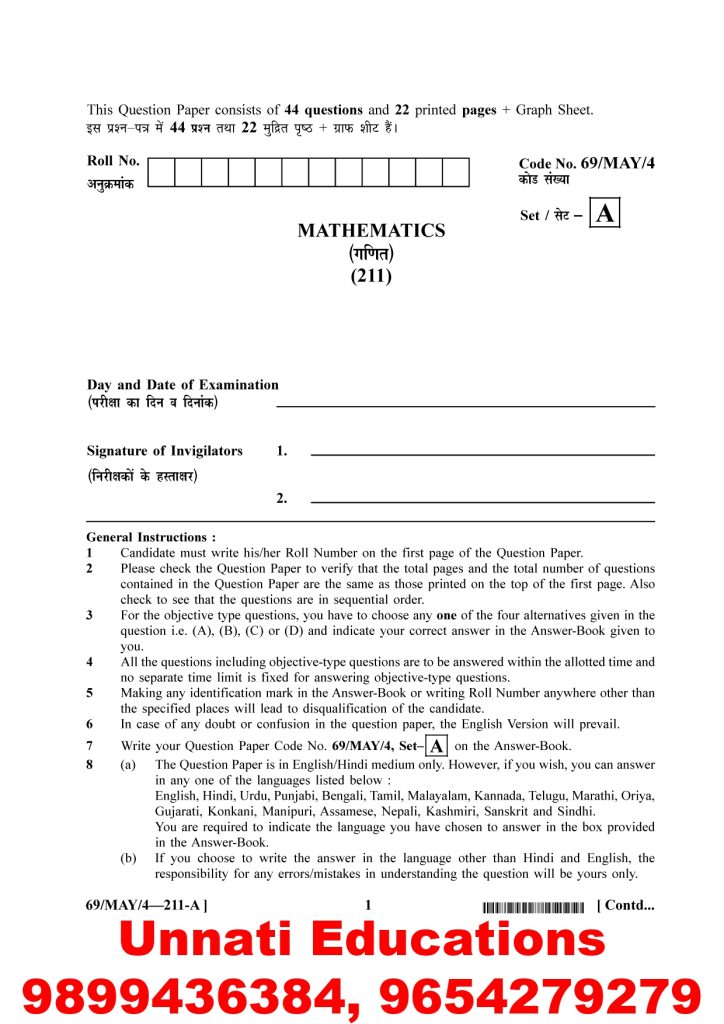
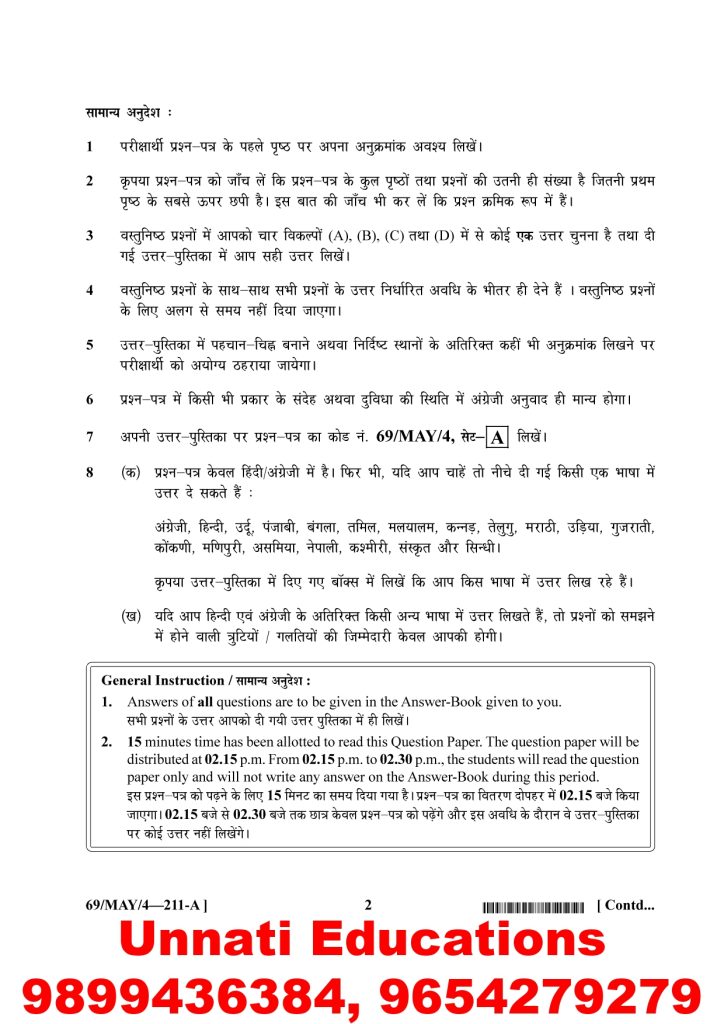
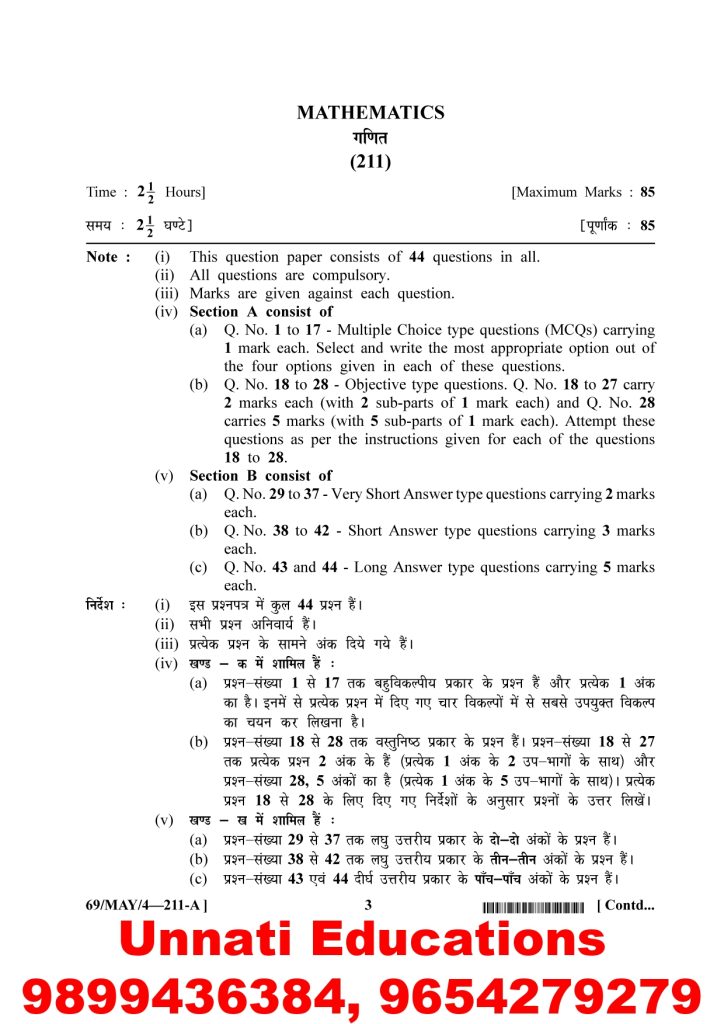
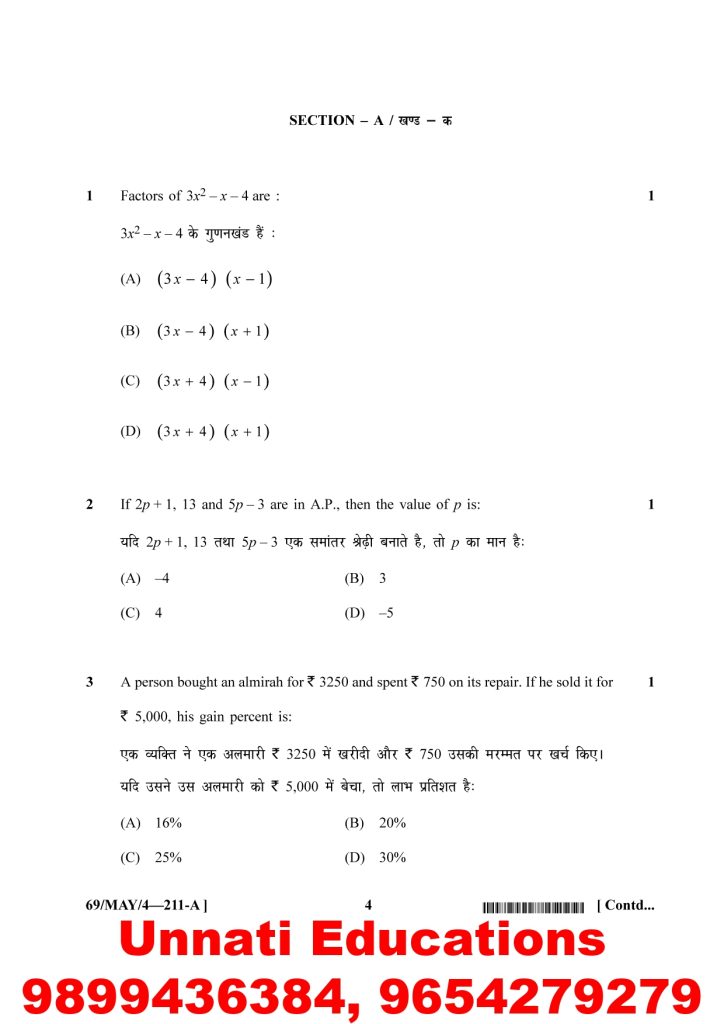
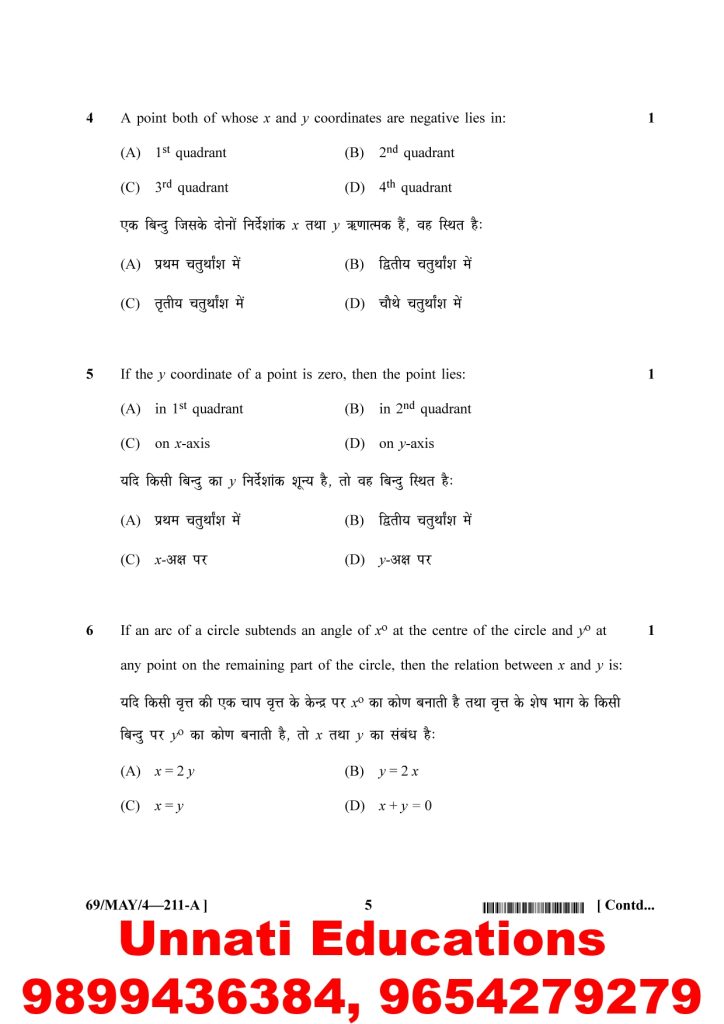
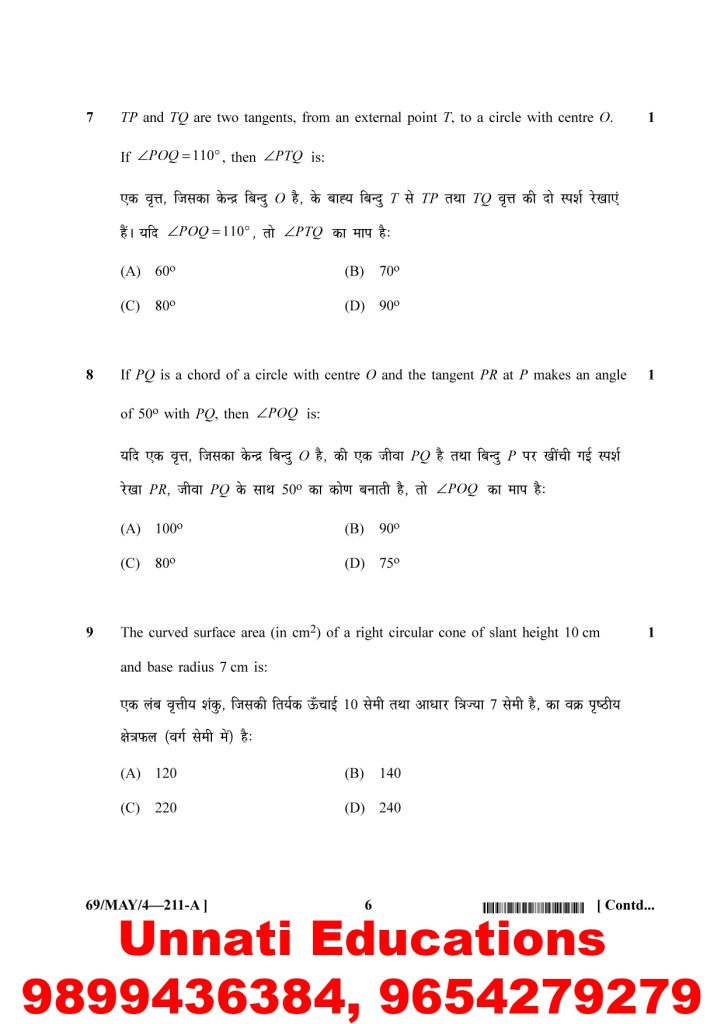
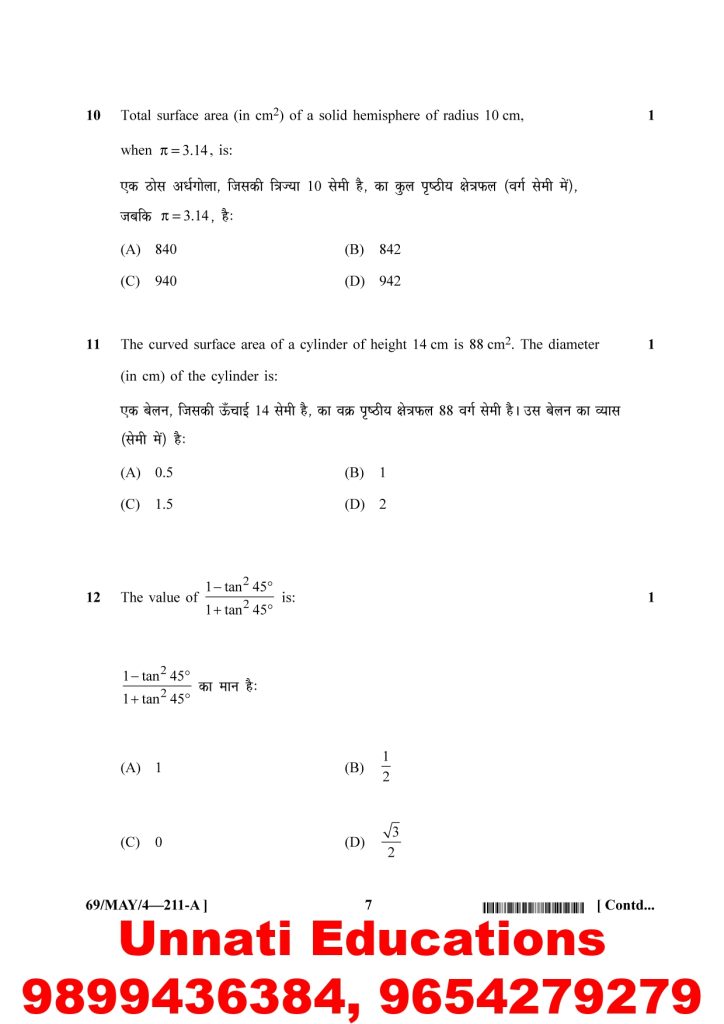
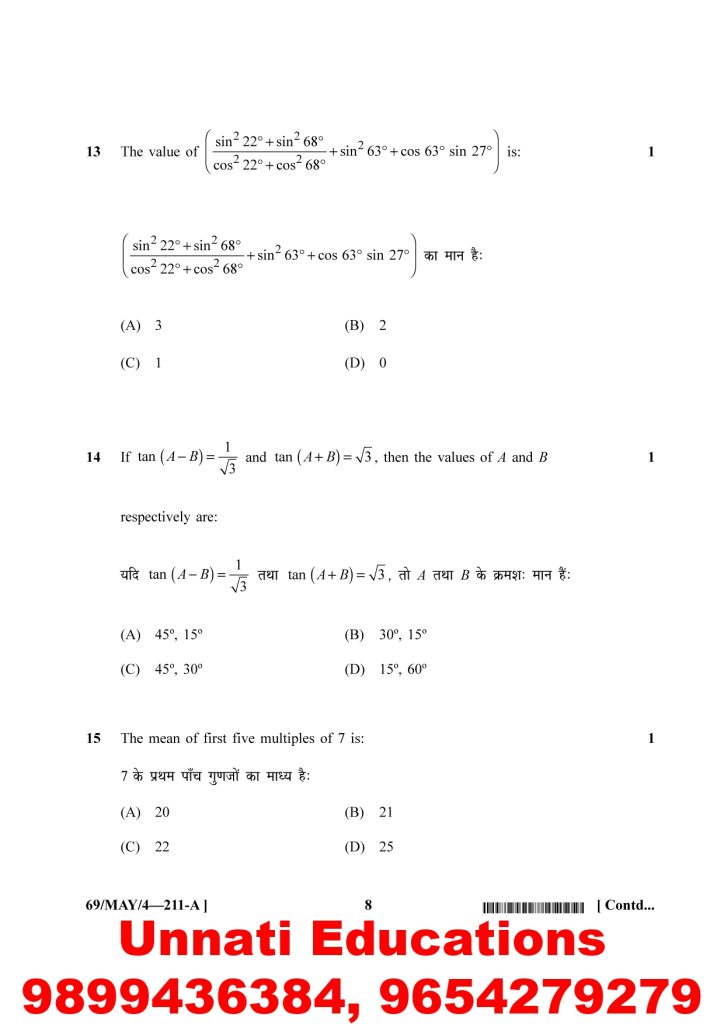
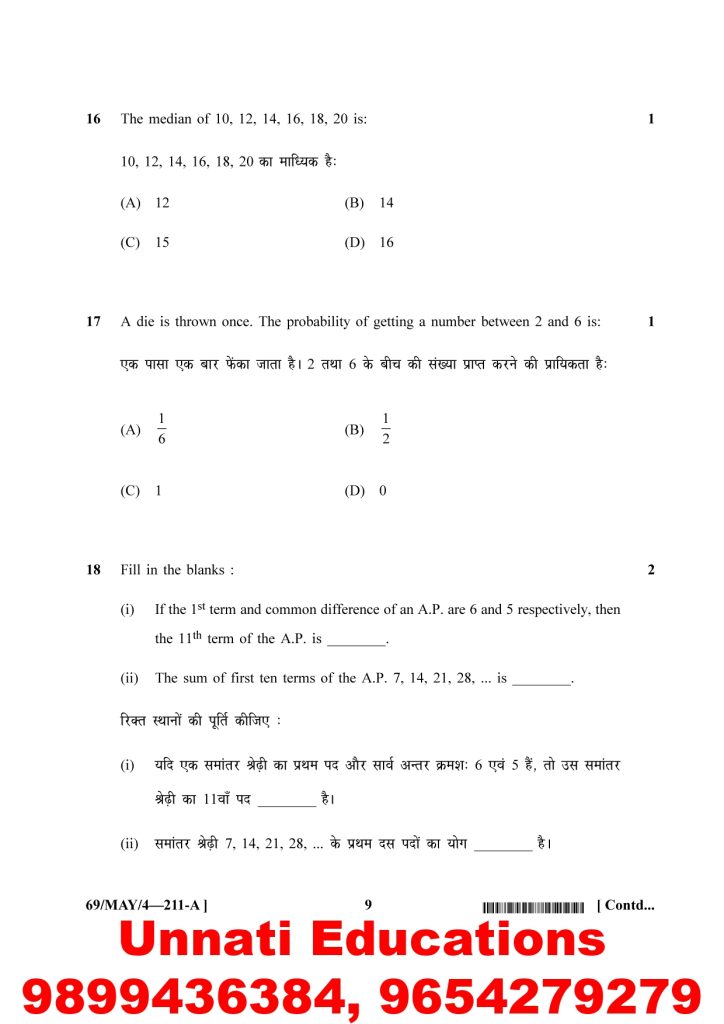
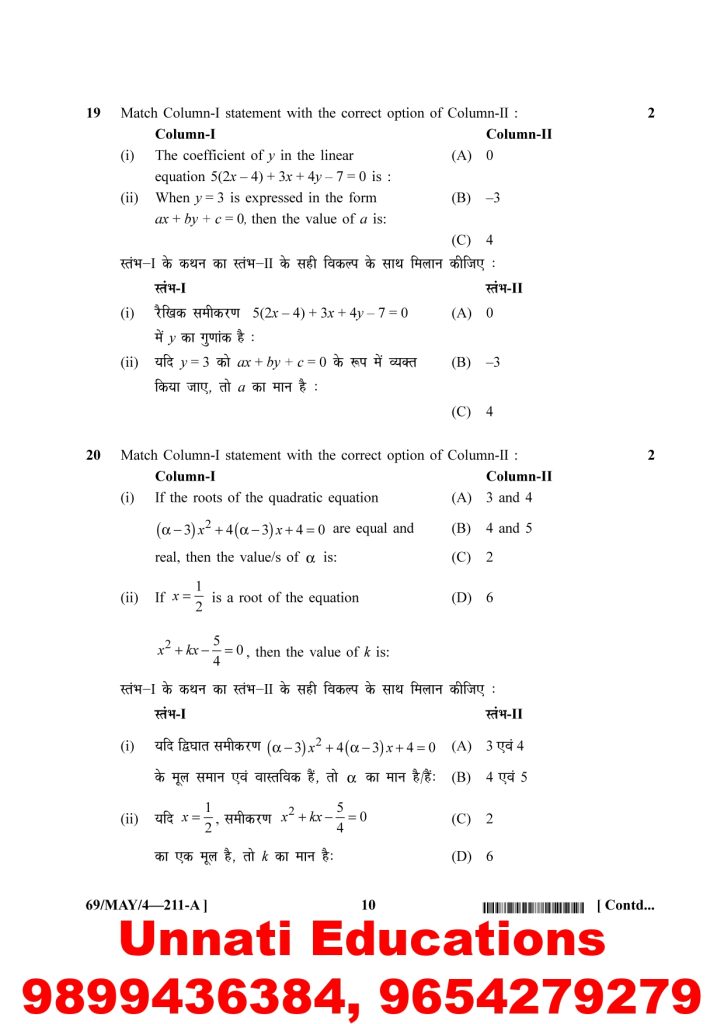
Download Solved Question Paper PDF 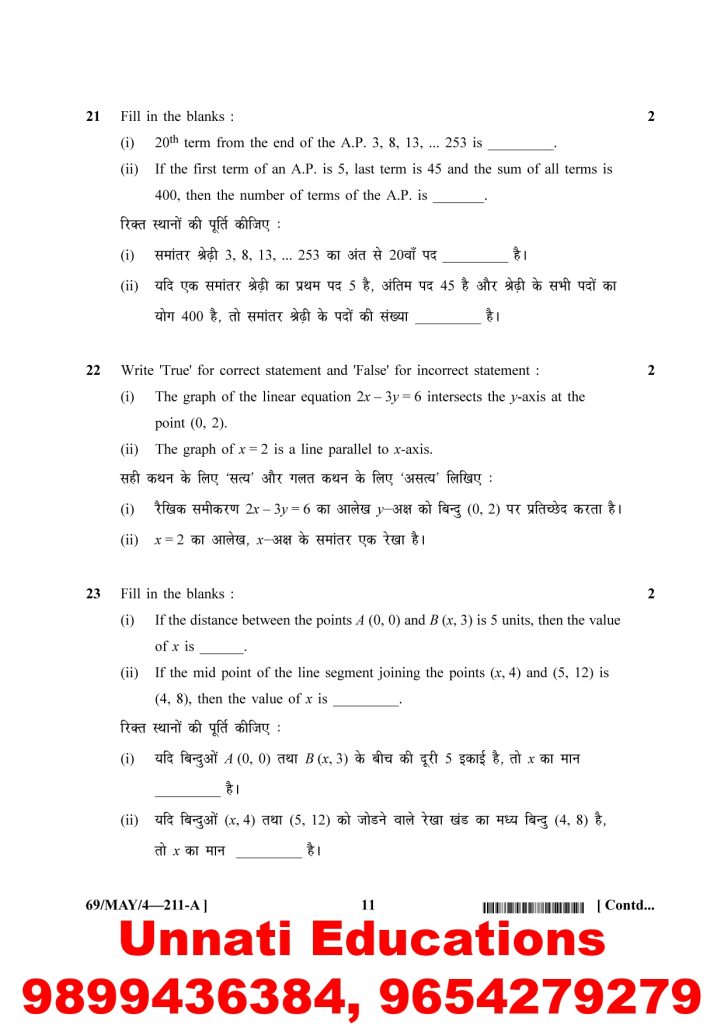
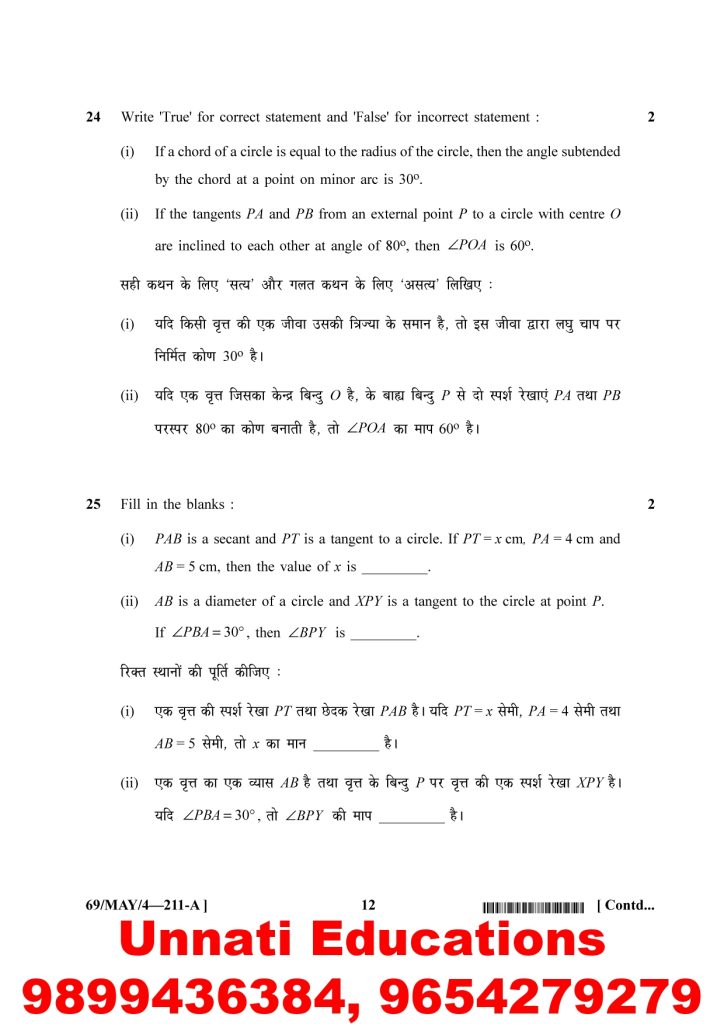
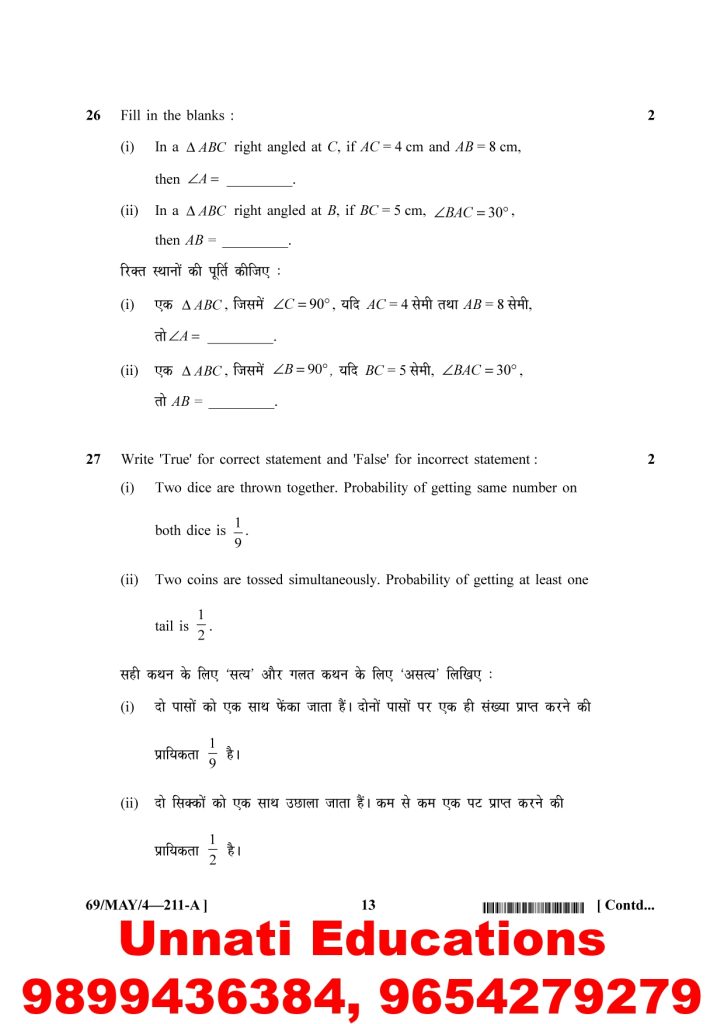
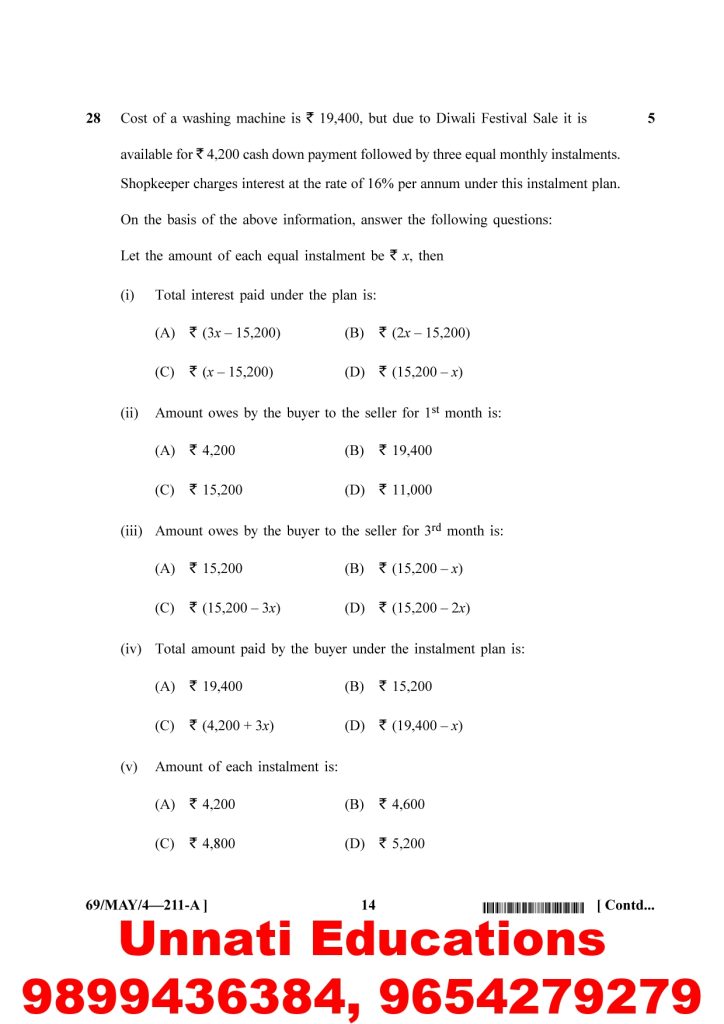
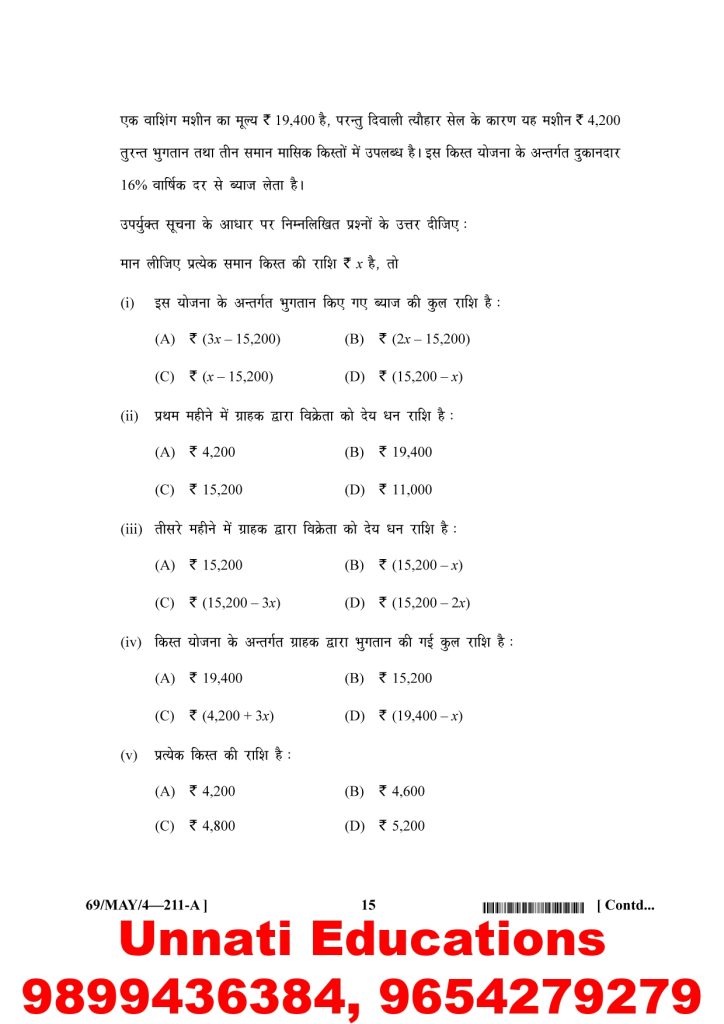
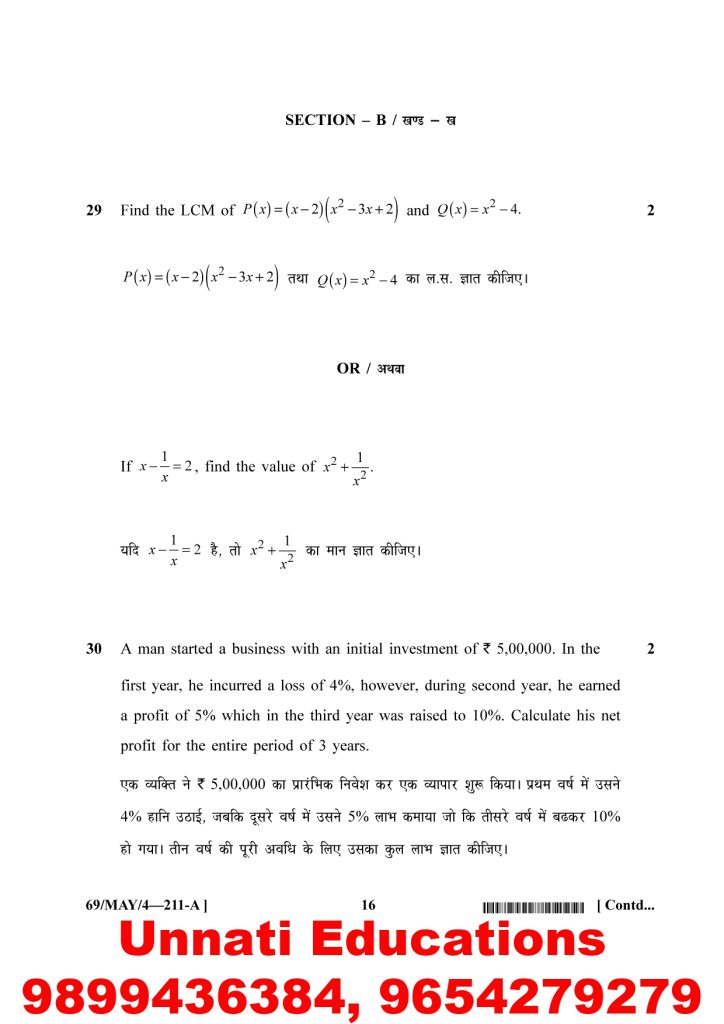
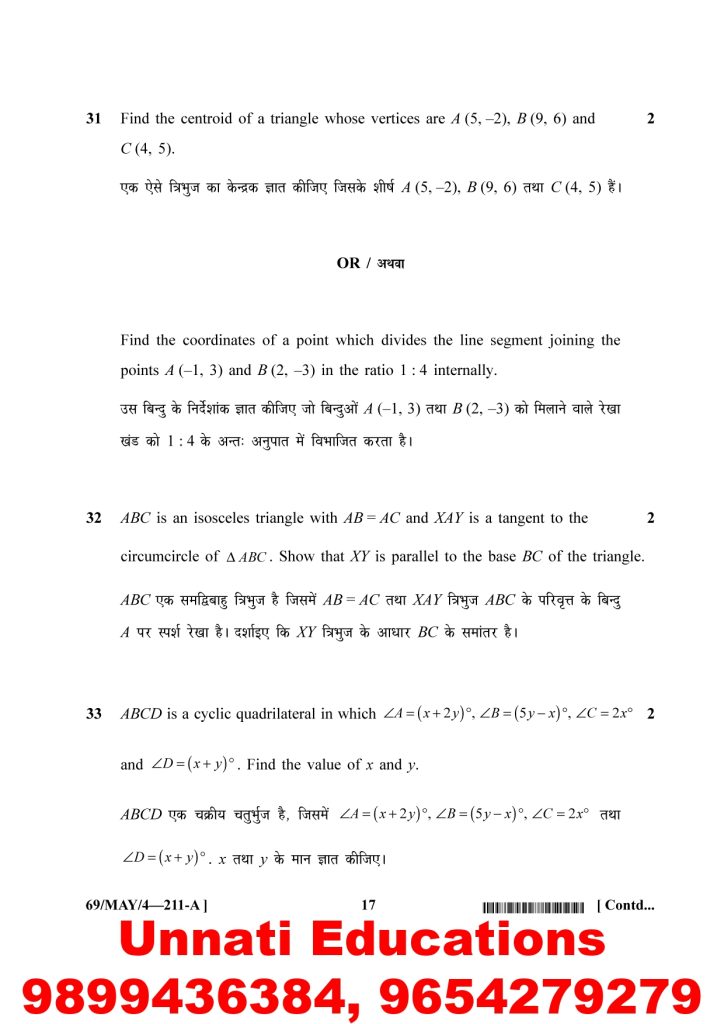
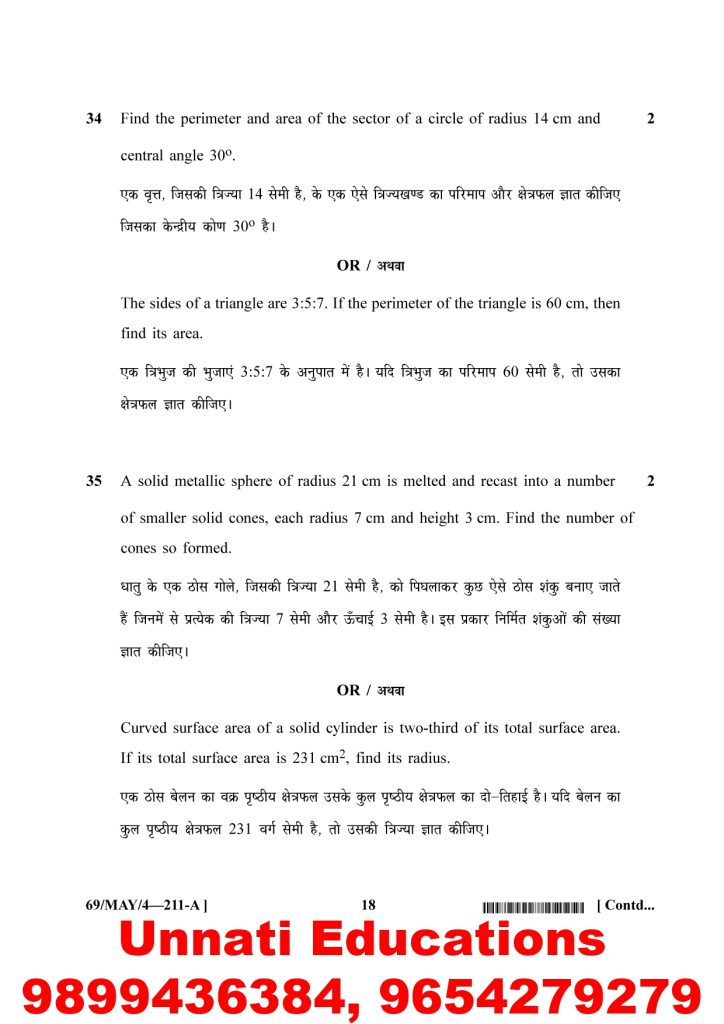
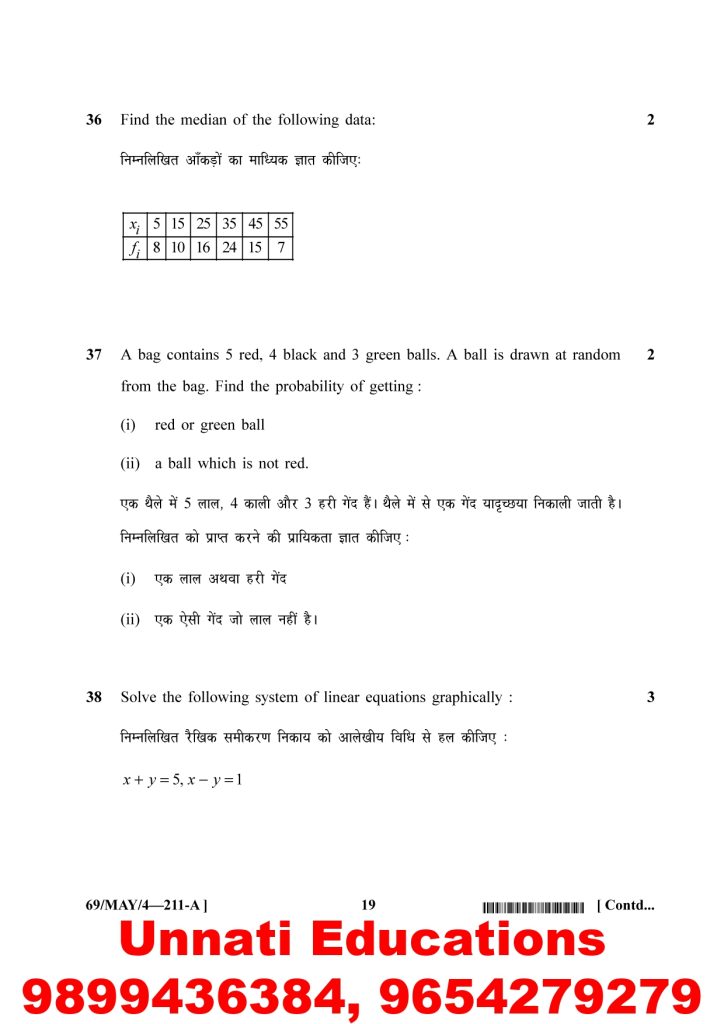
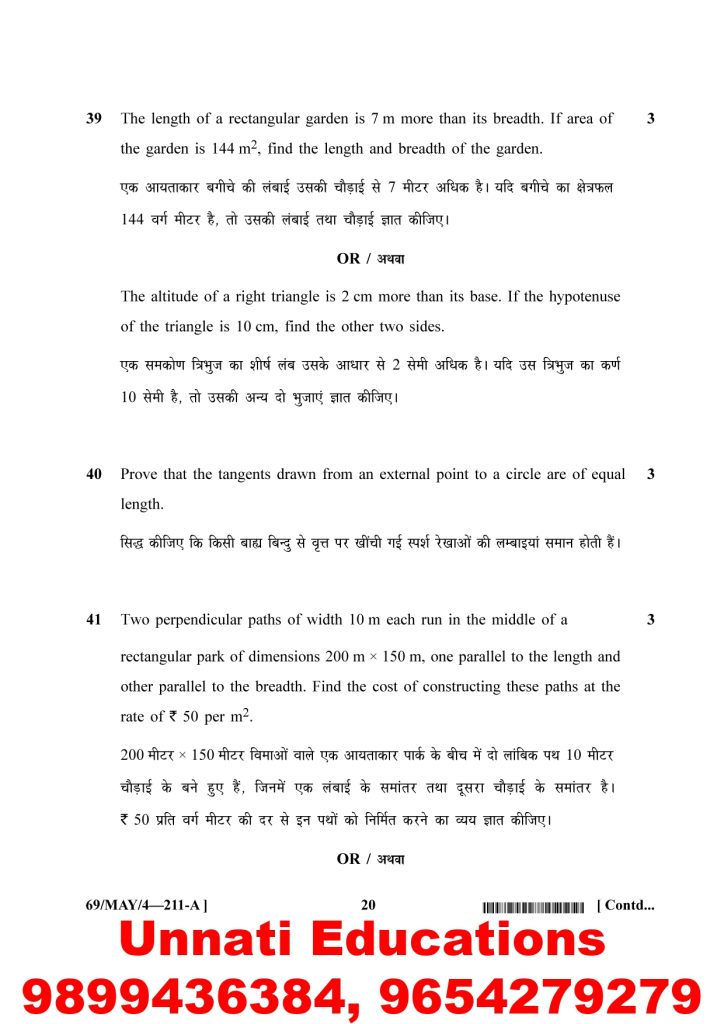
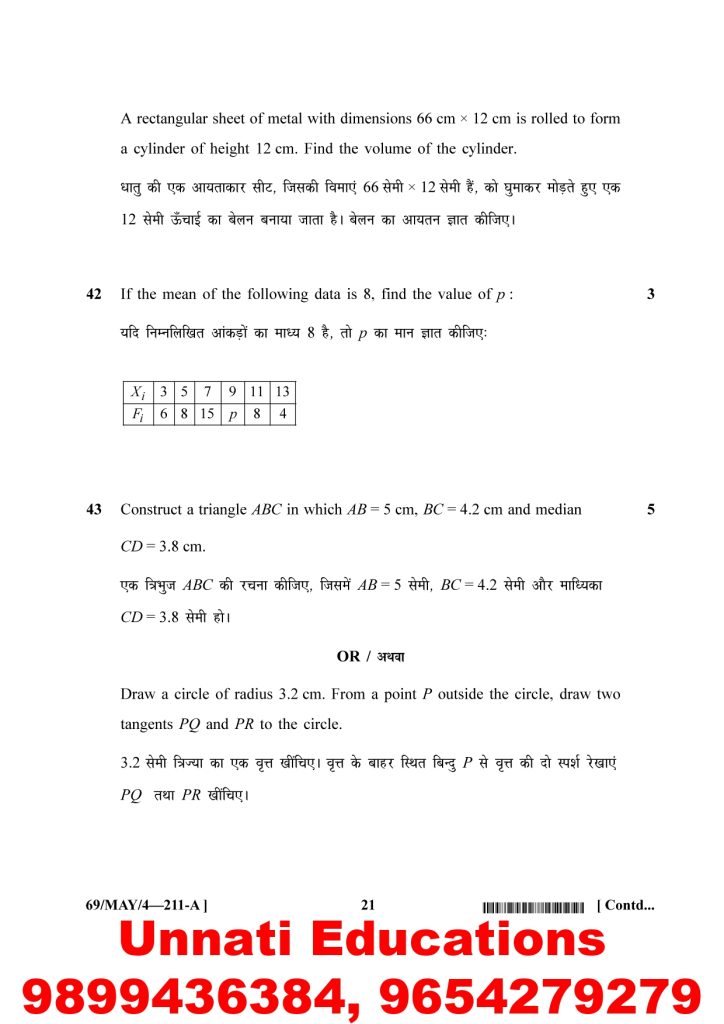
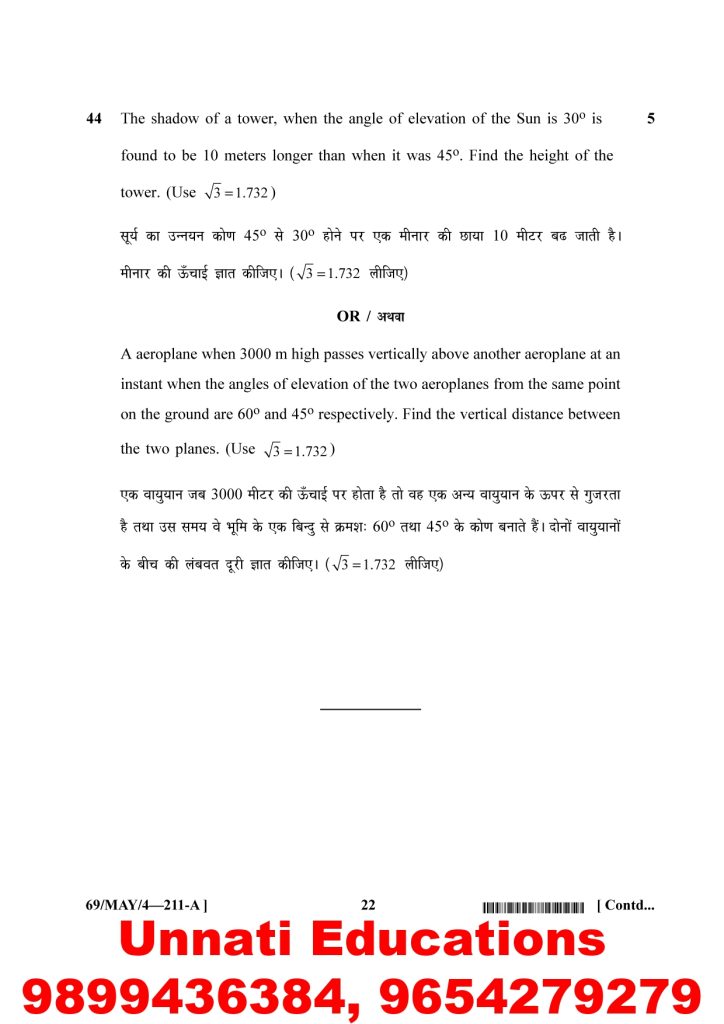
If you want another sets of question papers and its solution, then click on this Button.
Download Solved Question Paper PDF
NIOS Class 10 Mathematics Question Paper Overview (April 2025)
Before analysing questions, it is important to understand the paper at a glance.
Basic Exam Details
| Particular | Details |
|---|---|
| Board | National Institute of Open Schooling (NIOS) |
| Class | Secondary (Class 10) |
| Subject | Mathematics |
| Subject Code | 211 |
| Exam Session | April 2025 |
| Set | Set A |
| Total Marks | 100 |
| Time Allowed | 3 Hours |
This structure remains consistent across sets, which means preparation based on pattern is always safe.
Structure of the NIOS Class 10 Mathematics Question Paper
The Mathematics paper is divided into multiple sections to test different skills. NIOS does this intentionally so that students who understand concepts can score even if they are not extremely fast.
Key Objective of Paper Structure
- Section A checks basic understanding and accuracy
- Section B checks the clarity of thinking.
- Section C checks the depth of knowledge and presentation.
- Section D checks numerical handling and endurance.
Section-Wise Breakdown of Mathematics 211 Paper
Section A: Objective Type Questions
This section contains multiple-choice and very short objective questions. These questions test:
- Basic formulas
- Definitions
- Simple numerical logic
These questions are usually direct, but careless mistakes can cost marks quickly. Important points about Section A:
- Time-efficient but accuracy-sensitive
- No partial marks for wrong answers
- Best section to secure quick marks
Students who revise formulas daily usually score well here.
Section B: Short Answer Questions
Section B includes short numerical and conceptual questions. These questions require:
- Correct method
- One or two clear steps
- Final answer with proper calculation
Here, NIOS starts checking whether the student understands why a formula works, not just which formula to use. Common mistake in Section B:
- Writing answers without showing steps
- Skipping formula writing
Section C: Long Answer Questions
This is the most important section of the paper. Section C includes:
- Algebraic problems
- Geometry proofs or constructions
- Mensuration problems with multiple steps
Marks here depend heavily on:
- Logical flow of steps
- Correct formula usage
- Neat presentation
Even if the final answer is slightly wrong, students can still score partial marks if the steps are correct.
Section D: Numerical / Application-Based Problems
This section tests stamina and accuracy. Questions often come from:
- Mensuration
- Statistics
- Trigonometry
Students lose marks here mainly due to:
- Calculation errors
- Unit mistakes
- Rushing due to time pressure
This section separates average scores from high scores.
What the April 2025 Maths Paper Clearly Indicates
From the overall structure and question design, NIOS is clearly testing the following abilities:
- Ability to apply formulas in real questions
- Ability to write solutions step by step
- Ability to manage time across sections
- Ability to avoid careless calculation errors
This paper does not reward guesswork or rote learning.
Topic Coverage Pattern in April 2025 (Set A)
Although exact questions vary, the topic distribution followed a predictable pattern.
| Topic Area | Nature of Questions | Importance for 2026 |
|---|---|---|
| Algebra | Equations, simplification, reasoning-based problems | Very high |
| Trigonometry | Identities, standard values, application | Very high |
| Mensuration | Surface area and volume based calculations | High |
| Statistics | Mean, interpretation, calculation | High and scoring |
| Probability | Simple event-based questions | Moderate but easy marks |
| Geometry | Conceptual understanding and reasoning | Moderate |
This pattern is extremely useful for planning 2026 preparation.
Why Many Students Found the Paper “Lengthy”
The paper was not conceptually difficult, but it felt lengthy because:
- Many questions required full working steps
- Multiple sections needed careful reading.
- Poor time management caused pressure.
Students who practised writing full answers within time did not face this issue.
How This Paper Should Change Your Study Approach
If you are preparing for 2026, this paper clearly tells you:
- Reading solutions is not enough.
- Writing practice is compulsory.
- Formula revision must be daily.
- Mock tests must be timed.
Random studying will not work for NIOS Mathematics.
Role of Previous Year Papers in Maths 211 Preparation
Using the NIOS Class 10 Mathematics Question Paper download PDF correctly can dramatically improve scores. Previous year papers show:
- How does NIOS frame questions?
- Where do students lose marks?
- Which chapters repeat frequently?
If you keep a separate folder for the NIOS Class 10 previous year question paper and revise them properly, your confidence increases naturally.
Support Resources from Unnati Education
Unnati Education supports NIOS learners by providing:
- Clean, exam-oriented previous year papers.
- Solved TMAs strictly as per the NIOS format.
- Clear notes focused on scoring areas.
If you are organising your study material, also keep your NIOS Class 10 TMA separate so that theory and internal assessment preparation do not mix. For guidance or resources, you can contact:
- Phone/WhatsApp: 9654279279, 9899436384
Deep Analysis of the Paper: What This Exam Actually Tests
The April 2025 Mathematics paper is not designed to reward shortcuts. It rewards learners who can do three things consistently: read the question carefully, choose the correct method, and present steps neatly. What you should notice from this paper is that NIOS balances the exam across core areas like Algebra and Geometry, and it keeps a strong focus on application-based questions rather than purely direct formula questions. This is why many learners lose marks even after “studying a lot.” They prepare chapters randomly, but the paper demands structure.
Section B and Section C: Where Most Students Gain or Lose Marks
Section A is usually manageable if you practice. The real score difference happens after that, because Section B and Section C include short and long answers that test your thinking. In April 2025, these sections showed a clear pattern:
- More emphasis on writing correct steps than writing final answers only.
- More marks for method-based problems in Algebra and Geometry.
- More risk of silly mistakes in Mensuration and Statistics.
If your basics are weak, you will struggle here. If your basics are clear, these sections become your scoring advantage.
Most Repeated Chapters and High-Return Topics for 2026
Based on Set A and Set B together, the paper strongly supports these topics for revision priority:
- Statistics and central tendency questions were direct but required clean calculation steps.
- Probability was simple, but careless fraction mistakes can cost marks.
- Trigonometry identities and values appeared with a method requirement, not just memory.
- Mensuration appeared through cylinder-related surface area and formula application.
- Algebra covered core concepts like equations and standard forms in a predictable way.
If you want a high score in 2026, your safest plan is to master these first before moving to lower-frequency chapters.
NIOS Class 10 Maths Question Paper Weightage 2025: Practical Weightage Understanding
NIOS does not publish “chapter-wise marks” inside the paper, but the practical pattern is clear from the distribution of questions. You can treat weightage like this:
- Algebra + Trigonometry usually dominates the problem-solving portion
- Geometry + Mensuration often takes medium-to-high space.
- Statistics + Probability stays consistent and scoring.
- Basic arithmetic reasoning is tested in MCQs and short answers.
If you study weightage the right way, you stop wasting time on low-return areas and start targeting marks.
Table: Practical Topic Weightage Based on April 2025 Set A and Set B
(Use this table like a revision map, not as a rigid guarantee.)
| Unit / Topic Group | How It Appears in Paper | Scoring Potential in 2026 | Risk Level for Students |
|---|---|---|---|
| Algebra (Equations, Polynomials, Patterns) | Short answers and method-based problems | Very high if steps are correct | Medium, due to calculation mistakes |
| Trigonometry | Identities, values, simplification questions | High with regular practice | High if basics are weak |
| Mensuration (Cylinder, Surface Areas) | Formula application and substitution | High if formulas are memorized | Medium, due to unit confusion |
| Statistics | Mean, median, and interpretation style questions | Very high because questions are direct | Low if calculation is neat |
| Probability | Simple event-based probability | High and fast scoring | Low, unless fractions go wrong |
Set A vs Set B: What Actually Changes and What Stays the Same
Students often panic thinking Set B is “harder.” That is not the right way to judge it. Here is the truth: NIOS keeps the same paper structure, same marking blueprint, and similar difficulty level. The changes are mainly:
- different numerical values
- different wording
- Sometimes a different chapter appears in place of another.
So, if you prepare properly, you are safe for all sets.
NIOS Class 10 Mathematics Question Paper download PDF: How to Use It Correctly
Downloading the paper is not enough. Most learners waste paper by only reading it once. Use the paper correctly like this:
- Solve it once as a full mock test with a timer.
- Check where you lost marks and why you lost them.
- Create a revision list of only those weak topics.
- Re-solve the same paper after 10 days without seeing solutions.
- Repeat this method with at least two more papers.
This is how toppers prepare, even if they do not call themselves toppers.
The Smart 2026 Preparation Plan That Matches This Paper
If you want a real plan that fits NIOS, stop making random timetables. Your plan should match the exam pattern.
30-Day Framework (Practical and Realistic)
- Week 1 should rebuild basic concepts and formulas clearly.
- Week 2 should focus on solving mixed questions daily.
- Week 3 should focus on writing full-step answers neatly.
- Week 4 should be mock tests, error fixing, and revision only.
This plan works because it matches how NIOS marks answers.
Answer Writing Rules That NIOS Expects in 2026
Many students lose marks even when their approach is correct. That happens when the checker cannot see your steps properly. Follow these rules:
- Write the formula first, even if it feels obvious
- Substitute values on the next line, not the same line
- Show at least one key step for every calculation.
- Use correct units where required, not only numbers.
- Box the final answer clearly after confirming it.
These habits improve marks immediately, even without extra studying.
Common Mistakes Seen in April 2025 That You Must Avoid
These mistakes repeat every year, and they are fully avoidable.
- Students skip steps and expect marks for the final answer.
- Students mix up units in mensuration and lose accuracy.
- Students forget to simplify fractions in probability answers.
- Students rush trigonometry identities without verifying values.
- Students do statistical calculations correctly, but write the final value incorrectly.
If you fix these five things, your score improves without any new chapters.
Eligibility and Important Dates for NIOS Class 10 in 2026
Eligibility is generally stable, but exact deadlines can change every year. You should always verify on the NIOS admission portal before final submission. For Secondary (Class 10), NIOS typically requires the learner to meet the minimum age criteria for Secondary level, and admissions happen in blocks under Stream 1. For deadlines, many third-party education sites publish expected schedules, but you should treat them as tentative until confirmed on the NIOS official portals. If you want, Unnati Education can guide you step-by-step so you do not miss document steps, subject selection, or exam form timing.
Unnati Education Support (For Study, Not Just Information)
Unnati Education works with NIOS learners who want clarity, not confusion. If you are preparing for Maths 211 in 2026, you should not depend only on guessing and free PDFs. What we provide for NIOS learners:
- NIOS previous year question paper that match real patterns
- Solved TMAs prepared as per NIOS format and rules
- Practical files and structured notes were required.
- Regular updates about deadlines and exam-related steps
For support, call or WhatsApp: 9654279279, 9899436384. Use these resources intelligently along with your practice, because practice without correction is slow. Also, if you are collecting practice resources, keep one place for NIOS TMA and another place for NIOS previous year paper, so your revision stays organised.
Frequently Asked Questions (FAQs)
1) Is the NIOS Mathematics 211 paper hard in the April sessions?
It is not “hard” if your basics are clear, but it becomes difficult when you skip practice and rely only on reading. The paper rewards a step-wise method and neat presentation. If you practice mixed questions and revise formulas properly, this becomes a scoring subject in 2026.
2) How many mock tests should I do for Maths 211 before the exam?
You should do at least 5 timed mock tests, but only doing mocks is not enough. After every test, you must write down mistakes and re-solve those exact question types. This is how you turn weak areas into scoring areas before the final 2026 exam.
3) What should I focus on first: Algebra or Geometry?
Start with Algebra and basic trigonometry because they build confidence and appear frequently across sets. Once your speed improves, move to geometry and mensuration. The best approach is to master formulas and methods first, then practice mixed papers so you don’t panic in the exam.
4) Do Set A and Set B differ in mark distribution?
No, the marks distribution and section structure remain the same. Only the values, wording, and sometimes chapter selection change slightly. That is why preparing from the pattern is smarter than preparing for one set. If your method is correct, you will handle both sets confidently.
5) How do I avoid silly mistakes in mensuration questions?
Write the formula first, then substitute values clearly on the next line. Keep units consistent and do not rush the arithmetic. Many learners lose marks because they jump directly to the final value. Neat substitution and step separation reduce mistakes and improve checker confidence in your answer.
6) Are statistics questions easy marks in NIOS Maths?
Yes, they are usually direct and scoring, but only if your calculation is neat. Students lose marks when they calculate correctly but write the final answer incorrectly. Practice mean, median, and interpretation questions with full steps so you build accuracy and speed for 2026.
7) What is the best way to revise trigonometry for NIOS?
Revise identities and standard values daily in short sessions instead of doing it once a week. Then solve 10 mixed problems every alternate day. The goal is to recognise patterns quickly. If you do this consistently, trigonometry becomes one of the fastest-scoring areas in the paper.
8) Can I score above 70 in Maths 211 with self-study?
Yes, but only if your self-study includes real practice, error correction, and timed writing. Reading solutions is not self-study; solving and checking is. If you follow a structured plan and keep improving weak areas weekly, 70+ is realistic for 2026 without coaching pressure.
Final Quick Summary
If you prepare using the pattern, fix presentation mistakes, and practice the highest-return topics first, you can score confidently in 2026. Part 2 showed how Set A and Set B stay structurally similar and how to target marks through method-based preparation. Keep practising with the NIOS Class 10 Mathematics 211 Question Paper April 2025 approach, and use Unnati Education if you need solved resources, guidance, or exam-ready support.