NIOS Class 10 Social Science 213 Question Paper April 2025 (Set A) – Complete Paper Analysis, Weightage, Topics, Map Skills, and 2026 Preparation Plan
If you are preparing for the 2026 exam, the NIOS Class 10 Social Science 213 Question Paper April 2025 (Set A) is one of the best papers to understand what NIOS actually asks. This paper is not random. It follows a clear pattern, repeats core themes, and rewards students who write to-the-point answers with facts, examples, and map practice. This guide is written the way a student needs it: simple, practical, and focused on scoring. I have analysed the Set A paper carefully and broken it into sections, topics, and what you should do differently for 2026. Download Solved Question Paper PDF
Overview Table: NIOS Class 10 Social Science 213 Question Paper April 2025 (Set A)
| Detail | What it means for you |
|---|---|
| Subject | Social Science (213) |
| Set | Set A |
| Exam Time | 3 hours |
| Maximum Marks | 100 |
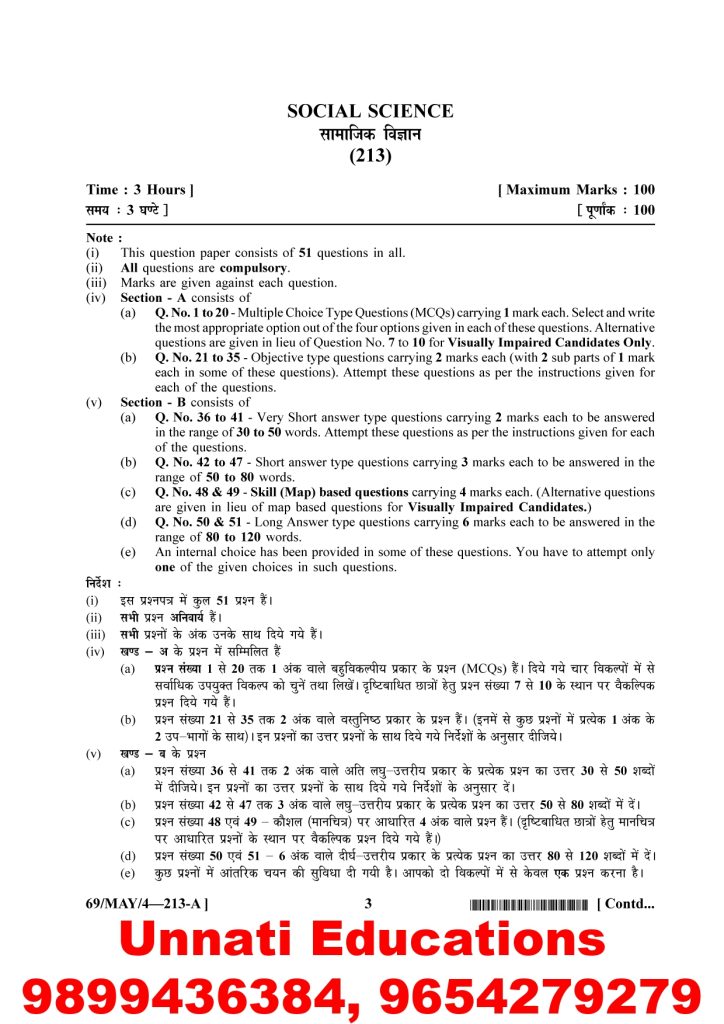
| Total Questions | 51 questions |
| Paper Design | Section A (Objective) + Section B (Written + Map) |
| Map Work | 2 map questions (4 marks each) |
| Answer Length Rule | 30–50 words, 50–80 words, and 80–120 words ranges |
This structure is clearly written in the paper instructions, and the marking scheme is predictable if you practice in the same format.
NIOS Class 10 Social Science 213 Question Paper April 2025 (Set A)

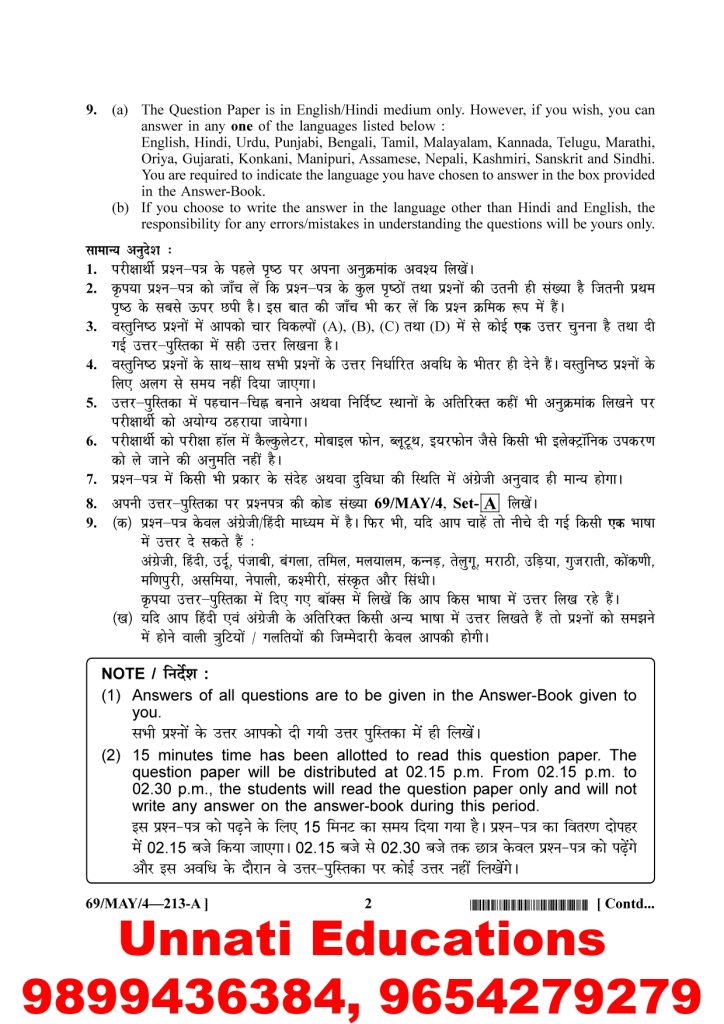
 Download Solved Question Paper PDF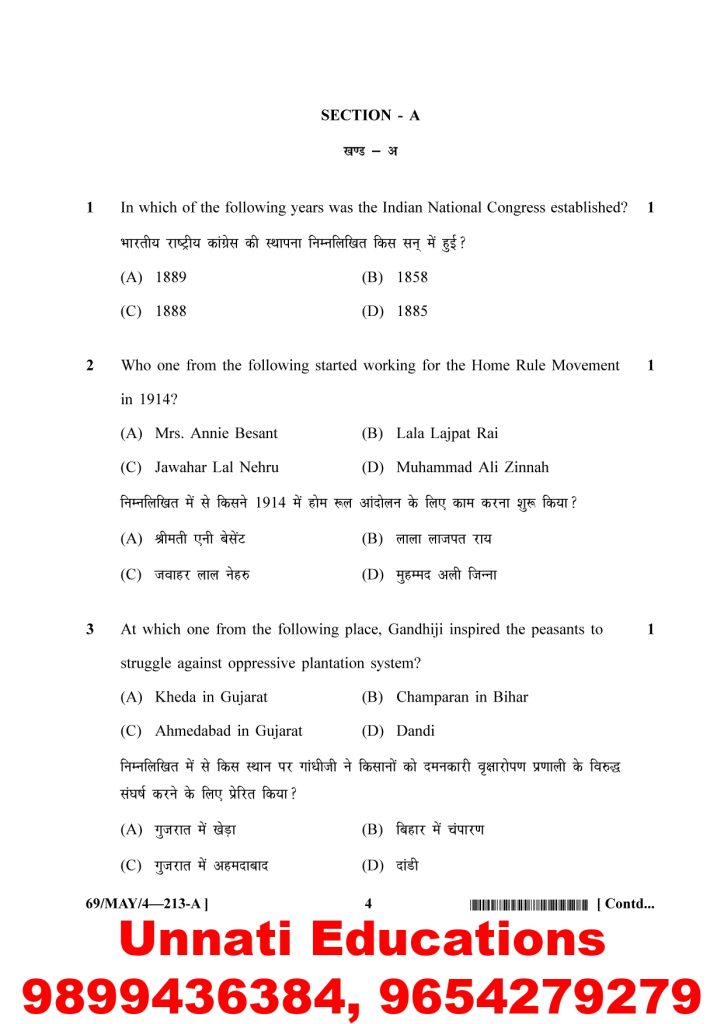
Download Solved Question Paper PDF 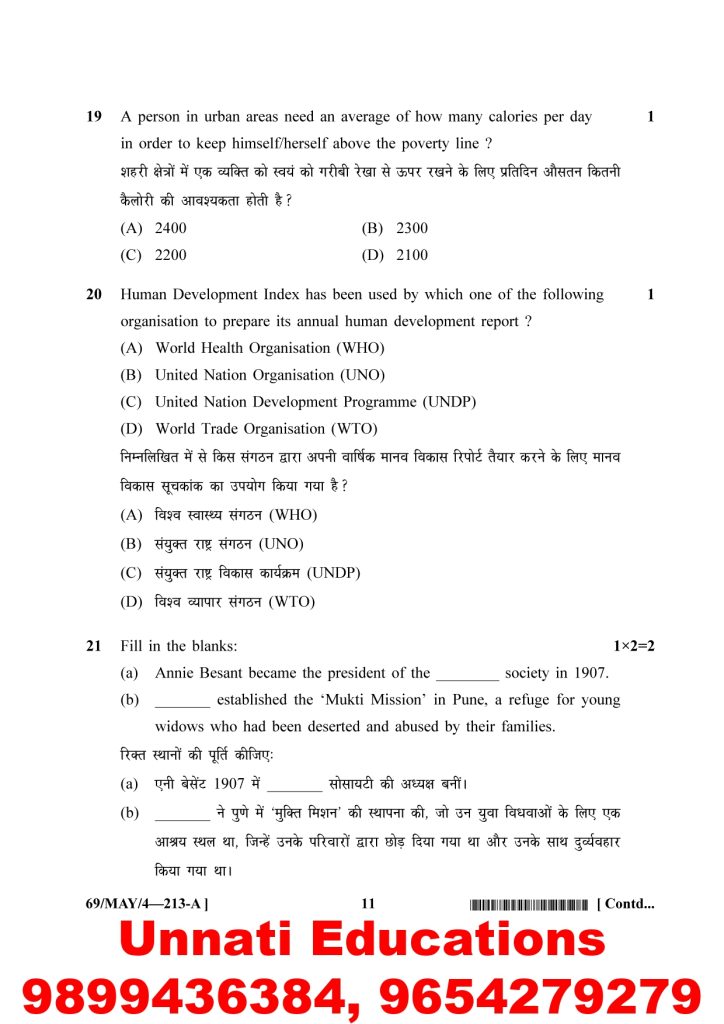
If you want another sets of question papers and its solution, then click on this Button.
Download Solved Question Paper PDF
Exam Context for 2026: What This Paper Tells You
The biggest mistake students make is treating Social Science as “read and remember.” NIOS does not reward that fully. This Set A paper shows NIOS wants a mix of memory and understanding. You are tested on four areas together: History, Geography, Civics, and Economics. If you only prepare one area strongly, your score will still stop early because the paper spreads marks across all units. This is also a paper where presentation matters. Even when you know the answer, if you write too long, too short, or without headings, you lose marks silently. NIOS gives marks for structured writing, not for emotional writing.
NIOS Class 10 Social Science 213 Question Paper download PDF: How to Use It Correctly
Do not just “solve” the paper once and move on. Use it like a scoring tool. Use the question paper for these purposes:
- Understand the exact section pattern and marks logic.
- Build a list of repeated themes like Nationalism and the Constitution.
- Practice map work with strict accuracy and neat labels.
- Train your writing to stay inside word limits.
- Learn how NIOS mixes direct and application questions.
If you practice it correctly, this single paper can improve your score more than five random guidebooks.
Structure of the NIOS Social Science 213 Question Paper (Set A)
The paper is clearly divided into two main parts:
Section A: Objective (Questions 1–35)
- Q1–Q20 are MCQs of 1 mark each.
- Q21–Q35 are objective questions of 2 marks each.
- Some 2-mark questions have two subparts of 1 mark each.
This section is your “score builder.” If you are serious about scoring 70+, you cannot be weak here. One wrong guess costs you more than you think.
Section B: Written + Map (Questions 36–51)
- Q36–Q41: very short answers, 2 marks each, 30–50 words.
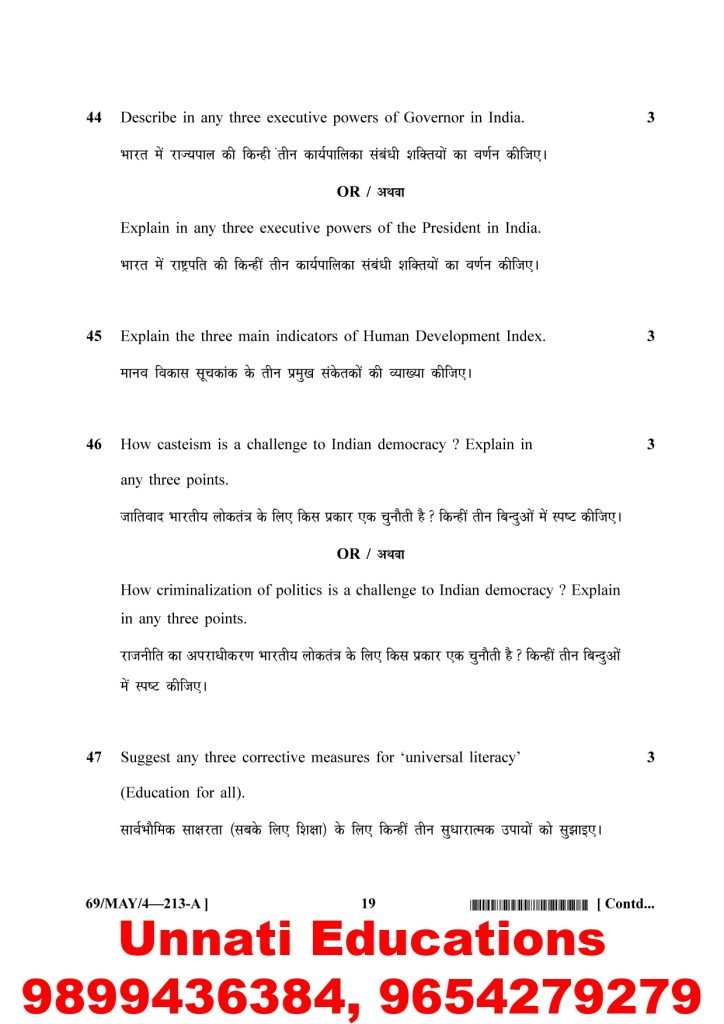
- Q42–Q47: short answers, 3 marks each, 50–80 words.
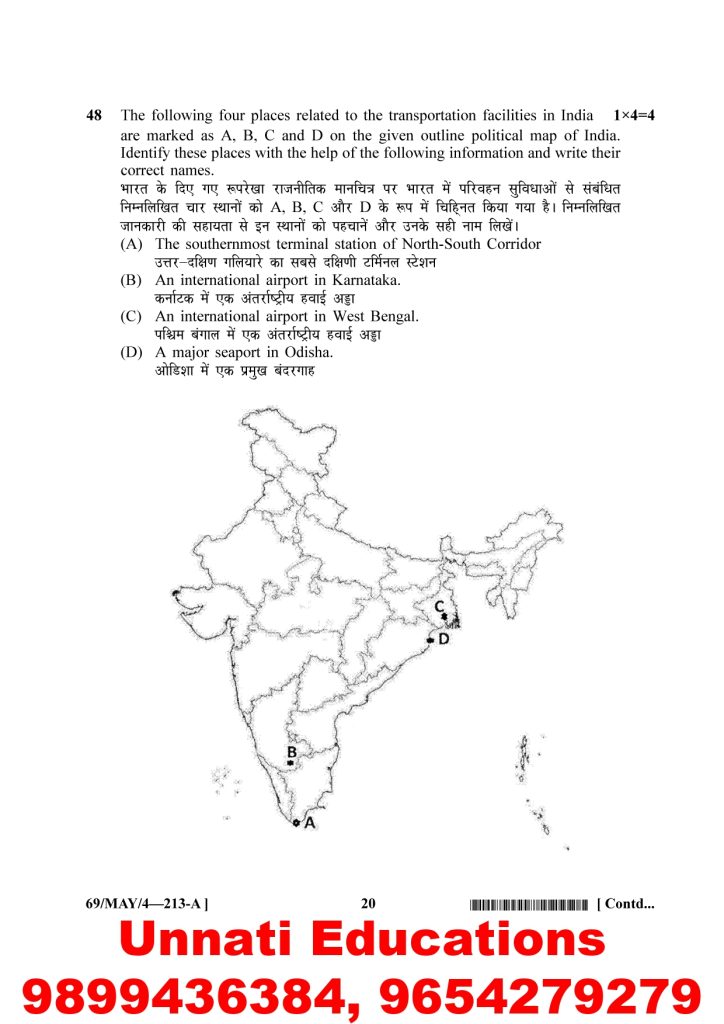
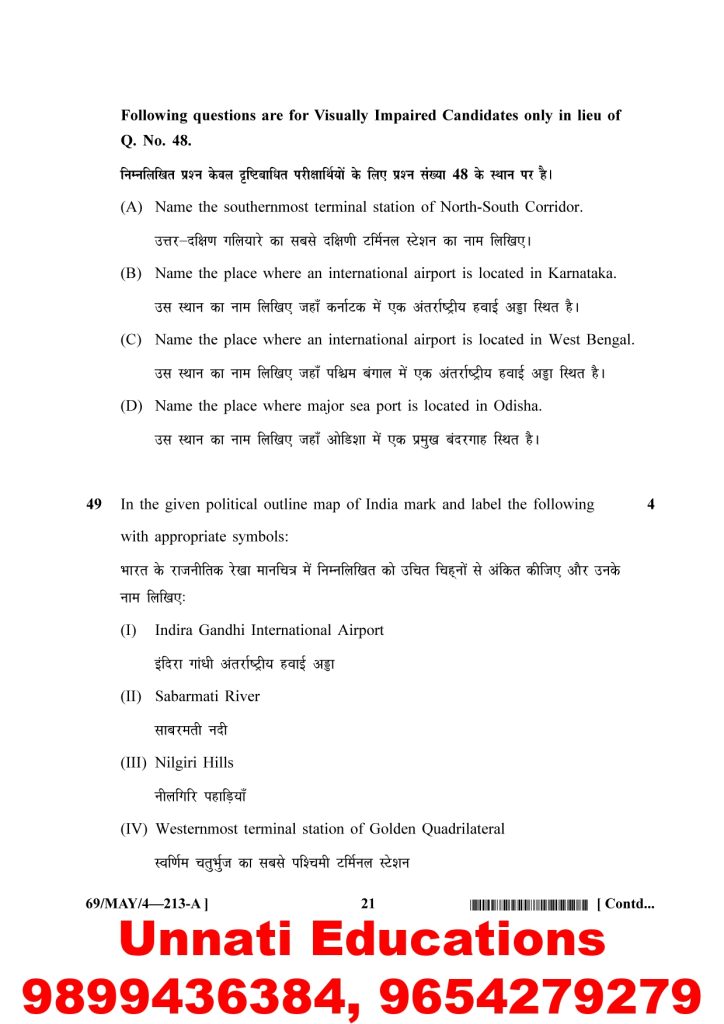
- Q48–Q49: map/skill-based, 4 marks each.
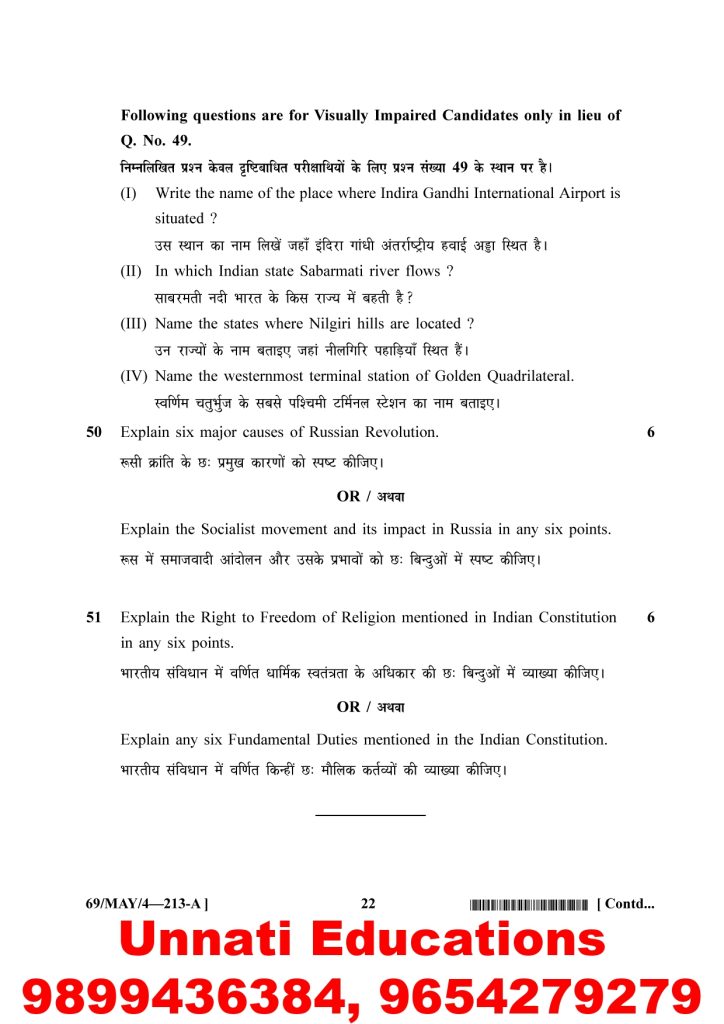
- Q50–Q51: long answers, 6 marks each, 80–120 words.
- Internal choice exists in some questions.
This is where most students lose marks, not because they do not know, but because their answers are messy, unbalanced, or off-topic.
NIOS Class 10 SST 213 Question Paper Weightage 2025: Marks Distribution That Matters
Here is the practical weightage that you should treat as your scoring map:
| Paper Component | Question Range | Marks |
|---|---|---|
| MCQ (1 mark) | Q1–Q20 | 20 |
| Objective (2 marks) | Q21–Q35 | 30 |
| Very Short (2 marks) | Q36–Q41 | 12 |
| Short (3 marks) | Q42–Q47 | 18 |
| Map / Skill (4 marks) | Q48–Q49 | 8 |
| Long Answers (6 marks) | Q50–Q51 | 12 |
| Total | 51 Questions | 100 |
If you notice carefully, Section A alone is 50 marks. That means half the paper depends on your accuracy and revision discipline.
Section A (Q1–Q20 MCQ) – What Set A Focused On
The MCQs in Set A heavily touch:
- Modern Indian history and national movement basics
- British policies, such as the Permanent Settlement and wars
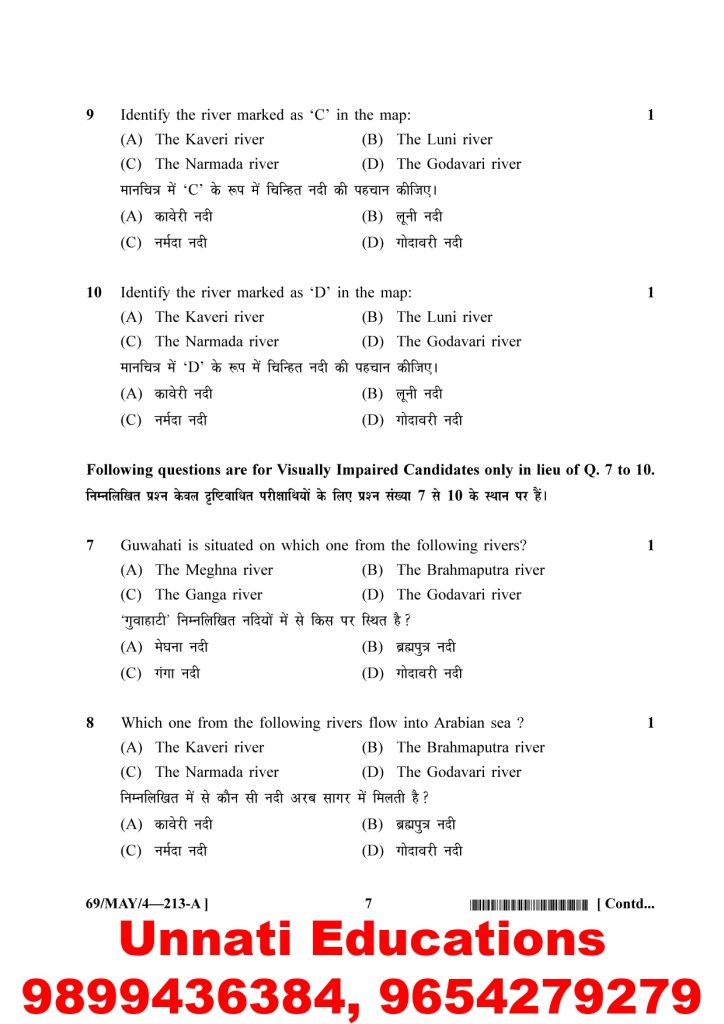
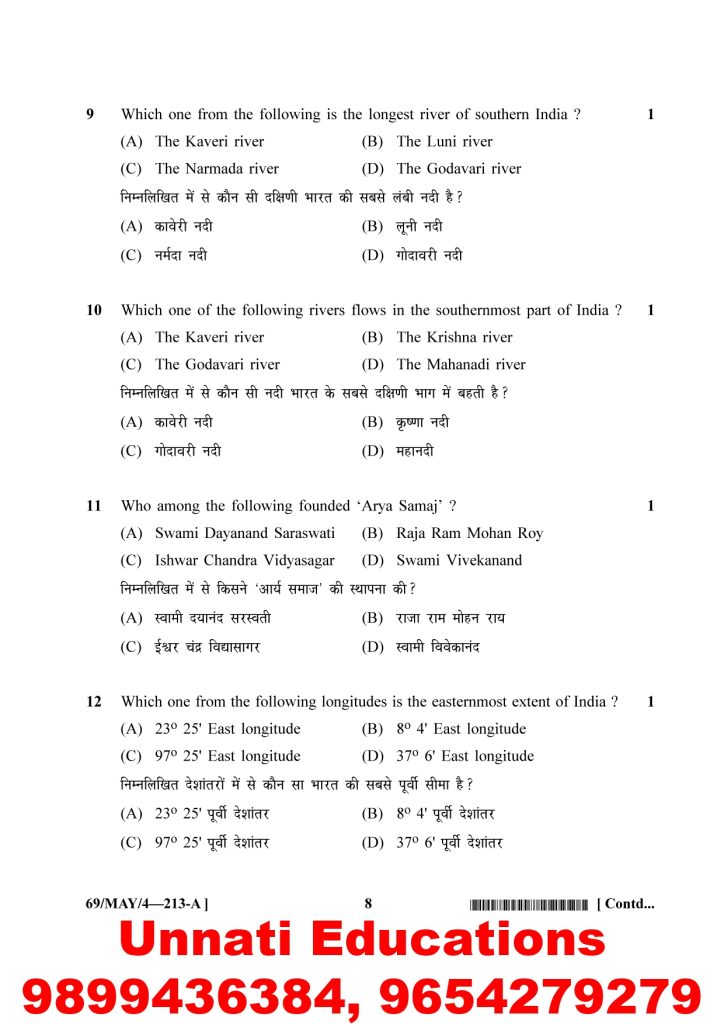
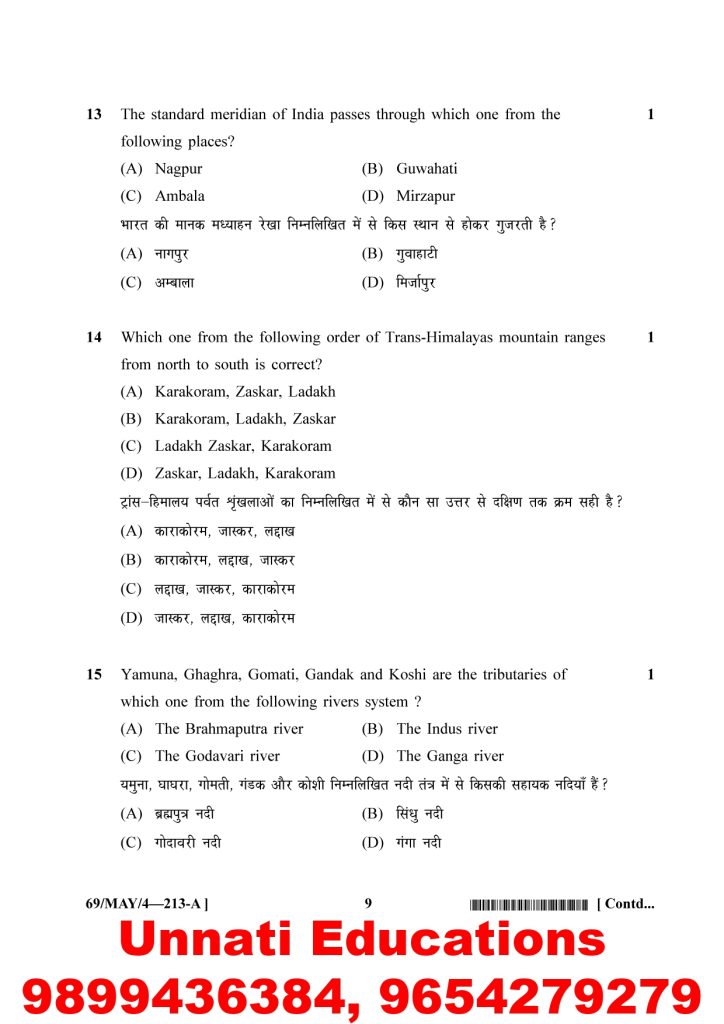
- Geography basics like rivers, longitudes, meridians, and mountains
- Society and culture examples, like festivals and reform movements
- Economic indicators like calories and HDI.
MCQ signals you should not ignore (for 2026)
- History questions are direct, fact-based, and do not forgive confusion
- Geography MCQs mix maps, coordinates, and “which is correct order” logic
- Civics and economics appear as short factual indicators, not long theory.
Examples of the MCQ style (Set A patterns)
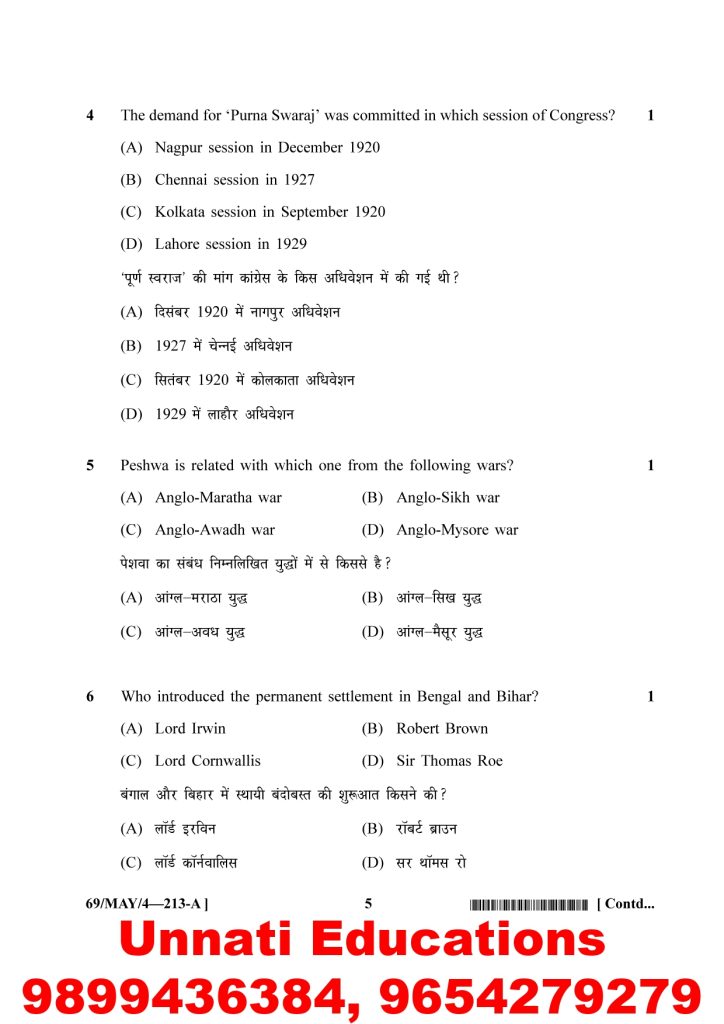
From Set A, you can clearly see questions like:
- The year of the establishment of the Indian National Congress
- Home Rule movement and key personality timeline
- Champaran is the place for the struggle of the plantation system
- Purna Swaraj session selection
- Permanent Settlement was introduced by Lord Cornwallis
- HDI report linked with UNDP
This tells you the level: it is not “deep,” but it is strict. You either know it, or you lose it.
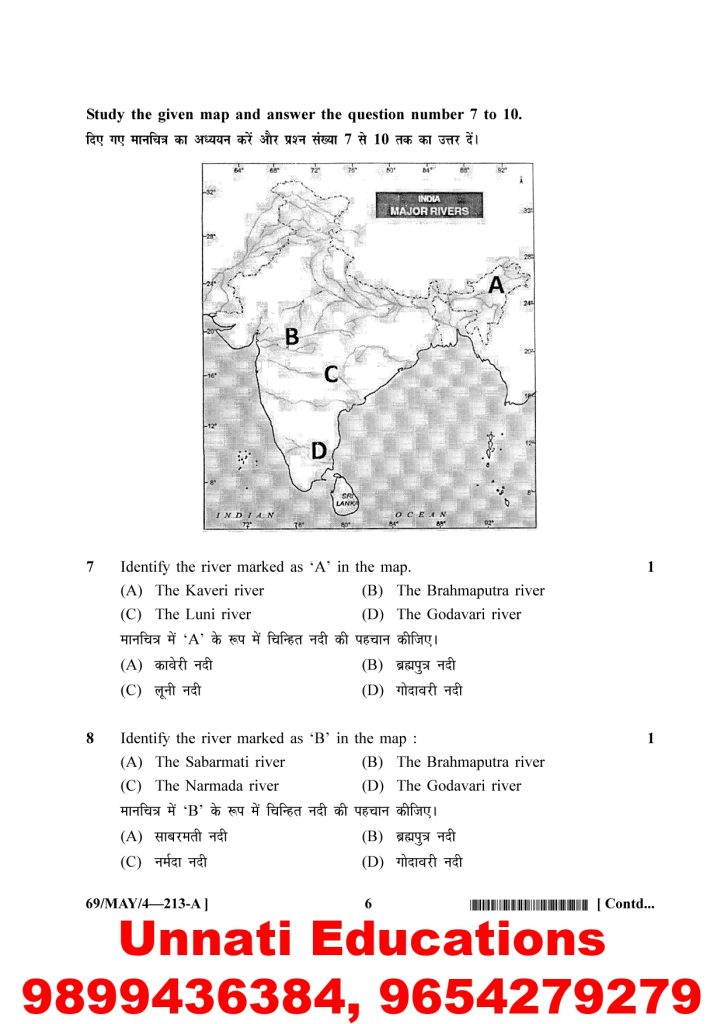
Map-Based MCQ (Q7–Q10) – Why It’s a Quiet Scoring Trap
Set A includes a small map of India with major rivers marked A, B, C, and D, and asks you to identify them. This looks easy, but many students mess it up because:
- They memorise river names without map positions.
- They confuse west-flowing and east-flowing rivers.
- They ignore where the Brahmaputra actually lies.
- They guess between Godavari, Narmada, and Kaveri casually.
If you want marks here, do this:
- Learn rivers with direction and state mapping, not just names.
- Practice at least five outline maps before exam month.
- Create a “river bank memory” for each major river.
This one small area can protect 4 marks in minutes.
Section A (Q21–Q35) – The 2-Mark Objective Block That Builds Rank
These questions are not essays. They are short accuracy tests. In Set A, the 2-mark block includes:
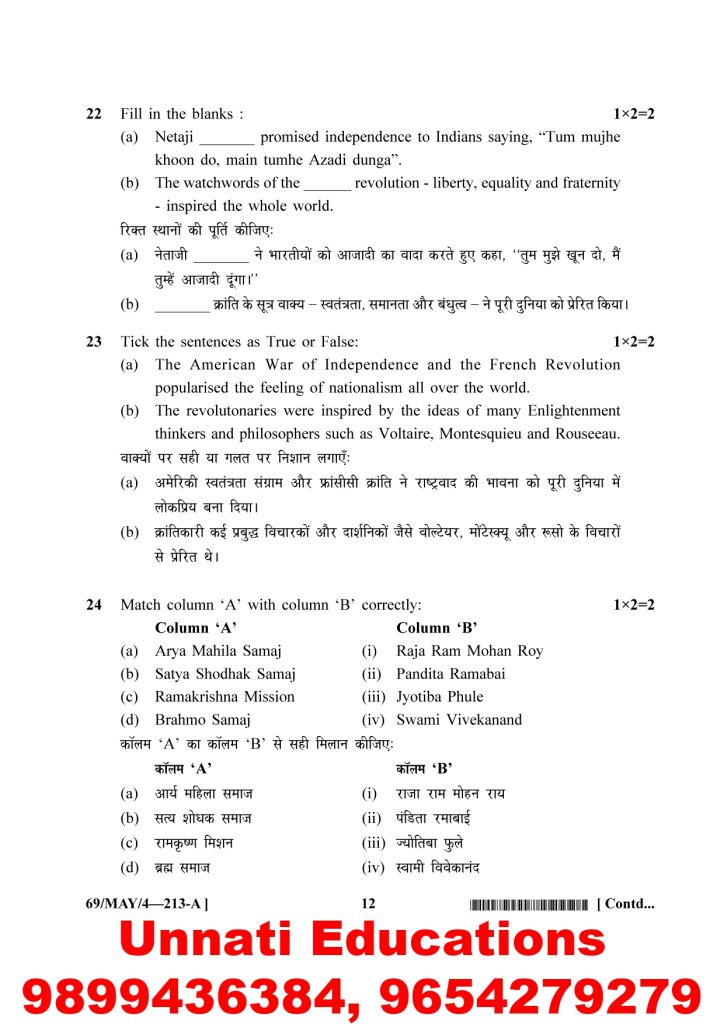
- Fill in the blanks about leaders and reformers.
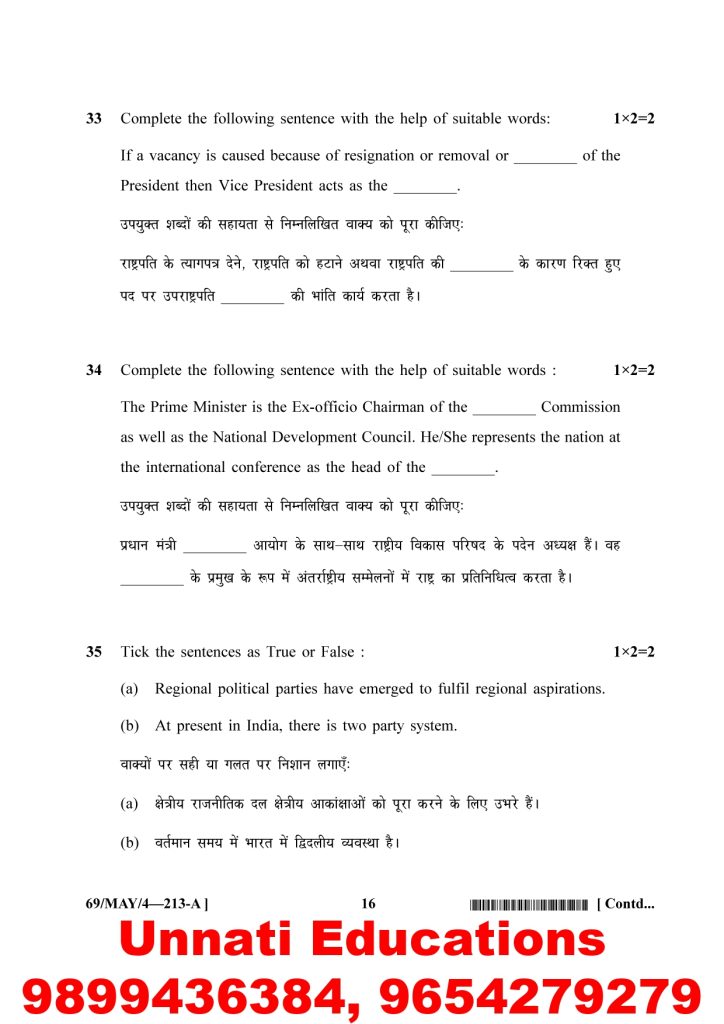
- True/False based on nationalism and the political system.
- Match the following with reform organisations and founders.
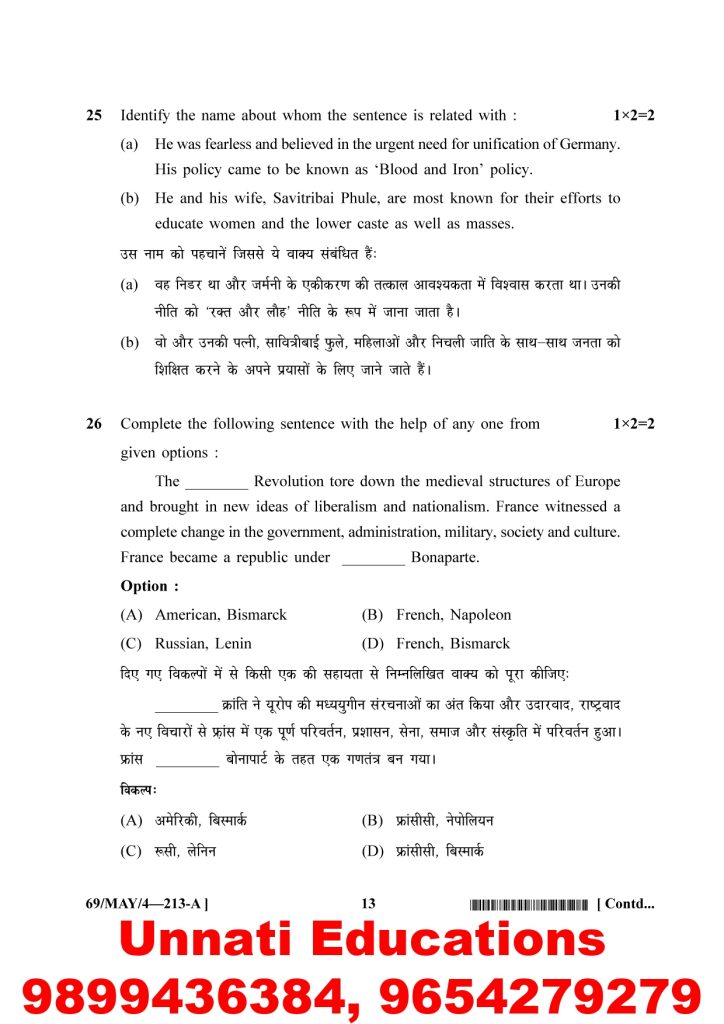
- Identify people by description, like “Blood and Iron policy.”
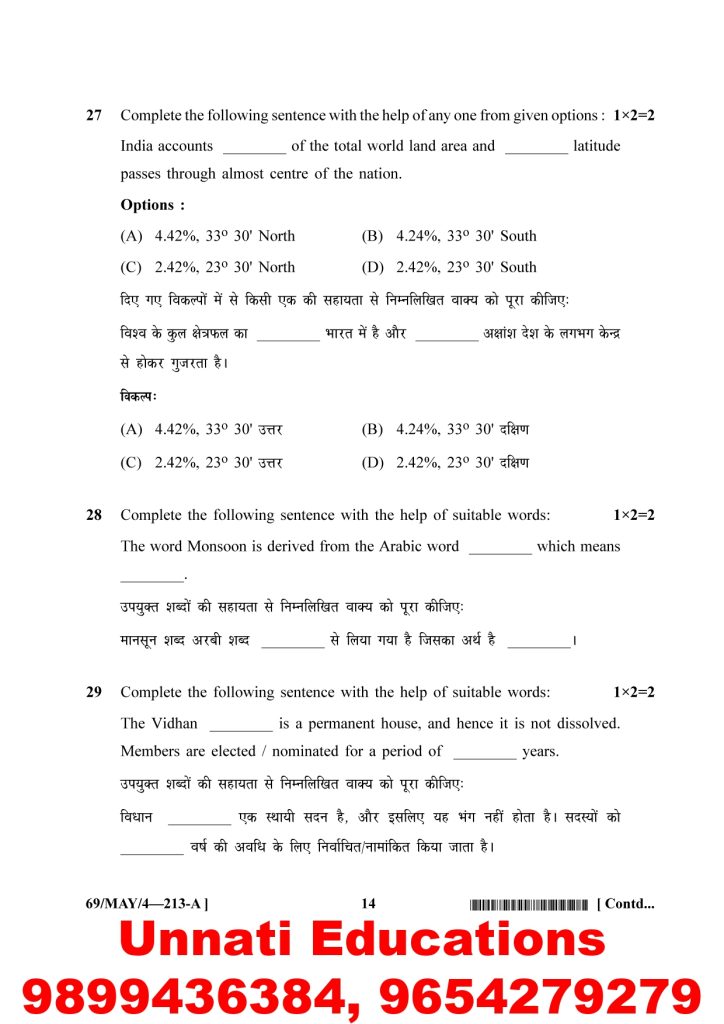
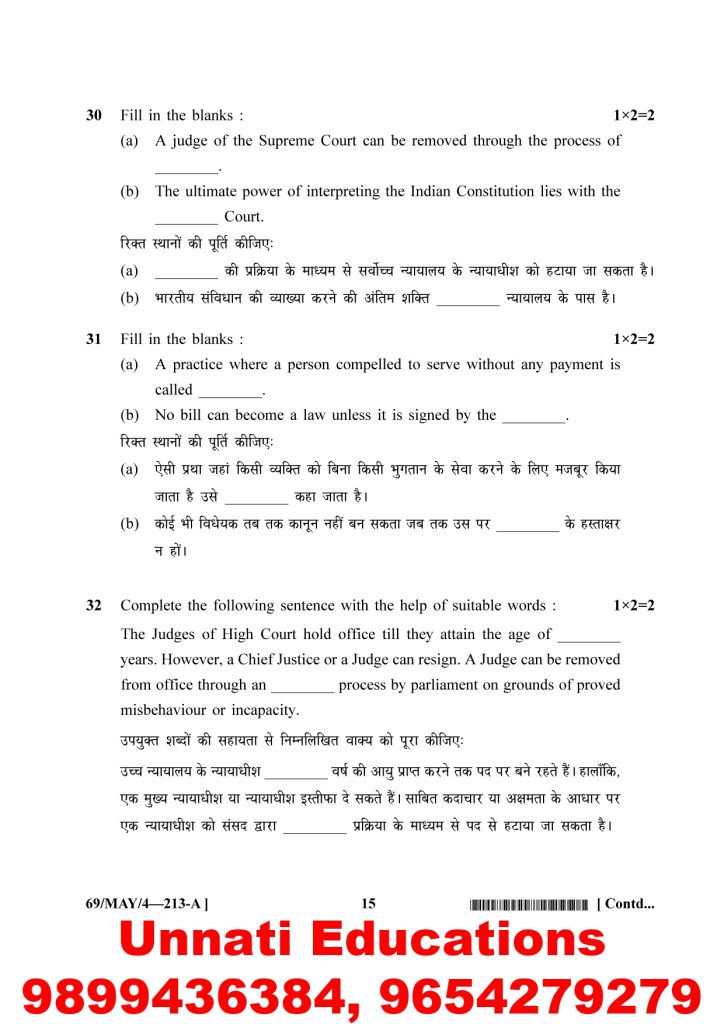
- Complete statements on monsoon, Vidhan Sabha, and impeachment basics.
What this means for your 2026 preparation
- You must revise names and organisations like a checklist.
- You must be clear on civic terms like impeachment and constitutional powers.
- You must not skip the reforms and women's empowerment chapters.
- You must practice writing answers exactly as asked.
High-yield objective topics seen in Set A
- Annie Besant and the Theosophical Society reference.
- Mukti Mission in Pune for young widows, reference.
- French Revolution watchwords: liberty, equality, fraternity.
- Arya Samaj, Brahmo Samaj, and Ramakrishna Mission matching.
- Supreme Court judge removal process and constitutional interpretation.
- The High Court judge's age limit and removal process are mentioned.
If you prepare this block well, you can realistically score 22–26 out of 30 here.
Section B Entry: What Changes After Q35
From Q36 onwards, NIOS is testing how you explain, not just what you remember. Here is the truth: Most students lose marks because they write as if they are telling a story. NIOS wants points, not drama. A clean answer with headings and three sharp points will beat a long emotional paragraph. You must respect word limits:
- 2 marks: 30–50 words.
- 3 marks: 50–80 words.
- 6 marks: 80–120 words.
Section B (Q36–Q41) – 2-Mark Very Short Answers (Set A)
Set A asks direct short questions like:
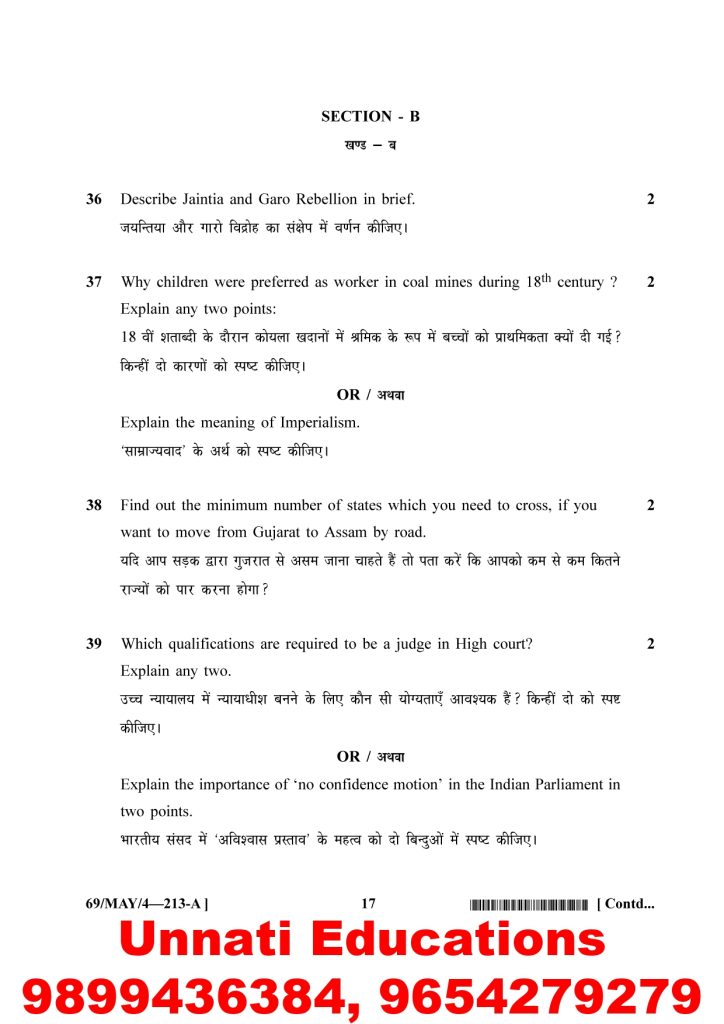
- Briefly describe the Jaintia and Garo Rebellion.
- Why were they preferred in coal mines in the 18th century? There were two points.
- Minimum number of states to cross from Gujarat to Assam by road.
- Qualifications for a High Court judge, any two.
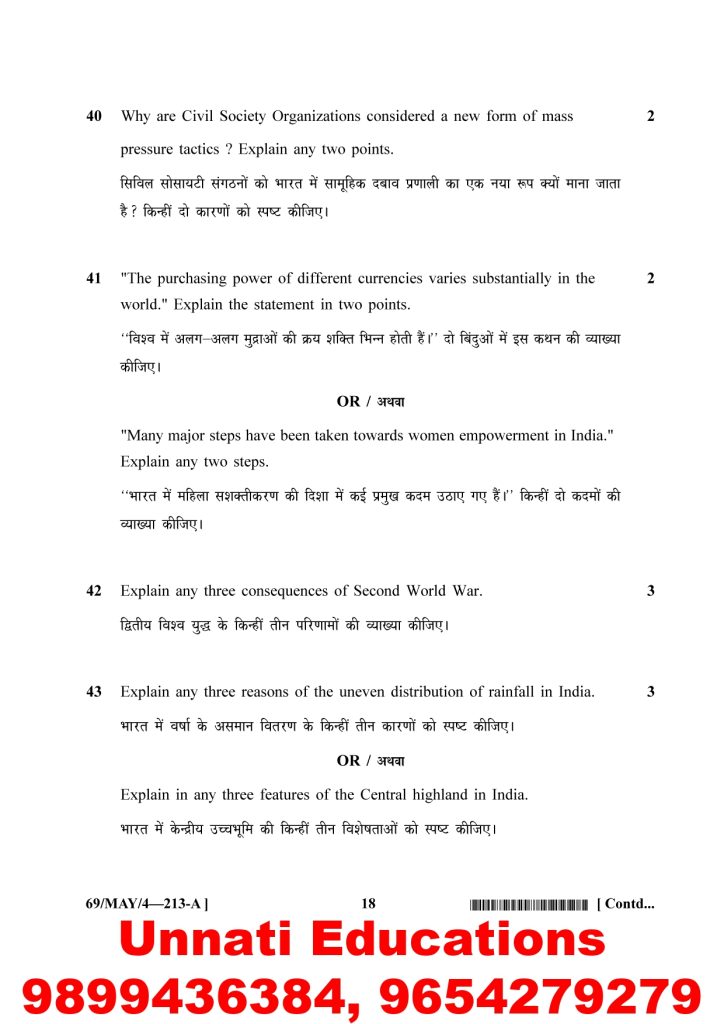
- Civil society organisations as mass pressure tactics, two points.
- The purchasing power of currencies varies, as explained in two points.
What these questions reveal for 2026
- NIOS wants you to know “small chapters” too.
- NIOS expects two crisp points, not a full page.
- Geography questions can be practical, not only theoretical.
- Civics is not optional if you want strong marks.
- Economics appears as a simple explanation, not calculations.
Section B (Q42–Q47) – 3-Mark Short Answers (Set A)
In Set A, the 3-mark block includes:
- Consequences of the Second World War (any three).
- Reasons for uneven distribution of rainfall in India (any three).
- Executive powers of the Governor, any three (or the President).
- Three indicators of the Human Development Index.
- Casteism as a challenge to Indian democracy, three points (or criminalisation).
- Corrective measures for universal literacy: three points.
The scoring approach for 3-mark answers
Use a fixed pattern:
- One-line definition or context.
- Three points, each with one line explanation.
- One closing line that links to impact.
If you keep this structure, you will consistently score 2.5+ out of 3.
Topic-Wise Coverage in Set A: What Was Tested Most
This is the cleanest way to understand the paper.
History focus areas (Set A)
- National Movement basics, like Congress sessions and Gandhi movements.
- British policies like the Permanent Settlement and related power structures.
- Tribal and regional resistance, like the Jaintia and Garo rebellions.
- Nationalism in Europe through the French Revolution and the Bismarck reference.
- Social reform movements and women's upliftment personalities and groups.
Geography focus areas (Set A)
- Indian rivers and map identification.
- Latitude and longitude-based factual questions.
- Standard meridian and location-based understanding.
- Trans-Himalayan ranges order type question.
- Monsoon meaning and rainfall distribution reasoning.
- Transportation map skills: airports, seaports, corridors.
Civics focus areas (Set A)
- Judiciary and removal processes, like impeachment references.
- Powers of the President and Governor as executive heads.
- Political party system and regional parties: a basic understanding.
- Challenges to democracy, like casteism and criminalisation.
- Fundamental Rights like Freedom of Religion appear in long answers.
Economics focus areas (Set A)
- Poverty line calories in urban areas as a factual indicator.
- HDI and its indicators are a concept-based question.
- Currency purchasing power explanation type question.
- Universal literacy as a practical improvement question.
- Women's empowerment steps appear as an alternate option.
Unnati Education Support (For Students Who Want Smart Preparation)
Unnati Education works as a study partner for NIOS students who want clarity and exam-focused resources. What we help students with:
- NIOS Previous year Question papers that match real NIOS patterns.
- Solved TMAs prepared as per the NIOS format needs.
- Practical files that save time and avoid confusion.
- Notes written for quick revision and clean answers.
- Real-time guidance when deadlines and rules change.
For support, you can contact Unnati Education on Phone/WhatsApp: 9654279279, 9899436384.
Eligibility and Important Dates (2026) – What You Must Track
NIOS eligibility and schedules can be updated, so treat the official notification as final. Still, most Class 10 students fall into these common rules. Eligibility basics that generally apply:
- You should meet the NIOS minimum age rule for the Secondary level.
- You can choose subjects as per the NIOS Secondary scheme.
- You must submit assignments if your stream requires it.
- You must keep your documents consistent across forms.
- You should follow the exam form windows strictly.
Important timing points to watch for 2026:
- NIOS usually conducts public exams in two cycles each year.
- Exam form and assignment windows open before the exam cycle.
- Practical and map-based preparation must start early.
- Late form filling can create avoidable stress.
- Always verify the latest dates from official updates.
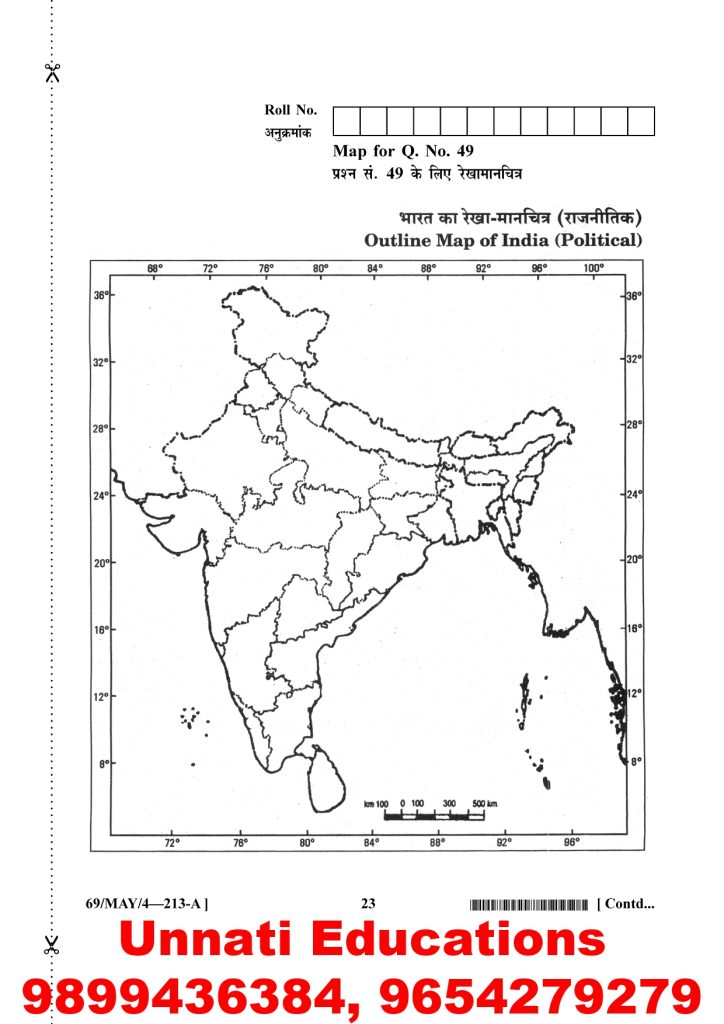
Section B (Q48–Q49): Map Work Analysis – The Silent Rank Booster
Map work carries 8 full marks, and these are among the highest-scoring marks in the entire paper if practised properly.
What NIOS Tested in Set A Map Questions
In April 2025 (Set A), map questions focused on Indian geography and transport features, not vague or tricky locations. The map questions required students to:
- Identify and mark the major physical features of India accurately.
- Mark transport-related locations such as ports or routes.
- Use correct symbols, spelling, and placement.
Why Students Lose Marks in Map Work
Most students lose marks not because they do not know the answer, but because:
- The marking is inaccurate or slightly misplaced.
- Spelling of place names is incorrect.
- Labels are written unclearly or too far from the marking.
- Pencil usage is careless or too light.
- Students panic and rush to the map work at the end.
NIOS examiners are strict with location accuracy, not handwriting beauty.
Correct Map Work Strategy for 2026
Follow this exact method in the exam:
- Read the map question fully before touching the pencil.
- Identify the feature mentally first.
- Mark lightly with a pencil.
- Label clearly on the right side wherever possible.
- Do not overwrite or darken too much.
- Attempt map questions when your hand is steady, not at the last minute.
How to Practice Map Work Properly Before the Exam
For 2026 preparation:
- Practice at least 15 full India outline maps.
- Practice rivers, mountains, ports, industrial regions, and transport routes.
- Practice writing correct spellings repeatedly.
- Time yourself to finish one map question within 5 minutes.
Map work alone can protect 6–8 guaranteed marks if you stay calm and accurate.
Section B (Q50–Q51): Long Answer Questions (6 Marks Each)
This section decides whether you score average marks or move into the top band.
Nature of 6-Mark Questions in Set A
In Set A, the long-answer questions were conceptual and descriptive, not factual lists. The questions focused on:
- Fundamental Rights and their importance.
- Democracy-related challenges and solutions.
- Social or economic development themes.
These questions test:
- Understanding
- Structure
- Ability to explain with balance
Biggest Mistake Students Make in 6-Mark Answers
Students often:
- Write one long paragraph
- Ignore word limits
- Miss key points
- Fail to give examples.
- Write emotionally instead of structurally.
NIOS does not reward length. It rewards clarity and structure.
Ideal Format for a 6-Mark Answer (NIOS-Approved)
Use this exact structure:
- Opening line (1–2 lines) Define or introduce the topic clearly.
- Main body (4–5 points)
- Each point in a new line
- Each point is explained in one or two lines.
- Use simple language
- Avoid repetition
- Conclusion (1 line) Connect the answer to democracy, society, or development.
This format fits perfectly within 80–120 words, as required.
Example: How a 6-Mark Answer Should Look (Conceptual)
Instead of writing a story, your answer should look like this:
- Definition or context
- Point 1 with explanation
- Point 2 with explanation
- Point 3 with explanation
- Point 4 with explanation
- Concluding line
This is how examiners easily locate marks.
Time Management Strategy for the 3-Hour Paper
Poor time management ruins even well-prepared students.
Recommended Time Split
| Paper Section | Recommended Time Allocation |
|---|---|
| Section A (Q1–Q35) | 50–55 minutes |
| Section B – Short Answers (Q36–Q47) | 60 minutes |
| Map Work (Q48–Q49) | 15 minutes |
| Long Answers (Q50–Q51) | 30 minutes |
| Revision Buffer | 10 minutes |
Never leave map work or long answers for the last 10 minutes.
Expected Trends for Social Science 213 – 2026 Exam
Based on April 2025 (Set A), here are realistic expectations for 2026.
History Trends
- National Movement topics will remain important
- Tribal and regional resistance may repeat.
- Social reform movements are high-probability areas.
Geography Trends
- Map work will stay compulsory.
- Rivers, monsoon, and location-based questions will continue.
- Transport and infrastructure themes may expand.
Civics Trends
- Judiciary, rights, and democracy challenges remain core.
- Questions may focus more on the application rather than the definition.
Economics Trends
- HDI and development indicators are permanent topics
- Literacy, poverty, and empowerment questions will continue.
Overall Paper Trend
NIOS is clearly moving toward:
- Balanced coverage of all units
- Less rote memorisation
- More clarity-based answers
Common Mistakes You Must Avoid in 2026
These mistakes were visible in the April 2025 answer copies:
- Writing beyond word limits
- Mixing answers to different questions
- Ignoring internal choices
- Poor map labelling
- Leaving questions half-answered
- Using informal or spoken language
Avoiding these alone can improve your score by 10–15 marks.
How Unnati Education Supports NIOS Social Science Students
Unnati Education supports NIOS learners with exam-focused clarity, not confusion. Support includes:
- Previous year question papers analysed topic-wise
- NIOS Solved TMAs prepared strictly as per NIOS guidelines
- Clean, easy-to-revise notes for Social Science
- Practical guidance on map work and answer writing
- Updates about assignments, exams, and schedules
For support, students can contact: Phone/WhatsApp: 9654279279, 9899436384
Frequently Asked Questions (FAQ)
Q1. Is the April 2025 Social Science paper useful for 2026 preparation?
Yes, the April 2025 paper is extremely useful because NIOS repeats structure, marking style, and topic weightage regularly. By analysing this paper carefully, students understand how questions are framed, how answers are evaluated, and how marks are distributed, which directly helps in planning Social Science preparation for the 2026 examination.
Q2. How important is map work in the NIOS Class 10 Social Science?
Map work is very important because it carries fixed marks and is easier to score than theory questions. With correct practice, students can secure almost full marks in map questions. Poor map accuracy or spelling mistakes, however, can lead to unnecessary loss of marks even if the rest of the paper is strong.
Q3. Do I need to write long answers in paragraph form or points?
NIOS prefers answers written in clear points rather than long paragraphs. Writing in points helps the examiner quickly identify correct content and award marks. Structured answers with headings or numbered points are safer and more effective for scoring well in long-answer questions.
Q4. What is the best way to revise Social Science before the exam?
The best revision method is to revise chapter-wise key points, practice previous year questions, and rewrite short and long answers within word limits. Regular map practice and revision of civics and economics definitions are equally important. Random reading without practice is not effective for NIOS exams.
Q5. Are internal choices equally important as main questions?
Yes, internal choices are equally important. Sometimes internal options are easier or more familiar than the main question. Students should always read both options carefully before choosing. Selecting the right internal option can significantly improve answer quality and overall marks.
Quick Summary: NIOS Class 10 Social Science 213 Question Paper April 2025
The NIOS Class 10 Social Science 213 Question Paper April 2025 (Set A) clearly shows that NIOS values structured answers, balanced preparation across all units, and accurate map work. Students preparing for 2026 should use this paper as a model, focus on writing within word limits, practice maps seriously, and avoid common mistakes. With disciplined preparation and the right strategy, scoring high in Social Science is completely achievable.